
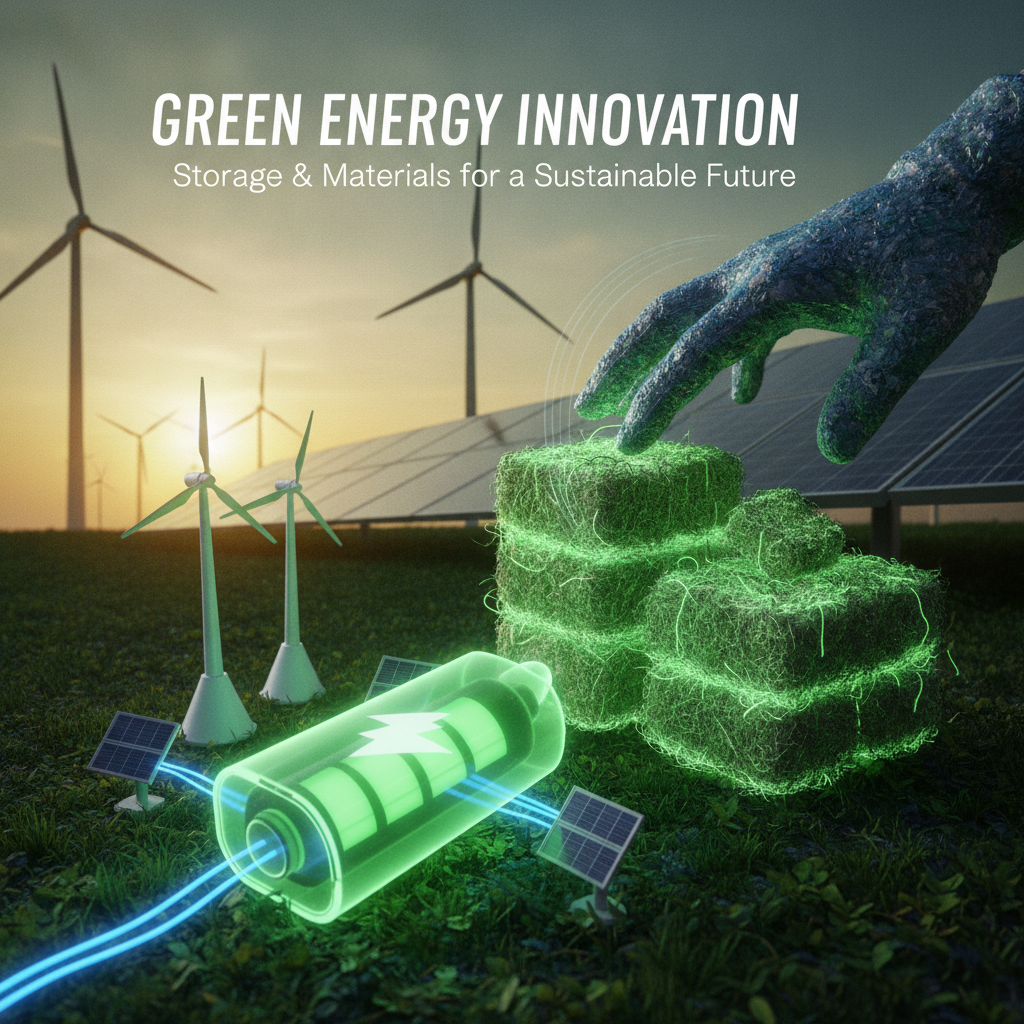
Green Energy’s Next Leap: Storage & Materials
The global shift towards renewable energy sources like solar and wind is undeniably exciting. We’re capturing power directly from nature, reducing our reliance on fossil fuels. However, sunlight doesn’t always shine, and the wind doesn’t always blow. This intermittency has long been a major hurdle, requiring sophisticated solutions for storing energy and ensuring the materials we use are as sustainable as the energy itself. Good news! Breakthroughs in renewable energy storage and green materials are rapidly changing the landscape, bringing us closer to a truly sustainable future.
Powering Up: Innovations in Energy Storage
For renewables to truly dominate, we need robust, efficient, and cost-effective ways to store surplus energy for when it’s needed most. Recent advancements are transforming this challenge into an opportunity.
We’re seeing incredible progress in advanced battery technologies. Beyond incremental improvements to lithium-ion batteries – like solid-state electrolytes offering higher energy density and safety, or silicon anodes boosting capacity – new chemistries are emerging. Sodium-ion, zinc-air, and even organic batteries are gaining traction, promising more abundant, less toxic, and potentially cheaper alternatives. These innovations are crucial for grid-scale storage, powering homes, and electric vehicles alike.
Beyond traditional batteries, long-duration energy storage (LDES) solutions are also making strides. Think innovative pumped hydro systems, advanced compressed air energy storage (CAES), and even thermal storage solutions that capture heat to generate electricity later. These technologies are vital for balancing the grid over days or weeks, offering the resilience needed for a 100% renewable energy system.
Building Greener: The Dawn of Sustainable Materials
It’s not enough for our energy to be clean; the infrastructure that generates and stores it must also be environmentally responsible. This is where green materials come into play, focusing on sustainability throughout the entire lifecycle.
The push for sustainable battery components is intense. Researchers are developing cathode and anode materials from more abundant and less environmentally impactful elements, reducing reliance on rare earth metals and cobalt. Furthermore, significant efforts are underway to improve battery recycling processes, ensuring that valuable materials are recovered and reused, closing the loop on manufacturing.
Similarly, the solar industry is embracing eco-friendly solar panels. While traditional silicon panels have improved, next-generation technologies like perovskite solar cells promise higher efficiencies with potentially lower manufacturing costs and less material intensity. The focus is also shifting towards designing panels for easier disassembly and recycling, minimizing waste at the end of their operational life.
Beyond the core components, the broader ecosystem of renewable energy infrastructure is benefiting from new biodegradable and recyclable materials. From wind turbine blades designed for circularity to sustainable construction materials for energy facilities, every step is being re-evaluated through a green lens.
A Sustainable Symbiosis: Storage Meets Green Materials
The beauty of these two fields advancing in parallel is their incredible synergy. Breakthroughs in green materials are making energy storage solutions more sustainable, less resource-intensive, and easier to recycle. Conversely, improved storage capabilities allow us to deploy more renewables, further driving the demand for and innovation in green materials.
We are truly on the cusp of a revolutionary era where clean energy isn’t just about generation, but about holistic sustainability – from how energy is stored to the very materials used to build its future. These breakthroughs aren’t just technical achievements; they are cornerstones of a healthier planet and a more resilient, sustainable future for all.



Leave a Reply