
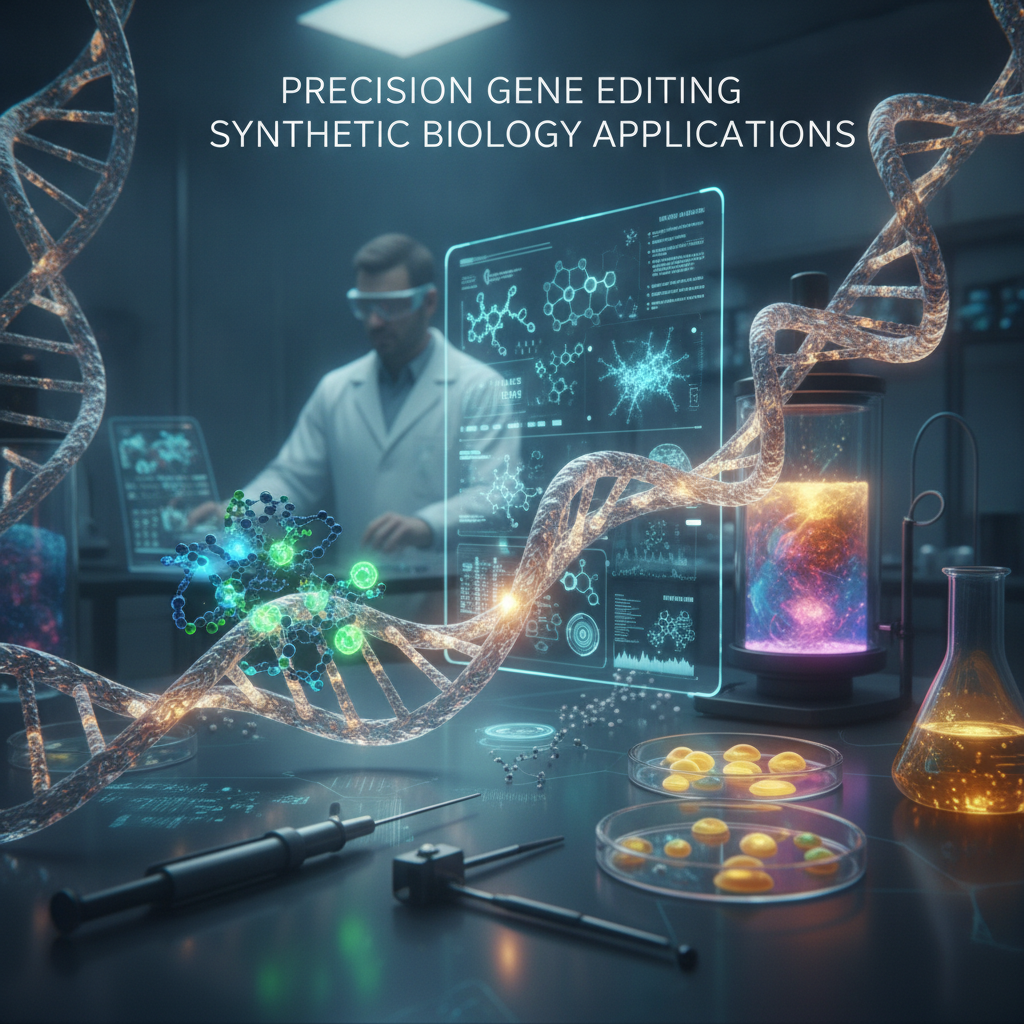
Precision Gene Editing and Synthetic Biology: Crafting Our Future
Imagine a world where genetic diseases could be corrected with pinpoint accuracy, or where microscopic organisms could be reprogrammed to produce sustainable fuels and medicines. This isn’t science fiction anymore! We’re living in an era where precision gene editing and synthetic biology are rapidly transforming these dreams into reality. Get ready to explore how these two revolutionary fields are converging to unlock unprecedented possibilities for healthcare, agriculture, and even our environment.
The Art of Precision: What is Gene Editing?
At its heart, precision gene editing is like having a molecular “find and replace” function for DNA. Tools like CRISPR-Cas9 have revolutionized our ability to make incredibly specific changes to the genetic code of living organisms. This means we can precisely cut out faulty genes, insert new ones, or even tweak existing ones to alter their function. It’s like being able to edit the very instruction manual of life, correcting typos or adding new chapters with unparalleled accuracy. This capability holds immense promise for treating diseases caused by genetic mutations, from cystic fibrosis to sickle cell anemia.
Building Life from Scratch: Exploring Synthetic Biology
While gene editing focuses on tweaking existing biological systems, synthetic biology takes a bolder approach: it aims to design and build entirely new biological parts, devices, and systems. Think of it as bioengineering meets computer programming. Scientists use engineering principles to create biological components – like enzymes or metabolic pathways – that don’t necessarily exist in nature, or to re-engineer existing ones for novel purposes. This field opens doors to manufacturing sustainable chemicals, developing advanced biofuels, and even creating cells that can detect and destroy cancer, all by re-imagining how living systems can function.
A Powerful Partnership: Applications and Impact
The real magic happens when precision gene editing and synthetic biology join forces. Together, they form a dynamic duo capable of addressing some of the world’s most pressing challenges:
Healthcare Revolution: Beyond correcting genetic diseases, these fields are paving the way for personalized medicine, engineering immune cells to fight cancer more effectively (CAR T-cell therapy), and developing new vaccines and diagnostics at incredible speeds.
Sustainable Agriculture: We can engineer crops to be more resistant to pests, droughts, and diseases, reducing the need for harmful pesticides and ensuring food security for a growing global population. Imagine nutrient-enhanced crops designed to thrive in challenging climates!
Environmental Solutions: Synthetic biology, often guided by precision gene editing, can create microbes capable of breaking down plastic waste, cleaning up oil spills, or producing eco-friendly alternatives to traditional manufacturing processes, leading to a greener planet.
Industrial Biotechnology: From producing biodegradable plastics to generating novel enzymes for industrial processes, the designed biological systems are revolutionizing how we manufacture goods, making them cleaner and more efficient.
Navigating the Future Responsibly
The immense power of precision gene editing and synthetic biology also comes with significant ethical and safety considerations. As we gain the ability to reshape life, thoughtful discussions about responsible innovation, equitable access, and potential unintended consequences are paramount. Scientists, policymakers, and the public must collaborate to ensure these powerful technologies are developed and applied in ways that benefit all of humanity while upholding strong ethical standards.
The Horizon is Bright
Precision gene editing and synthetic biology are not just scientific disciplines; they are transformative forces shaping our future. From eradicating diseases to building a more sustainable world, the possibilities are truly mind-boggling. We’re at the dawn of a new era where we can actively design and improve biological systems, promising a future that is healthier, more sustainable, and incredibly innovative. Keep an eye on these fields – the best is yet to come!
“`


Leave a Reply