
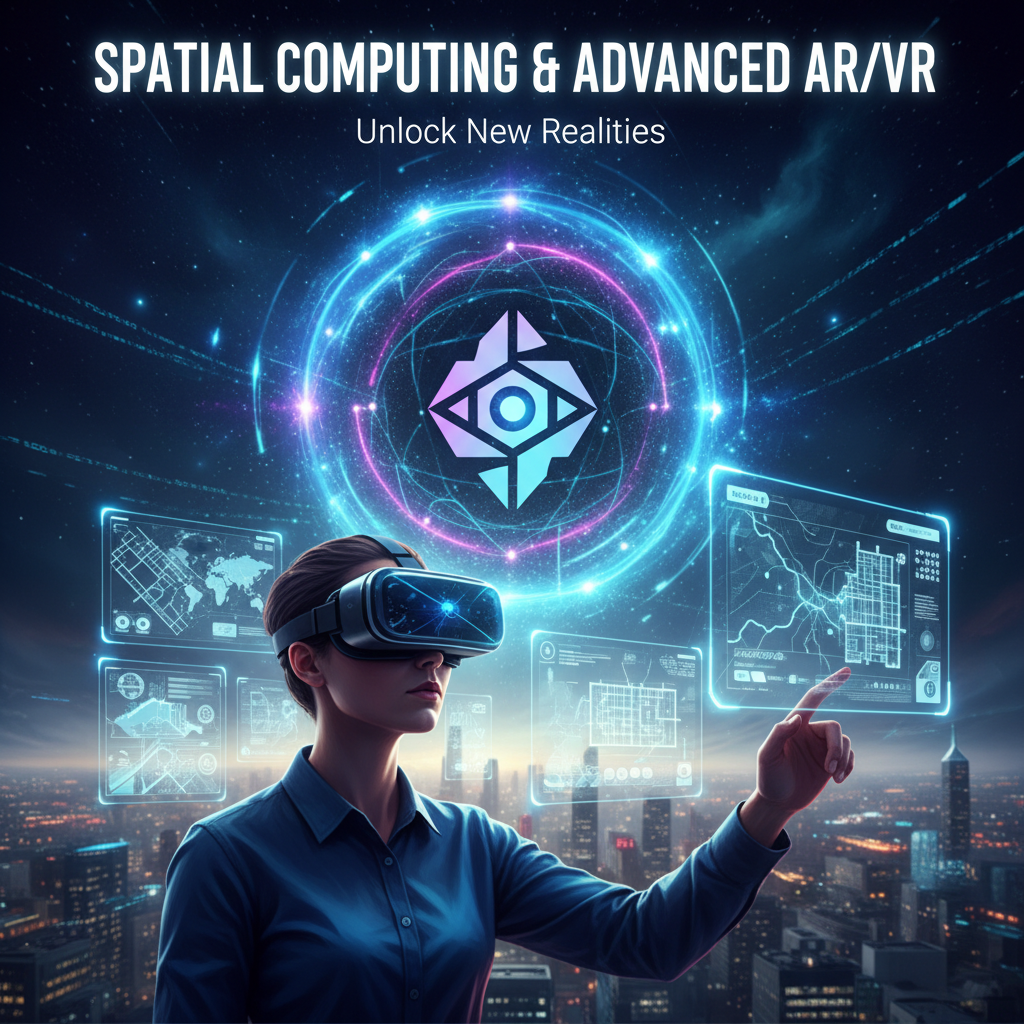
Unlock the Future: Spatial Computing & AR/VR
Ever feel like your digital world is confined to a flat screen? Imagine a world where your digital content isn’t just displayed, but truly *exists* within your physical environment. Welcome to the exciting frontier of Spatial Computing, powered by advanced Augmented Reality (AR) and Virtual Reality (VR) technologies. It’s not just a buzzword; it’s a profound shift in how we interact with technology and the world around us.
What is Spatial Computing?
At its core, Spatial Computing is about enabling computers to understand and interact with the physical world in a three-dimensional way. Instead of us adapting to the computer’s interface (like clicking icons on a desktop), the computer adapts to *our* space and interactions. Think of it as giving machines eyes and ears to perceive depth, objects, and user movements, then allowing digital information to blend seamlessly into that reality.
The Power of Advanced AR/VR
Advanced AR and VR headsets are the primary gateways to spatial computing. These powerful devices are equipped with sophisticated sensors, cameras, and processing power to map our surroundings, track our movements, and render realistic digital objects that respect the physics and context of the real world.
Augmented Reality (AR): Technologies like the Apple Vision Pro, Meta Quest 3, or even advanced smartphone AR, overlay digital information onto our real-world view. Imagine seeing a digital blueprint projected onto a construction site, or a virtual assistant appearing in your living room.
Virtual Reality (VR): Fully immerses us in entirely synthetic digital environments. While often seen as separate, modern VR (especially passthrough VR) increasingly blends AR elements, allowing for seamless transitions and mixed reality experiences that are foundational to spatial computing.
Transforming Industries and Daily Life
The implications of spatial computing are staggering, promising to revolutionize countless aspects of our lives:
Work & Collaboration: Imagine architects walking through digital models of buildings before they’re built, or remote teams collaborating around a virtual 3D prototype as if they were in the same room.
Education & Training: Students can explore historical sites as if they were there, or medical trainees can practice complex surgeries on realistic virtual patients without risk.
Entertainment & Socializing: Beyond traditional gaming, spatial computing opens doors to entirely new forms of interactive storytelling, live events, and truly immersive social experiences.
Retail & Design: Visualize furniture in your home before buying it, or customize products in real-time 3D.
The Road Ahead: Challenges and Opportunities
While the potential is immense, spatial computing is still evolving. Challenges include developing more comfortable and affordable hardware, creating compelling and intuitive software, and addressing privacy concerns as our environments become more digitized.
However, the pace of innovation is rapid. As these technologies mature, we can expect them to become as ubiquitous and indispensable as smartphones are today, fundamentally changing how we learn, work, play, and connect with each other.
Step Into the Future
Spatial computing and advanced AR/VR aren’t just about fancy gadgets; they’re about redefining our relationship with technology, making it more intuitive, immersive, and integrated into our world. The future is no longer just on a screen; it’s all around us, waiting to be explored. Are you ready to step in?



Leave a Reply