
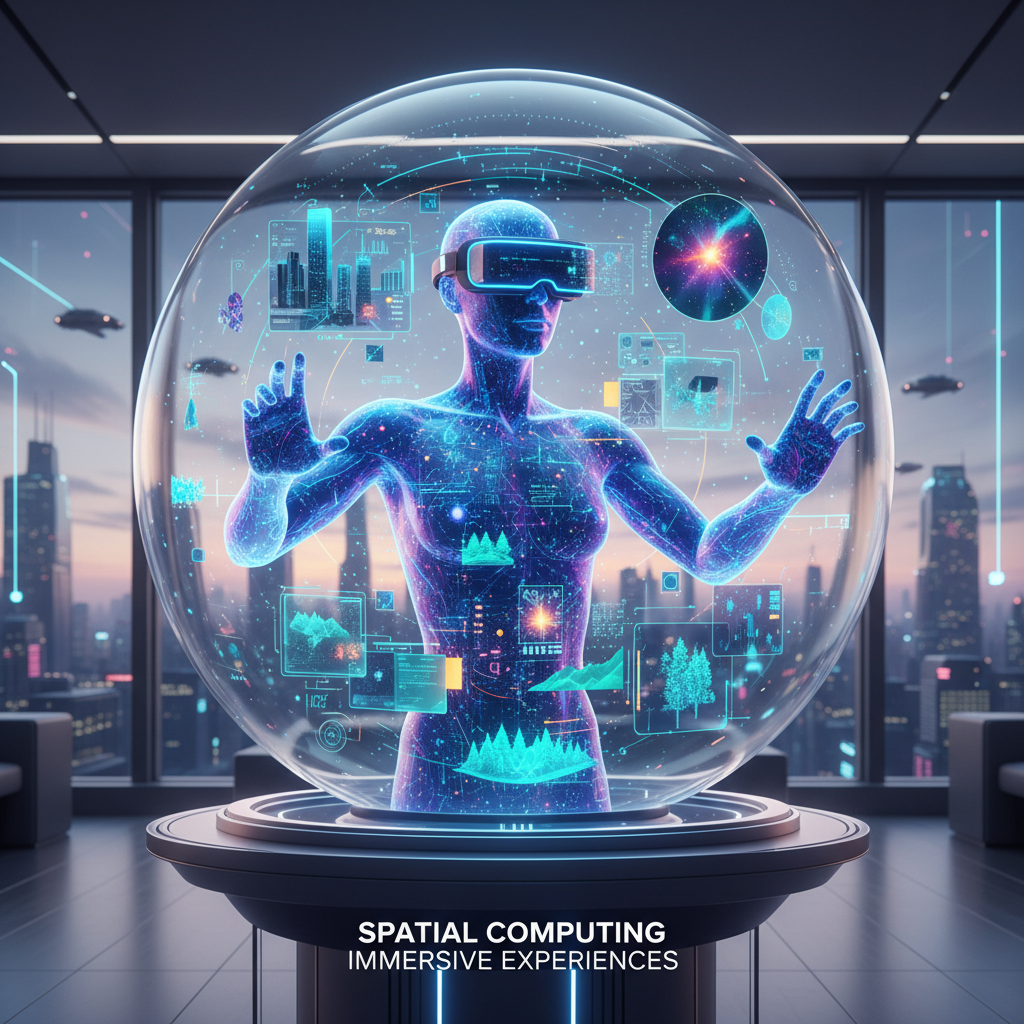
Stepping into Tomorrow: Exploring Spatial Computing and Immersive Experiences
Imagine a world where digital information isn’t confined to a screen, but seamlessly integrates with your physical surroundings. Welcome to the captivating realm of Spatial Computing and Immersive Experiences! It’s not just sci-fi anymore; it’s the next frontier of how we interact with technology and the world around us.
What Exactly is Spatial Computing?
At its core, spatial computing is about giving computers the ability to “understand” and interact with the physical world in three dimensions, much like humans do. It’s more than just augmented reality (AR) or virtual reality (VR); it’s about systems that can sense, map, and process spatial data to create environments where digital content can coexist and interact intelligently with real-world objects and spaces. Think of it as merging the digital twin with your actual environment, allowing for truly contextual and intuitive interactions.
The Power of Immersive Experiences
Spatial computing is the engine, and immersive experiences are the incredible journeys it enables. These experiences transport us beyond our current reality, whether by fully immersing us in a virtual world (VR), overlaying digital information onto our physical world (AR), or blending the two (Mixed Reality or MR). The goal is to create a profound sense of presence and engagement, making digital interactions feel tangible and natural. From exploring distant planets to dissecting a virtual heart, the possibilities for learning, entertainment, and connection are limitless.
Beyond Gaming: Real-World Applications Taking Shape
While gaming often comes to mind first, the impact of spatial computing and immersive experiences stretches far and wide:
- Healthcare: Surgeons can practice complex procedures in a virtual operating room, and therapists can use VR for pain management or phobia treatment.
- Education: Students can take virtual field trips to ancient civilizations or explore the human body in 3D, making learning incredibly engaging and interactive.
- Design & Architecture: Architects can walk through their unbuilt designs with clients, making real-time adjustments, while engineers can prototype and test products virtually.
- Workplace Collaboration: Remote teams can meet in a shared virtual space, interacting with 3D models and data as if they were in the same room.
- Retail & E-commerce: Imagine trying on clothes virtually or placing furniture in your living room before you buy it.
The Road Ahead: Challenges and Opportunities
Like any groundbreaking technology, spatial computing faces challenges. Hardware needs to become lighter, more powerful, and more affordable. Content creation requires new tools and skillsets. Ensuring user comfort, addressing potential privacy concerns, and developing universal standards are also crucial.
However, the opportunities are immense. We’re on the cusp of an era where our digital lives will increasingly integrate with our physical world in intuitive, powerful ways. This isn’t just about new gadgets; it’s about fundamentally changing how we perceive, interact with, and create our realities.
Your Invitation to the Future
Spatial computing and immersive experiences are set to redefine industries, reshape education, and revolutionize how we connect with each other. It’s a field brimming with innovation, pushing the boundaries of what’s possible. So, get ready to step off the screen and into a world where your imagination can truly come to life – the future is spatial, and it’s incredibly exciting!
“`


Leave a Reply