
Once the exclusive domain of governments, space exploration is rapidly being reshaped by private enterprise. We’re witnessing a new era, not just of reaching for the stars, but of building a sustainable future beyond Earth, particularly on our closest celestial neighbor: the Moon.
Why the Moon is the New Frontier
The Moon isn’t just a lifeless rock; it’s a treasure trove of possibilities. Its poles harbor water ice, essential for life support, rocket fuel (hydrogen and oxygen), and even agriculture. Its regolith contains valuable minerals like helium-3, a potential clean energy source. Beyond resources, its proximity to Earth makes it an ideal proving ground for technologies and a strategic staging point for deeper space missions to Mars and beyond. The economic potential is immense, from lunar tourism and research facilities to resource extraction and manufacturing.
The Rise of Commercial Space Players
A new breed of companies is leading this charge. Giants like SpaceX and Blue Origin are developing powerful reusable rockets, drastically reducing the cost of access to space. Landers from companies like Astrobotic and Intuitive Machines are touching down on the lunar surface, delivering scientific payloads and commercial cargo. Startups are emerging to tackle specific aspects, from building lunar rovers and habitats to developing communication networks and power systems for the Moon. This commercial competition is fostering innovation and accelerating progress at an unprecedented pace.
Building a Foundation: Lunar Infrastructure
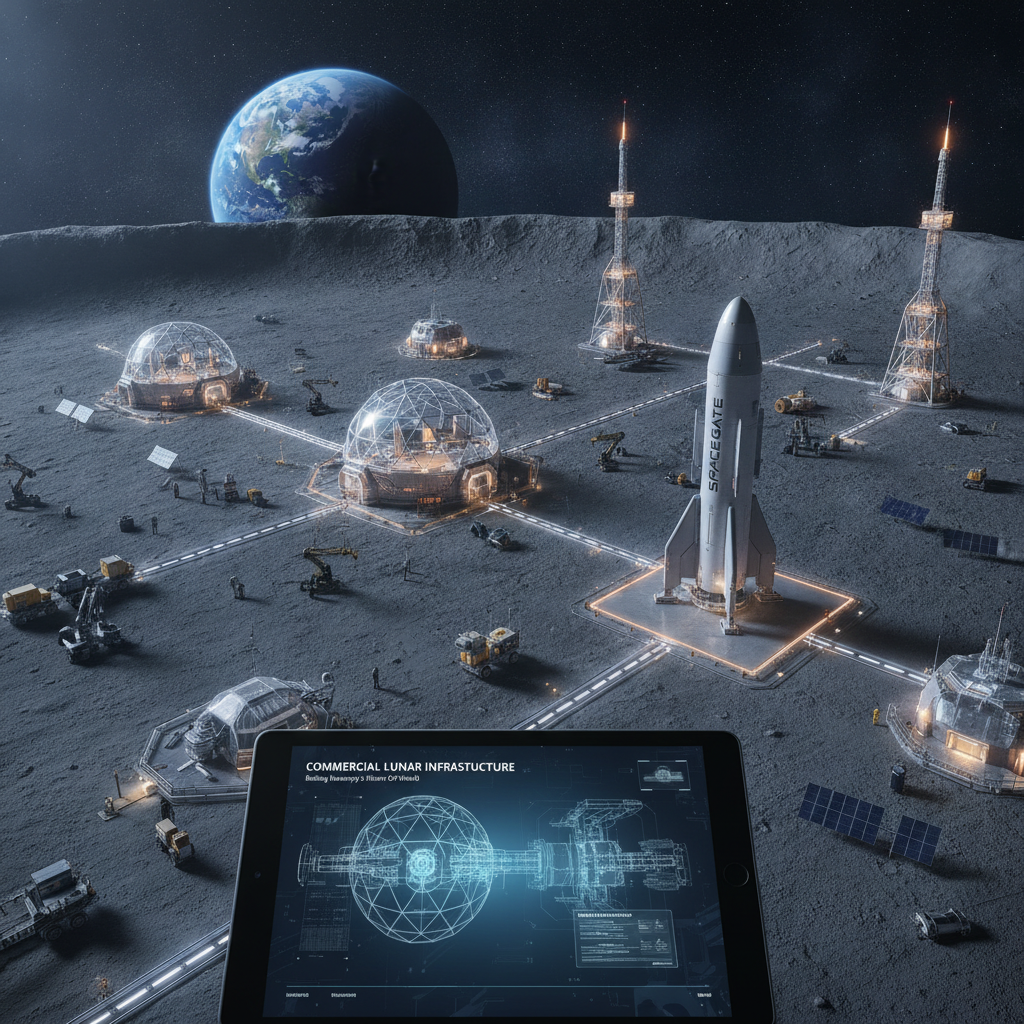
Developing the Moon isn’t just about sending rockets; it’s about establishing a permanent, self-sustaining presence. This requires robust infrastructure. Imagine solar power farms spanning lunar plains, providing continuous energy for habitats and operations. Envision communication satellites orbiting the Moon, creating a seamless network for data transfer. Future lunar bases will require advanced life support systems, dust mitigation solutions, and eventually, in-situ resource utilization (ISRU) facilities that can turn lunar regolith into building materials or extract water ice. Paved landing pads, transportation networks for rovers, and even early forms of lunar manufacturing are all part of this ambitious vision.
Challenges and the Path Forward
Of course, the journey is fraught with challenges. The harsh lunar environment – extreme temperatures, radiation, and abrasive dust – demands resilient technology. High development costs, complex international regulations, and the need for groundbreaking technological innovation are significant hurdles. However, the opportunities far outweigh these difficulties. This commercial push is not just about profit; it’s about expanding humanity’s reach, fostering new industries, creating jobs, and unlocking scientific discoveries that could benefit all of Earth. International collaboration, public-private partnerships, and continued investment in research and development will be key to realizing this incredible future.
Our Lunar Future is Bright
The vision of a bustling lunar economy, with permanent bases, research outposts, and even tourist destinations, is no longer science fiction. Commercial space exploration is transforming this dream into a tangible reality, laying the groundwork for humanity’s sustained presence on the Moon. We are on the cusp of an era where our nearest celestial body becomes a hub of innovation, industry, and discovery, propelled by the entrepreneurial spirit.
“`



Leave a Reply