
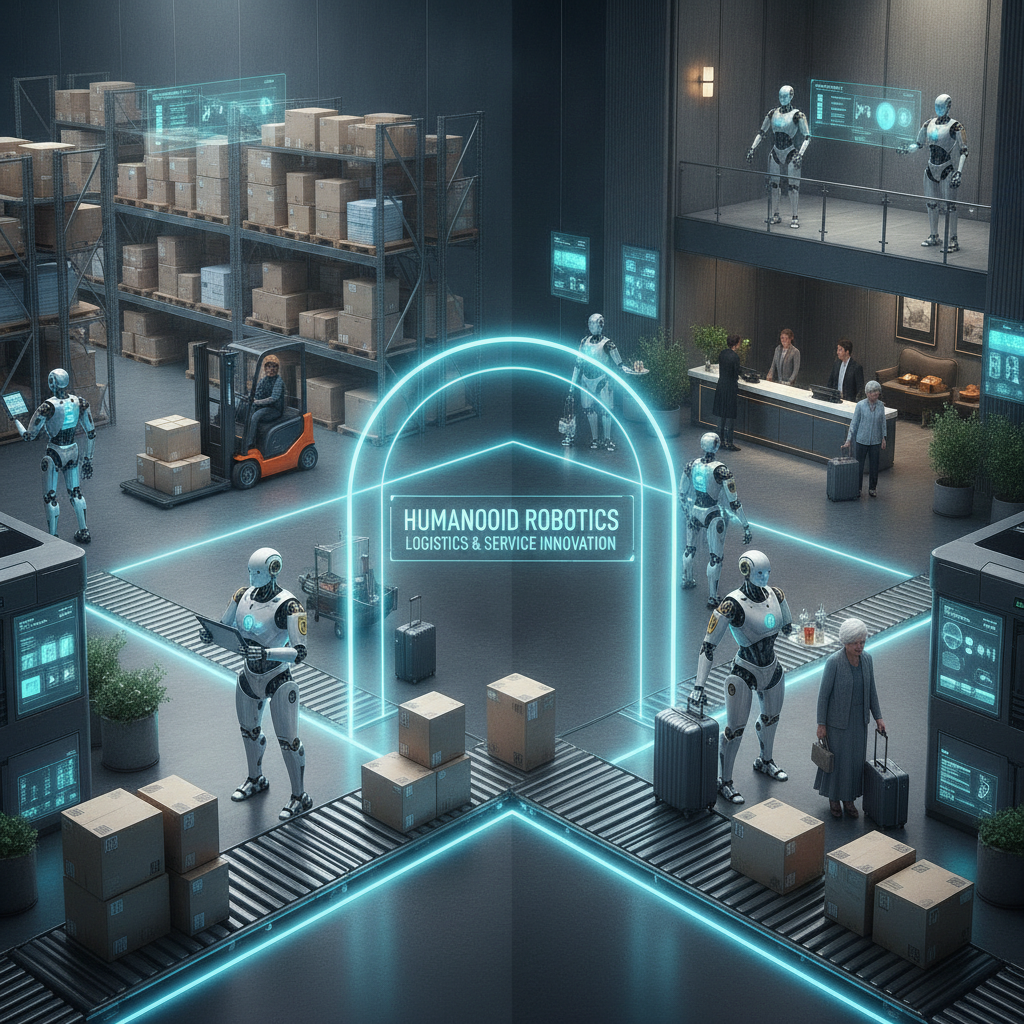
Humanoid Robots: Revolutionizing Logistics & Service
Imagine a future where robots don’t just move boxes in a sterile factory, but walk alongside us, navigate complex environments, and even assist customers with a friendly demeanor. This isn’t science fiction anymore! Humanoid robotics, once confined to labs and movies, are rapidly emerging as a transformative force, particularly in the logistics and service industries. Their unique ability to operate in environments designed for humans makes them incredibly versatile.
The Rise of Humanoids in Logistics
The logistics sector faces persistent challenges: labor shortages, the demand for faster fulfillment, and the need to handle a vast array of items efficiently. Traditional industrial robots are excellent for structured, repetitive tasks but often struggle with variability and human-centric spaces. Enter humanoids like Agility Robotics’ Digit, designed to work in human environments.
These bipedal marvels can navigate stairs, open doors, and pick up irregularly shaped packages using advanced grippers. They can work safely alongside human colleagues, augmenting capacity during peak seasons, performing repetitive tasks that lead to human fatigue, or handling hazardous materials. Ultimately, they boost efficiency and safety in warehouses and distribution centers by adapting to existing infrastructure.
Transforming the Service Sector
Beyond warehouses, humanoid robots are poised to make a significant impact on service industries, from retail and hospitality to healthcare and elder care. Their human-like form factor allows for more natural interaction and integration into existing human-centric workflows, enhancing rather than disrupting operations.
In retail, imagine humanoids stocking shelves, assisting customers with finding products, or even managing inventory. In hospitality, they could deliver room service, carry luggage, or provide multilingual concierge services, freeing up human staff for more complex guest interactions. For healthcare, humanoids could assist nurses with mundane tasks, deliver medication, or even provide companionship and basic mobility assistance to patients, easing the burden on human staff and improving patient care.
Challenges and the Collaborative Future
While the potential is immense, the widespread adoption of humanoid robots isn’t without its challenges. High costs, the complexity of integrating advanced AI for nuanced decision-making, and public perception are all significant hurdles. Ethical considerations around job displacement and ensuring seamless human-robot interaction also need careful navigation.
However, the opportunities far outweigh the obstacles. As technology advances and costs decrease, humanoids will become more accessible. Their role is not to replace humans, but to collaborate with them, taking on the “dull, dirty, and dangerous” tasks, freeing up human workers for more creative, strategic, and empathetic roles. This human-robot synergy promises a future of enhanced productivity, safety, and service quality across industries.
Humanoid robotics is no longer a futuristic dream but a tangible reality rapidly shaping our industrial landscape. By bridging the gap between automated efficiency and human-centric environments, these robots are set to unlock unprecedented levels of innovation and create a more dynamic, efficient, and safer world for logistics and service. The era of the humanoid colleague is just beginning!



Leave a Reply