
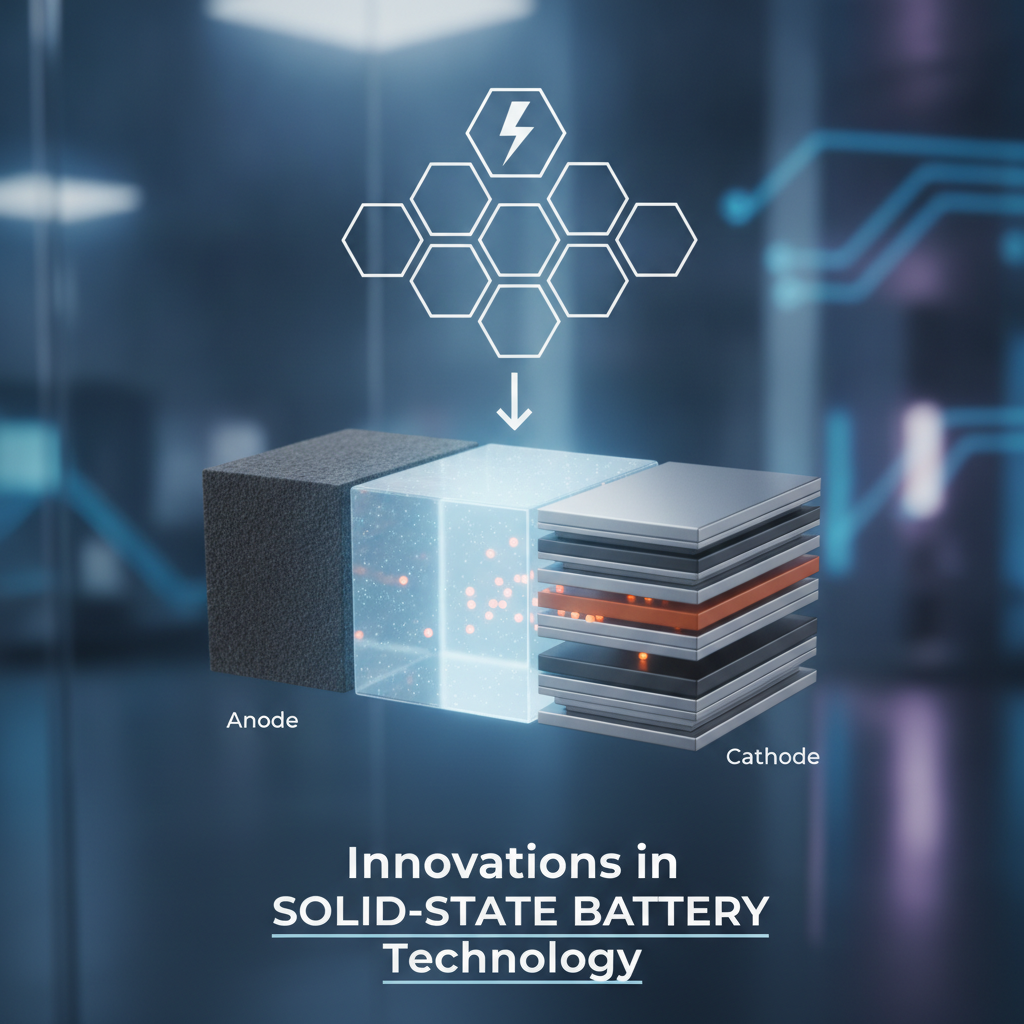
Solid-State Batteries: Powering Tomorrow’s Tech
We’re living in an electric age, and the quest for better, safer, and more efficient power sources is relentless. Enter solid-state batteries – a revolutionary technology that promises to redefine energy storage as we know it. From electric vehicles to portable electronics, these next-generation power packs are at the forefront of innovation, poised to usher in a new era of performance and safety.
Why Solid-State Batteries Matter So Much
For decades, lithium-ion batteries have been the workhorse of our rechargeable world. However, they come with inherent limitations, primarily due to their flammable liquid electrolytes. This liquid component can pose safety risks (think thermal runaway) and restricts how much energy can be packed into a given space. Solid-state batteries, by replacing this liquid with a stable, solid material, fundamentally transform the game, offering unprecedented improvements in safety, energy density, and charging speeds.
Breakthroughs in Solid Electrolyte Materials
The “solid” in solid-state batteries refers to the electrolyte, which is now a non-flammable material. Recent advancements in materials science have been nothing short of astonishing. Researchers are exploring various promising solid electrolytes, including solid polymers, sulfites, and ceramic oxides.
These new materials are not only incredibly stable and non-flammable but many can also conduct ions more efficiently than their liquid predecessors. This leads to a significantly reduced risk of thermal runaway and allows for wider operational temperature ranges. For example, garnet-type solid electrolytes, such as Lithium Lanthanum Zirconium Oxide (LLZO), are showing exceptional ionic conductivity and chemical stability, making them prime candidates for commercial applications. The ongoing fine-tuning of their composition aims to optimize performance and reduce manufacturing costs.
Innovations in Anodes and Cathodes
It’s not just the electrolyte seeing major upgrades; electrodes are also undergoing a transformation. On the anode side, the “holy grail” is often a pure lithium metal anode. This offers a significantly higher energy density compared to traditional graphite anodes. The beauty of solid electrolytes is their ability to provide the necessary stability to prevent dendrite formation – a critical safety and performance issue with lithium metal anodes in liquid electrolytes.
For cathodes, the focus is on developing materials that can handle higher voltages and offer greater capacity. Nickel-rich NMC (lithium nickel manganese cobalt oxide) and LFP (lithium iron phosphate) are being tailored for optimal performance within solid-state interfaces. The interface between the solid electrolyte and electrode is crucial for efficient ion transfer, and engineers are employing advanced manufacturing techniques, including nanoscale coatings, to ensure seamless operation.
The Road to Commercialization and Beyond
While the promise of solid-state batteries is immense, challenges remain, primarily concerning large-scale manufacturing, ensuring robust interfaces, and reducing overall costs. However, the momentum is undeniable. Major automotive companies, tech giants, and startups worldwide are pouring resources into R&D, with impressive prototypes already demonstrating superior performance in everything from small wearables to electric vehicle test beds.
The journey of solid-state battery technology is a thrilling testament to human ingenuity and perseverance. With continuous breakthroughs in materials science and engineering, these next-generation batteries are poised to fundamentally redefine our relationship with energy storage, promising a future that is safer, cleaner, and more powerfully connected. The future of power is solid, and it’s rapidly approaching!
“`



Leave a Reply