
Hello Quantum Enthusiasts!
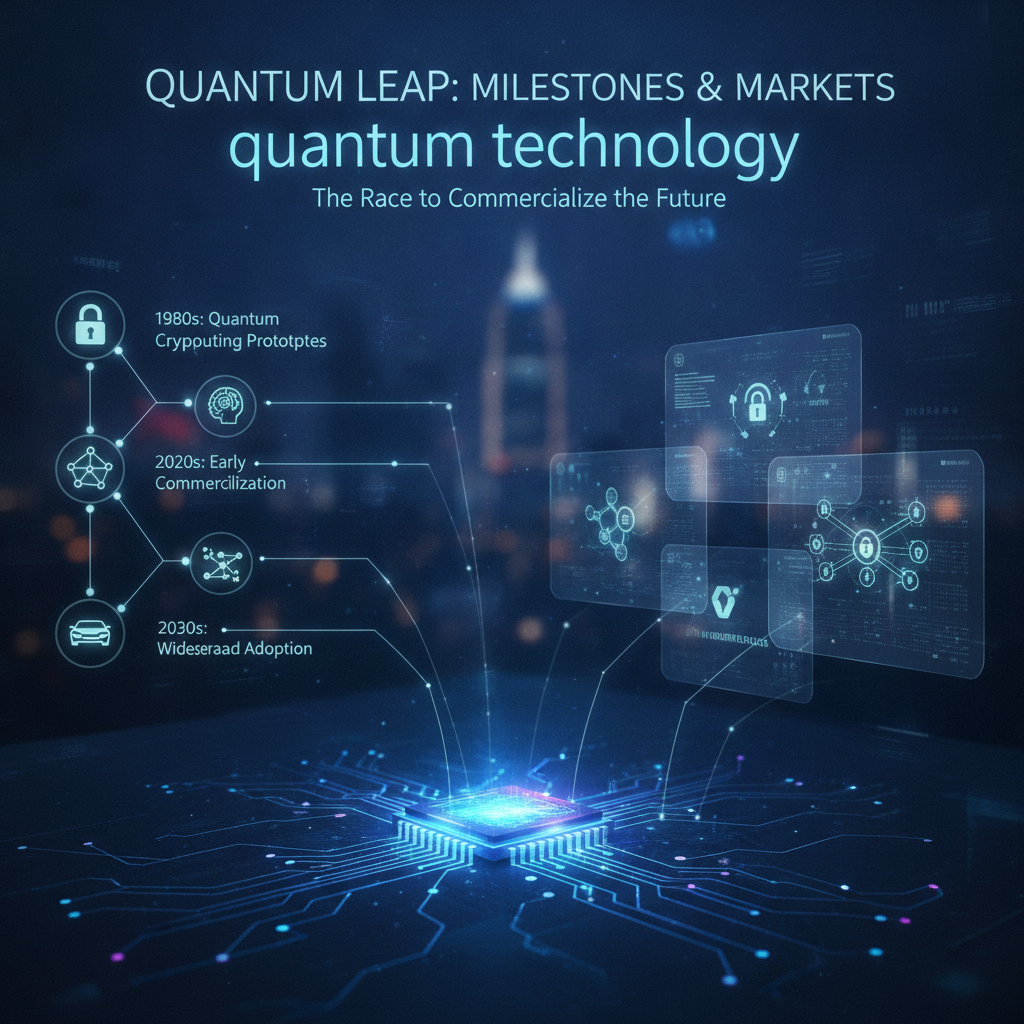
Quantum technology, once the stuff of science fiction, is rapidly becoming a tangible reality. From groundbreaking scientific discoveries to bustling commercial ventures, the quantum realm is undergoing a dramatic transformation. This post will delve into the remarkable milestones achieved and explore the exciting efforts underway to bring these revolutionary technologies from the lab to the market.
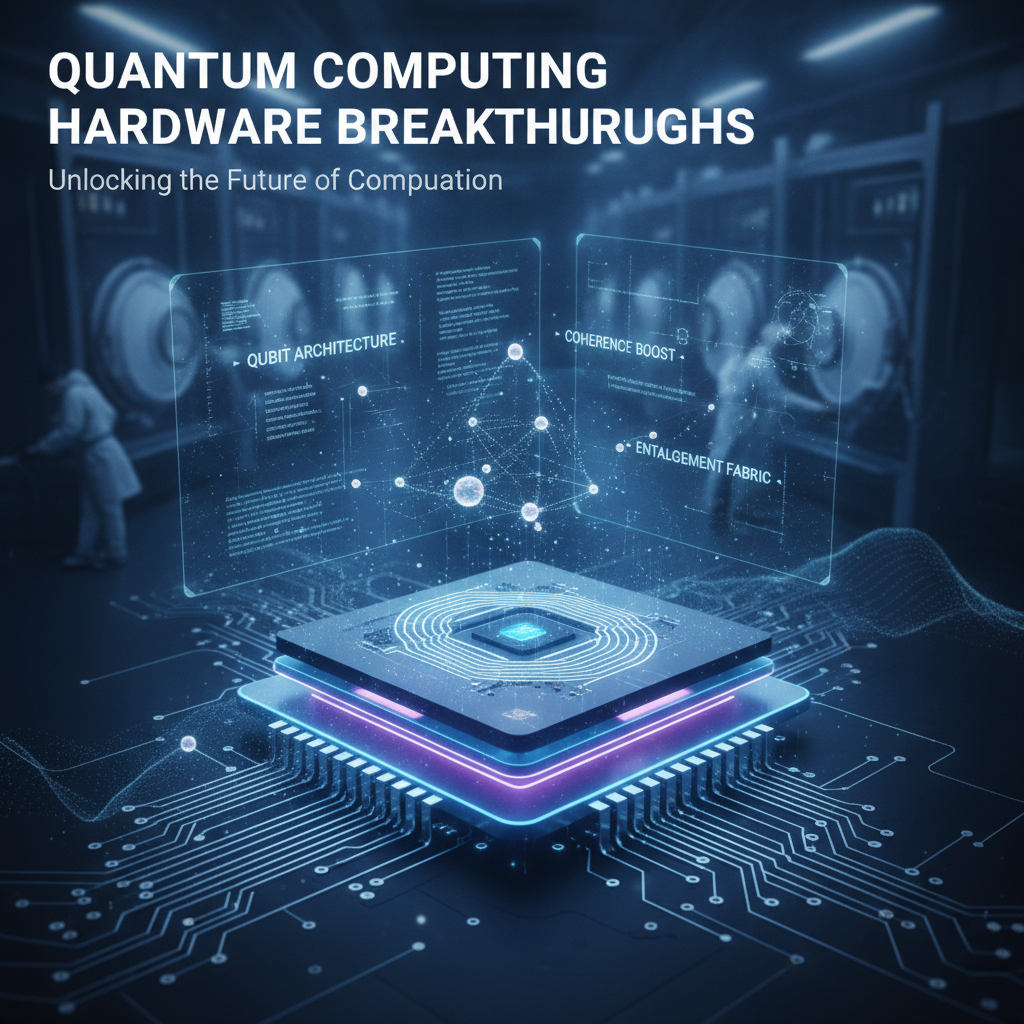
The Quantum Leap: Key Milestones in Computing
The journey of quantum computing began with theoretical concepts, famously by Richard Feynman in the 1980s. However, significant experimental breakthroughs have truly propelled it forward:
- Qubit Development: The fundamental building block, the quantum bit (qubit), has seen incredible advancements. Researchers have successfully created and manipulated qubits using various technologies, including superconducting circuits (IBM, Google), trapped ions (IonQ, Quantinuum), photonic systems, and even topological qubits.
- “Quantum Supremacy” Demonstrations: A pivotal moment occurred in 2019 when Google’s Sycamore processor performed a computation in minutes that would have taken the fastest classical supercomputer thousands of years. While debated, this milestone undeniably showcased the potential of quantum computers for specific tasks. China’s USTC also demonstrated similar feats with photon-based systems.
- Improved Coherence and Error Correction: A major challenge is maintaining qubit coherence (their quantum state) and correcting errors. Significant progress is being made in developing more stable qubits and implementing sophisticated error correction techniques, bringing us closer to fault-tolerant quantum computers.
Beyond Computing: Milestones in Quantum Sensing & Communication
Quantum technology isn’t just about computing. Other fields are also witnessing incredible advancements:
- Quantum Sensors: These sensors leverage quantum properties to achieve unprecedented precision. Milestones include highly accurate quantum gravimeters for geological surveys, ultra-sensitive magnetometers for medical imaging (e.g., MEG), and atomic clocks with incredible stability, vital for navigation and fundamental physics research.
- Quantum Communication (QKD): Quantum Key Distribution (QKD) offers theoretically unbreakable encryption based on the laws of quantum mechanics. China has successfully launched the Micius satellite, demonstrating satellite-to-ground QKD over vast distances, marking a significant step towards a quantum internet.
Commercialization Takes Center Stage: From Research to Revenue
The transition from academic curiosity to commercial viability is now in full swing. Major players and innovative startups are investing heavily:
- Tech Giants Leading the Charge: Companies like IBM, Google, Microsoft, and Amazon are not only pushing the boundaries of research but also building quantum computing platforms (e.g., IBM Quantum Experience, Amazon Braket) accessible via the cloud. This allows businesses and researchers to experiment with quantum hardware without owning it.
- Emerging Startups & Specialized Hardware: A vibrant ecosystem of startups like Rigetti, IonQ, Quantinuum, D-Wave, and PsiQuantum are developing proprietary quantum hardware, software, and specific applications. They’re focusing on diverse approaches to qubit design and quantum architectures.
- Government & Industry Partnerships: Governments worldwide (e.g., US National Quantum Initiative, EU Quantum Flagship) are pouring billions into quantum research and development, often fostering public-private partnerships to accelerate commercialization and build a skilled quantum workforce.
- Early Adopter Industries: Industries such as finance (portfolio optimization, fraud detection), pharmaceuticals (drug discovery, material science), and logistics (supply chain optimization) are actively exploring quantum algorithms for problems currently intractable for classical computers.
The Road Ahead: Challenges and Bright Prospects
While the milestones are impressive, the quantum journey is still in its early stages. Challenges include scaling up qubit numbers, achieving robust error correction, and developing user-friendly software and algorithms. However, the commercialization efforts indicate a strong belief in quantum technology’s future impact.
We’re living through an exciting era where the once-abstract world of quantum mechanics is being harnessed for practical applications. The synergy between scientific discovery and commercial innovation promises a future where quantum technology could revolutionize countless aspects of our lives. Stay tuned!
“`


Leave a Reply