
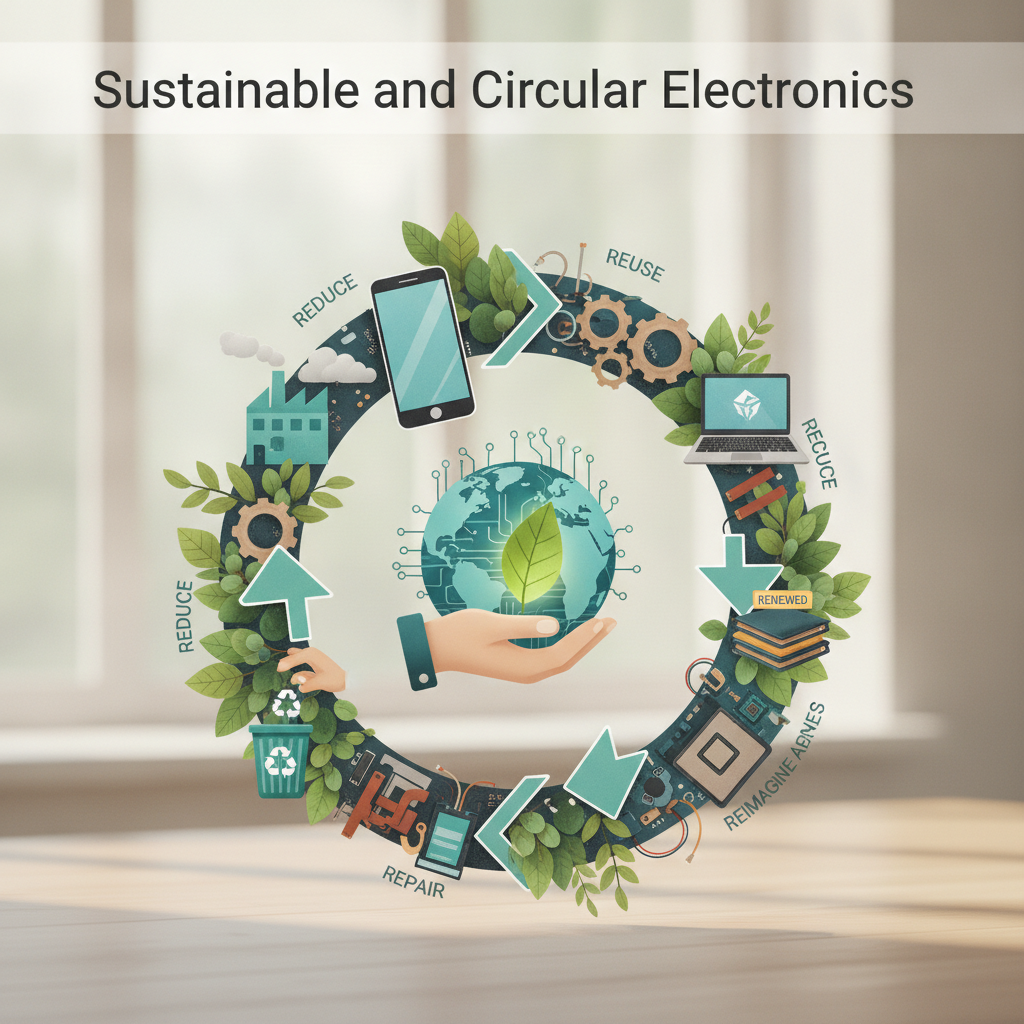
Tech for Tomorrow: Embracing Circular Electronics
Have you ever thought about the journey of your smartphone or laptop long after you’ve upgraded? In our rapidly evolving digital world, electronics are indispensable. Yet, their production and disposal have a significant environmental footprint. It’s time to shift our perspective from a linear “take-make-dispose” model to something more sustainable: circular electronics.
The Hidden Cost of Our Gadgets: A Linear Problem
Traditionally, the electronics industry operates on a linear model. We extract raw materials, manufacture devices, use them for a relatively short period, and then dispose of them. This approach leads to colossal amounts of electronic waste (e-waste) – the fastest-growing waste stream globally. E-waste often contains hazardous substances like lead, mercury, and cadmium, polluting our soil and water when not properly managed. Beyond pollution, it also means constantly mining finite resources, contributing to habitat destruction and significant energy consumption.
What Exactly are “Circular Electronics”?
Imagine a world where your device isn’t just used and then thrown away, but designed to be repaired, reused, and ultimately, its components recycled to create new products. That’s the essence of circular electronics! It’s an approach that keeps resources in use for as long as possible, extracts the maximum value from them while in use, then recovers and regenerates products and materials at the end of each service life.
Key principles include:
- Design for Longevity: Making products durable, modular, and upgradeable.
- Repairability: Ensuring easy access to spare parts, manuals, and repair services.
- Reuse & Refurbishment: Giving products a second, third, or even fourth life through resale or donation.
- High-Quality Recycling: Efficiently recovering valuable materials and components for new production, minimizing waste.
Your Role in Closing the Loop
Building a truly circular electronics ecosystem requires collective effort from all stakeholders.
As a Consumer:
You have significant power! When purchasing, look for brands committed to sustainability, repairability, and responsible sourcing. Consider buying refurbished electronics – they often offer great value, extend product lifespans, and reduce demand for new production. Before discarding, always explore repair options, donate working devices, or ensure they are recycled through certified, responsible programs.
As an Industry:
Manufacturers are crucial players. This means embracing eco-design principles from the outset, using recycled and renewable materials, offering comprehensive take-back schemes, providing accessible repair services, and innovating for easy disassembly and high-quality material recovery.
As a Society:
Policymakers can create enabling environments through legislation that supports the “right to repair,” incentivizes circular business models, and establishes robust e-waste collection and processing infrastructure. Education and awareness campaigns also play a vital role.
The Future is Bright, and Circular!
Transitioning to sustainable and circular electronics isn’t just about reducing waste; it’s about building a more resilient economy, fostering innovation, and protecting our planet for future generations. By working together, we can ensure that the technology that enriches our lives today doesn’t deplete our world tomorrow. Let’s make every gadget count, not just once, but multiple times!



Leave a Reply