
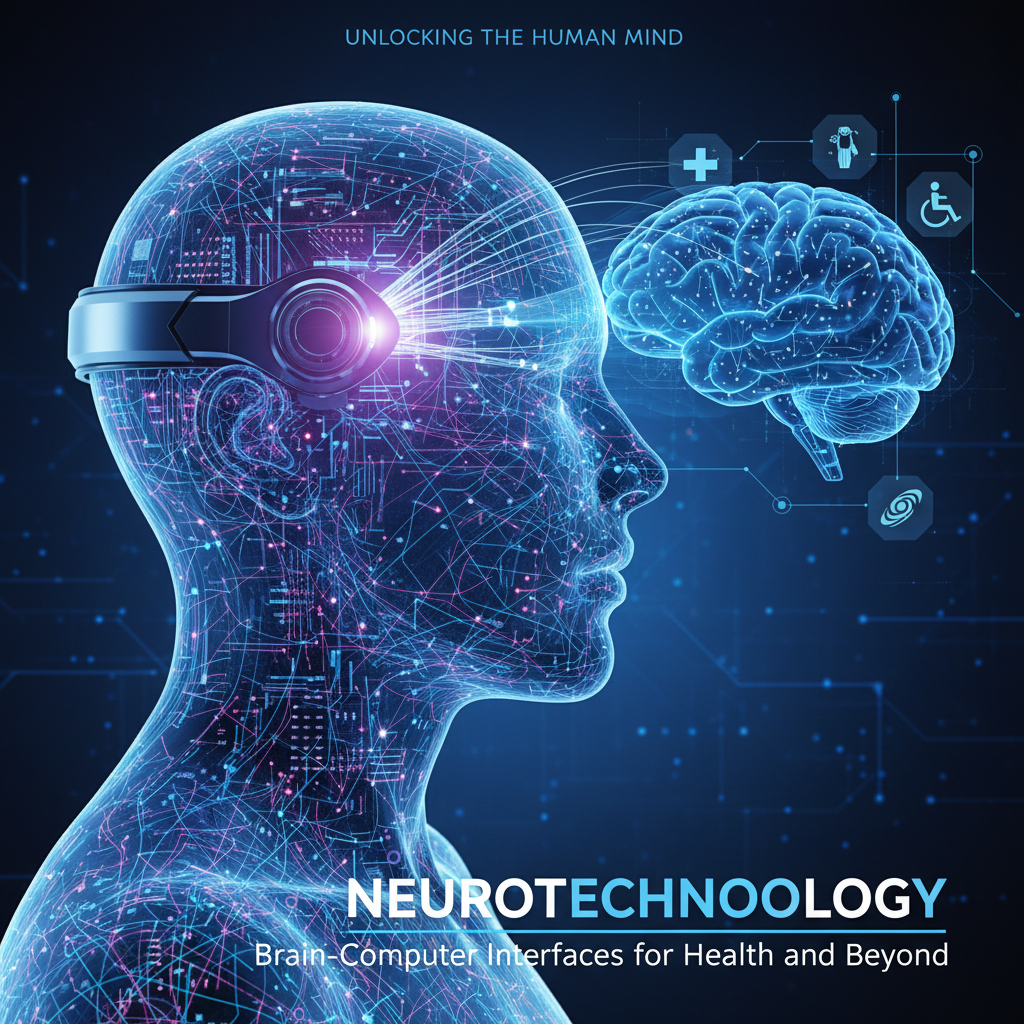
Ever wondered about the incredible potential hidden within our own minds? The human brain is the most complex known object in the universe, and we’re just beginning to tap into its full power. This is where Neurotechnology and Brain-Computer Interfaces (BCIs) step in – a fascinating field bridging the gap between our thoughts and the digital world.
From restoring lost abilities to opening entirely new frontiers of human experience, BCIs are not just science fiction anymore; they are rapidly becoming a reality. Let’s dive into how these groundbreaking technologies are transforming lives, both today and in the future.
What Exactly Are BCIs?
At its core, a Brain-Computer Interface (BCI) is a direct communication pathway between an enhanced or wired brain and an external device. Simply put, BCIs allow us to control computers, robotic limbs, or other devices using only our thoughts. Think about it: no need for a mouse, keyboard, or even voice commands – just pure brainpower!
While the concept sounds futuristic, the basic idea involves detecting specific electrical signals generated by our brains (often via electrodes placed on the scalp or, in some cases, implanted within the brain), interpreting those signals, and translating them into commands that external technology can understand. It’s a truly revolutionary way to interact with the world around us.
Revolutionizing Healthcare: The Medical Marvels of BCIs
The most profound and immediate impact of BCIs is seen in the medical field. For individuals facing severe disabilities, BCIs offer a beacon of hope, restoring functions that were once thought permanently lost.
- Restoring Mobility: For people with paralysis resulting from spinal cord injuries or neurological conditions, BCIs are enabling them to control prosthetic limbs or even external robotic exoskeletons with their thoughts, giving them a new sense of independence and movement.
- Facilitating Communication: Patients with “locked-in syndrome” or severe ALS, who cannot speak or move, can now communicate by using BCIs to select letters on a screen or convey basic needs and thoughts, giving them back their voice.
- Treating Neurological Disorders: Beyond physical control, neurotechnology is showing promise in managing conditions like epilepsy, Parkinson’s disease, and even severe depression through targeted brain stimulation or neurofeedback mechanisms.
- Sensory Restoration: While still in early stages, research aims to use BCIs to restore sight for the blind or hearing for the deaf, pushing the boundaries of what’s possible for human sensory experience.
Beyond the Clinic: Expanding Horizons
While health applications are undeniably transformative, the potential of neurotechnology and BCIs extends far beyond medical treatment. Imagine a world where your thoughts can interface directly with everyday technology:
- Enhanced Gaming & Entertainment: Imagine controlling video game characters or virtual reality environments with your mind, creating an immersive experience like never before.
- Augmented Productivity: Direct thought control of computers, smart home devices, and even industrial machinery could drastically increase efficiency and create new forms of human-computer interaction.
- Cognitive Enhancement: Though more speculative and ethically complex, future BCIs might offer ways to augment memory, improve focus, or even facilitate faster learning.
- Artistic Expression: New forms of art could emerge as creators translate their pure thoughts directly into digital masterpieces or musical compositions.
Navigating the Future: Challenges and Ethical Considerations
As with any powerful technology, the advancement of BCIs comes with significant challenges and ethical questions that we must address thoughtfully:
- Privacy and Security: Our thoughts are perhaps the most private aspect of our being. Protecting this “brain data” from misuse, hacking, or unauthorized access is paramount.
- Equity and Accessibility: Will these life-changing technologies be accessible to everyone who needs them, or will they create new divides?
- Identity and Autonomy: How might direct interfaces with our brains affect our sense of self, decision-making, or even our concept of humanity?
- Technical Hurdles: Improving signal resolution, making devices smaller and more durable, and ensuring long-term safety and reliability are ongoing research efforts.
The Road Ahead: A Glimpse into Tomorrow
Neurotechnology and BCIs are still in their infancy, but the progress we’ve witnessed in just the past decade is astonishing. The future promises even more sophisticated, accessible, and integrated systems that will continue to blur the lines between human intention and technological action.
As scientists, ethicists, policymakers, and the public engage in crucial conversations, we are collectively shaping a future where the power of the human mind is not just understood but actively harnessed for the betterment of health and beyond. The journey into our brains is just beginning, and it’s set to be one of the most exciting adventures of our time!
“`


Leave a Reply