
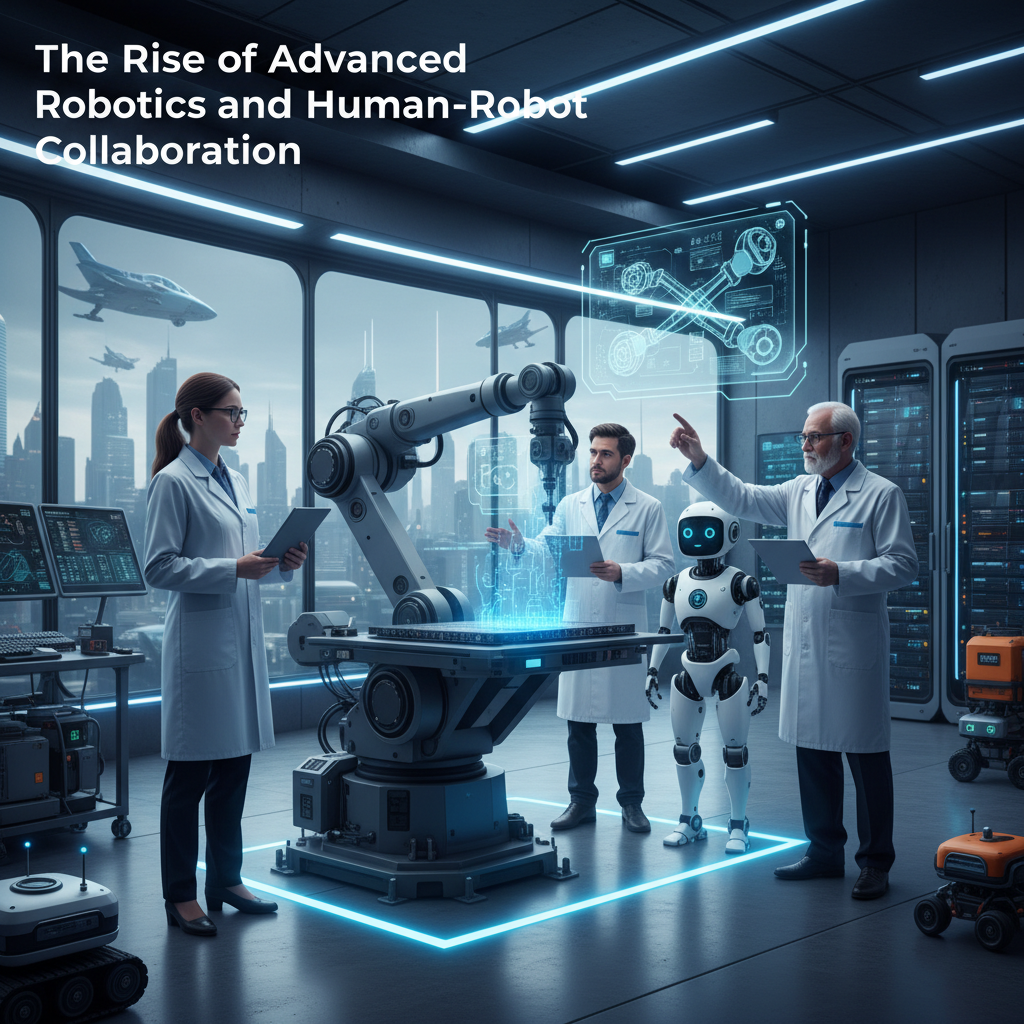
The Future is Now: Humans & Robots Partner Up
Remember the robots from sci-fi movies – either dystopian overlords or helpful but clunky servants? Well, the reality of advanced robotics today is far more nuanced and, frankly, exciting! We’re no longer just talking about automation; we’re witnessing the dawn of true human-robot collaboration, reshaping industries and our daily lives in profound ways.
Beyond the Assembly Line: A New Breed of Bots
For decades, industrial robots have been a staple in manufacturing, performing repetitive, high-precision tasks. But the landscape has evolved dramatically. Modern robots, equipped with advanced sensors, AI, and machine learning, are becoming more agile, adaptable, and aware of their surroundings. Collaborative robots, or ‘cobots,’ are designed specifically to work safely alongside humans, sharing workspaces and tasks.
The Power of Partnership: Why Collaboration Works
The beauty of human-robot collaboration lies in leveraging the unique strengths of both. Robots excel at precision, endurance, repetitive tasks, and handling hazardous environments. Humans, on the other hand, bring creativity, critical thinking, problem-solving skills, adaptability, and emotional intelligence to the table. When combined, this partnership leads to:
- Increased Efficiency: Robots handle the monotonous, humans focus on complex decision-making.
- Enhanced Safety: Robots perform dangerous tasks, protecting human workers.
- Improved Quality: Precision robotics reduce errors, while human oversight ensures excellence.
- Greater Flexibility: Collaborative setups can adapt quickly to changing demands.
Robots in Action: Real-World Collaboration
This isn’t just theory; it’s happening across various sectors:
- Manufacturing: Cobots assist workers with assembly, material handling, and quality inspection, boosting productivity.
- Healthcare: Robotic assistants help surgeons with precision, assist nurses with lifting patients, and deliver medications, freeing up human staff for direct patient care.
- Logistics & Warehousing: Robots sort packages and transport goods, working alongside human operators to streamline supply chains.
- Exploration & Disaster Response: Robots venture into environments too dangerous or inaccessible for humans, gathering vital data and performing crucial tasks.
Navigating the Future: Addressing Concerns and Ethics
It’s natural to have questions and concerns about the rise of robots, especially regarding job displacement. However, the collaborative model often leads to job evolution rather than elimination. New roles emerge for managing, programming, and maintaining robotic systems, and humans are freed up for more engaging and value-added work. Ethical considerations around data privacy, algorithmic bias, and responsible AI development are crucial conversations that continue to shape the industry’s future.
A Collaborative Tomorrow
The journey of advanced robotics and human-robot collaboration is still in its early stages, but the trajectory is clear. As technology continues to advance, we can look forward to even more seamless and intuitive partnerships between humans and machines. This collaboration promises not just to automate tasks, but to augment human capabilities, create new opportunities, and collectively drive innovation towards a more productive, safer, and exciting future for us all.



Leave a Reply