
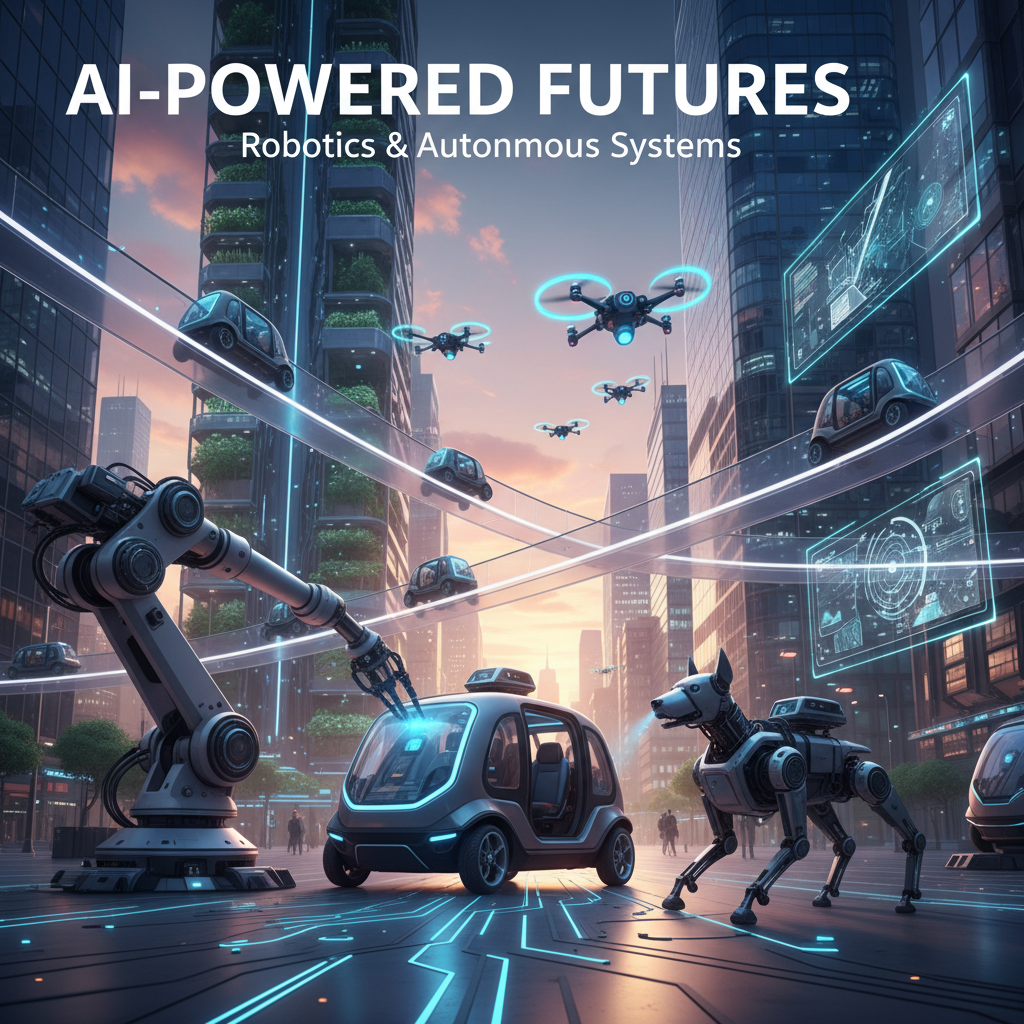
Robots, AI, & Autonomy: Shaping Our Future
Welcome to the era where science fiction increasingly becomes reality! AI-powered robotics and autonomous systems are no longer just concepts from futuristic movies; they are rapidly integrating into our daily lives, transforming industries, and redefining how we interact with technology. It’s an exciting time to explore the incredible advancements and potential these innovations hold.
What are AI-Powered Robotics?
At its core, AI-powered robotics refers to the seamless fusion of artificial intelligence with robotic mechanisms. This means robots are no longer just programmed to perform repetitive tasks; they can learn, adapt, perceive their environment, and make decisions based on complex data. Think of it as giving robots a “brain” powered by machine learning, computer vision, and natural language processing, allowing them to perform tasks with unprecedented flexibility and intelligence.
Understanding Autonomous Systems
Autonomous systems are the next frontier. These are systems, often but not exclusively robotic, that can operate and make decisions independently, without continuous human input. From self-driving cars navigating busy streets to drones delivering packages and intelligent agents managing complex networks, autonomy empowers machines to perceive, plan, and execute actions on their own. This independence is a game-changer, enabling efficiency and capabilities previously unimaginable.
Key Innovations Driving Progress
The rapid evolution of AI-powered robotics and autonomous systems is fueled by several breakthrough technologies. Advances in deep learning allow robots to interpret visual and auditory data with human-like accuracy. Improved sensor technology provides more precise environmental awareness. Edge computing enables real-time decision-making without constant cloud connectivity, crucial for applications like autonomous vehicles. Moreover, breakthroughs in materials science are leading to lighter, stronger, and more agile robotic designs.
Real-World Applications Transforming Industries
The impact of these technologies is already profound and widespread:
Manufacturing: Smart factories utilize collaborative robots (cobots) that work alongside humans, optimizing production lines, enhancing safety, and improving quality control.
Healthcare: AI-powered robots assist in delicate surgeries, automate pharmacy operations, and even help deliver medicines, freeing up medical staff for more critical tasks.
Logistics & Supply Chain: Autonomous guided vehicles (AGVs) and drones revolutionize warehouse management and last-mile delivery, making supply chains faster and more efficient.
Agriculture: Precision agriculture benefits from autonomous tractors and drones that monitor crop health, manage irrigation, and optimize yields, leading to more sustainable farming practices.
Exploration: Autonomous rovers explore distant planets, and underwater drones map ocean floors, operating in environments too hazardous or remote for human presence.
The Future is Now (and Beyond!)
While the present applications are impressive, the future promises even more integrated and sophisticated systems. We can anticipate more personalized healthcare through robotic companions, safer transportation with fully autonomous vehicles, and more sustainable resource management through intelligent environmental monitoring. Of course, this evolution also brings important conversations about ethics, job displacement, and regulatory frameworks, which are crucial to navigate responsibly.
AI-powered robotics and autonomous systems are not just tools; they are partners in shaping a more efficient, innovative, and potentially more equitable future. As we continue to push the boundaries of what’s possible, the journey promises to be nothing short of extraordinary. What aspect are you most excited to see evolve?



Leave a Reply