
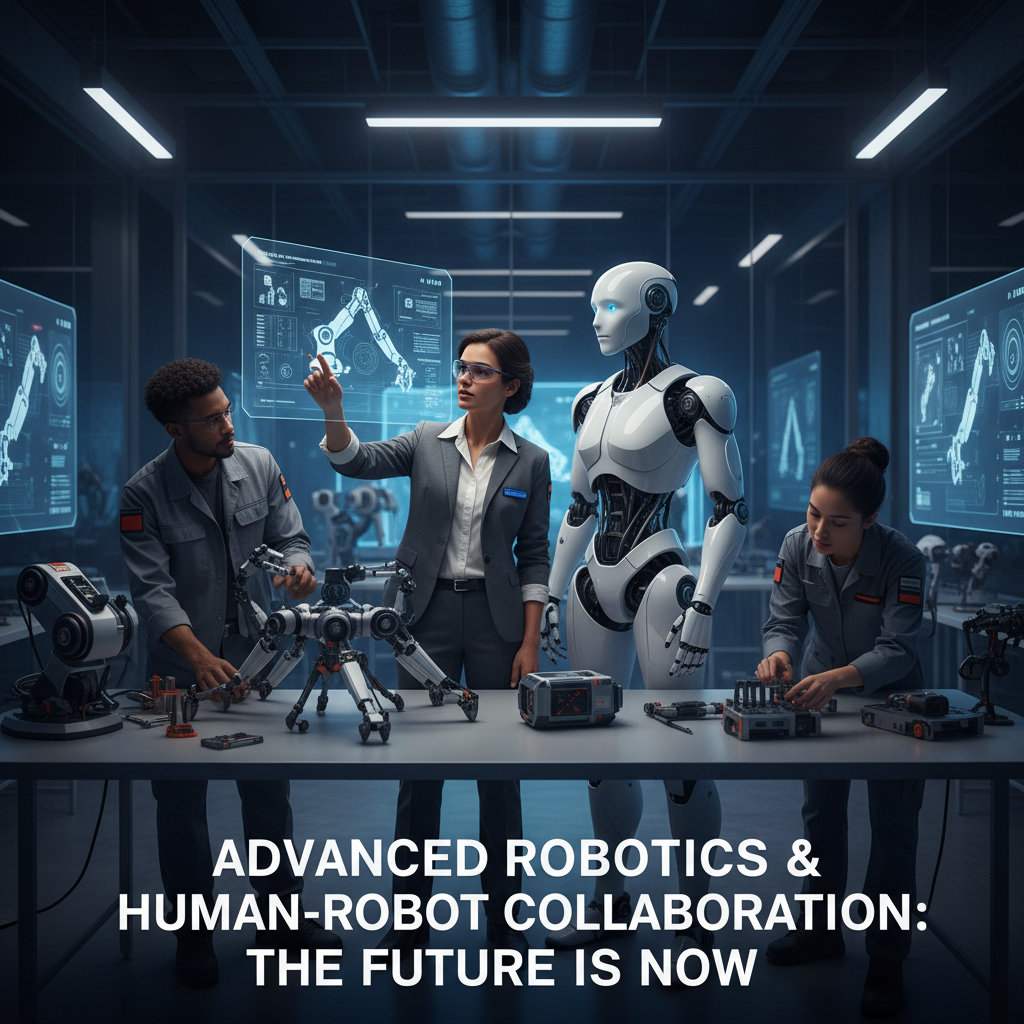
Advanced Robotics: Our New Teammates
The world of robotics is no longer just about clunky factory arms performing repetitive tasks. We’re witnessing a transformative shift, moving from simple automation to sophisticated systems designed to work with us, not just for us. This exciting evolution brings us into the era of advanced robotics and human-robot collaboration (HRC).
What Makes Them “Advanced”?
These aren’t your grandpa’s robots! Today’s advanced robots are equipped with cutting-edge technologies like artificial intelligence (AI), machine learning, advanced sensors, and refined manipulation capabilities. They can perceive their environment, adapt to dynamic changes, and even learn from human interactions. This intelligence allows them to be much more than tools; they can be active, responsive partners in a wide array of settings.
The Power of Human-Robot Collaboration
Why collaborate? Because it harnesses the strengths of both humans and machines! Robots excel in precision, strength, speed, and tireless operation, perfectly suited for repetitive or hazardous tasks. Humans, on the other hand, bring invaluable adaptability, creativity, critical thinking, problem-solving skills, and empathy. When these two forces combine, HRC boosts efficiency, enhances safety, and unlocks possibilities previously unimaginable, pushing the boundaries of what we can achieve.
Where We See HRC in Action
Human-robot collaboration is rapidly moving from concept to reality across various industries:
- Manufacturing: So-called “cobots” (collaborative robots) work seamlessly alongside assembly line workers, handling ergonomic or repetitive tasks while humans focus on complex operations, quality control, or intricate assembly.
- Healthcare: Robotic assistants are aiding surgeons, delivering medications, assisting with patient rehabilitation, and even performing diagnostic scans, freeing up medical staff for direct patient care and critical decision-making.
- Logistics and Warehousing: Robots navigate complex warehouse environments, fetching items and optimizing routes, while humans manage inventory, handle exceptions, and oversee dispatch.
- Exploration and Hazardous Environments: Imagine humans and robots exploring dangerous or inaccessible environments together, sharing real-time data and insights, extending our reach and capabilities without compromising human safety.
Navigating the Challenges
Of course, this revolutionary shift isn’t without its hurdles. Safety is paramount; ensuring robots can reliably sense and react to human presence is a top priority for designers and engineers. Building trust between humans and their robotic counterparts is another crucial factor. We also need to address ethical considerations and the vital importance of reskilling the workforce to adapt to these new collaborative roles rather than fearing displacement.
The Future is Collaborative
The trajectory for advanced robotics is clear: increasingly integrated and intuitive collaboration. We’re moving towards symbiotic relationships where robots anticipate our needs, learn from our actions, and become indispensable members of our teams, both in the workplace and potentially in our daily lives. This partnership promises to redefine work, enhance human capabilities, and foster innovation on an unprecedented scale.
Advanced robotics is ushering in an exciting new chapter for humanity. Embracing human-robot collaboration isn’t just about technological advancement; it’s about creating a more efficient, safer, and innovative future for everyone. What possibilities do you envision as we team up with our new robotic colleagues?
“`



Leave a Reply