
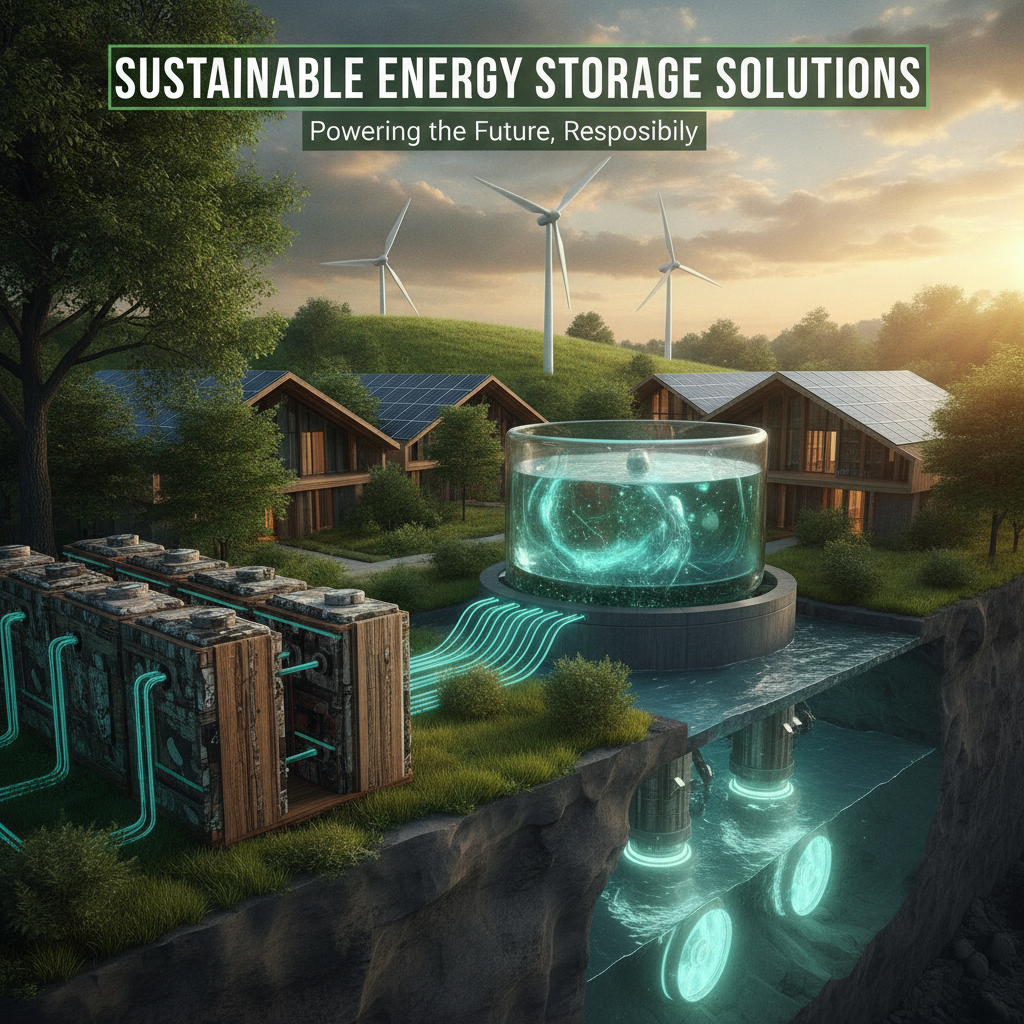
Green Power Storage: Powering a Sustainable Future
The shift towards renewable energy sources like solar and wind is crucial for combating climate change. However, their intermittent nature presents a significant challenge: what happens when the sun isn’t shining or the wind isn’t blowing? This is where sustainable energy storage solutions come into play, acting as the linchpin for a truly reliable and green energy future.
Why Sustainable Storage Matters
Traditional battery technologies, while effective, often come with environmental concerns related to raw material extraction, manufacturing processes, and end-of-life disposal. Sustainable energy storage goes beyond just holding power; it focuses on solutions that are environmentally responsible, resource-efficient, and economically viable over their entire lifecycle. We need systems that don’t just solve one problem by creating another.
Innovative Sustainable Storage Solutions
Fortunately, innovation is booming in this critical sector. Here are a few exciting sustainable energy storage technologies making waves:
Pumped Hydro Storage (PHS)
One of the oldest and most established large-scale storage methods, PHS uses excess renewable electricity to pump water uphill to a reservoir. When power is needed, the water is released, turning turbines to generate electricity. While geographically limited, it’s incredibly efficient and has a long lifespan, making it a cornerstone of grid stability in many regions.
Flow Batteries
Unlike conventional batteries, flow batteries store energy in liquid electrolyte tanks that are pumped through a central cell. This design allows for independent scaling of power and energy capacity, making them ideal for long-duration storage. They often use abundant, non-flammable materials like vanadium or zinc-bromine, and boast impressive lifespans with minimal degradation.
Thermal Energy Storage
This method captures excess energy as heat or cold, storing it for later use. Think of molten salt systems that can store heat at high temperatures for hours or even days, which can then be used to generate steam for electricity or for industrial processes. It’s a highly versatile approach with significant potential for both power generation and industrial applications.
Compressed Air Energy Storage (CAES)
Similar in principle to pumped hydro, CAES stores energy by compressing air into large underground caverns or tanks. When electricity is needed, the compressed air is released through turbines to generate power. This technology offers large-scale storage capacity and a long operational life, leveraging natural geological formations or purpose-built reservoirs.
The Path Forward: Challenges and Opportunities
While the promise of sustainable energy storage is immense, there are still hurdles to overcome. Reducing manufacturing costs, improving energy density, developing robust recycling infrastructure for all components, and ensuring ethical sourcing of materials are paramount. Furthermore, integrating these diverse storage solutions seamlessly into existing power grids requires smart policy, continued R&D investment, and strong public-private partnerships.
Sustainable energy storage is not just a technological challenge; it’s a societal imperative. By embracing and developing these greener solutions, we can unlock the full potential of renewable energy, create more resilient grids, and pave the way for a truly sustainable, carbon-neutral future. Let’s power tomorrow, responsibly.



Leave a Reply