
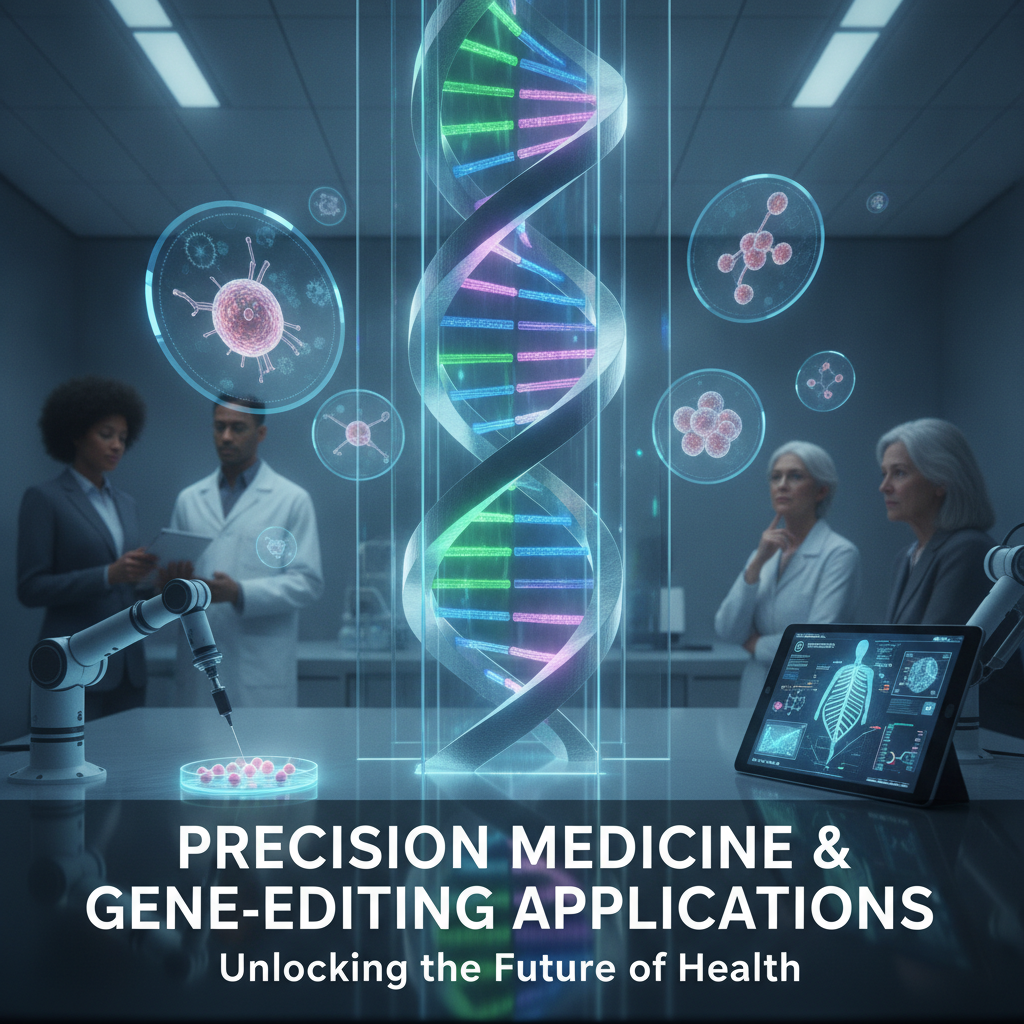
Tailoring Health: Precision Medicine & Gene-Editing
Imagine a world where your healthcare is as unique as your fingerprint. A world where treatments are designed specifically for you, based on your individual genetic makeup, lifestyle, and environment. This isn’t science fiction anymore; it’s the exciting frontier of Precision Medicine, powerfully amplified by breakthrough Gene-Editing applications.
What Exactly is Precision Medicine?
Precision Medicine moves beyond the “one-size-fits-all” approach to healthcare. Instead, it focuses on understanding the individual variability among people to tailor disease prevention and treatment. This means considering everything from your unique genetic code and the proteins your body produces, to your lifestyle choices and environmental exposures. The goal is to deliver the right treatment to the right patient at the right time.
Gene-Editing: The Scalpel of the Future
At the heart of many precision medicine advancements lies gene-editing technology, most notably CRISPR-Cas9. Think of gene-editing as an incredibly precise set of molecular scissors that can cut, add, or alter DNA sequences. This revolutionary tool allows scientists to target specific genes responsible for diseases and either correct them, turn them off, or replace them with healthy versions.
The synergy between precision medicine and gene-editing is profound. While precision medicine identifies the exact genetic anomalies contributing to a patient’s condition, gene-editing offers the means to directly address those anomalies, offering a targeted and potentially curative solution.
Real-World Applications Today
The impact of these fields is already being felt. In cancer treatment, precision medicine allows doctors to profile a tumor’s specific genetic mutations, then prescribe therapies that precisely target those mutations, leading to more effective treatments and fewer side effects. Gene-editing, meanwhile, is being explored in clinical trials to treat genetic disorders such as sickle cell disease, cystic fibrosis, and certain forms of blindness, by directly correcting the underlying genetic defects.
The Promise of Tomorrow
The future potential is truly staggering. We could see a shift from treating symptoms to preventing diseases before they even manifest, by identifying genetic predispositions and correcting them early. Gene-editing could unlock new strategies for regenerative medicine, drug discovery, and even enhance our immune system’s ability to fight off infections and diseases like HIV.
Imagine personalized “genetic vaccines” or therapies that prevent Alzheimer’s disease by fixing relevant genes long before symptoms appear. The possibilities for a healthier, more resilient human future are vast and rapidly expanding.
Navigating the Path Forward: Challenges & Ethics
Of course, such powerful technologies come with significant responsibilities and challenges. Ensuring equitable access to these advanced treatments, addressing potential off-target effects of gene-editing, and navigating complex ethical considerations (such as “designer babies”) are critical discussions that must accompany scientific progress. It’s a journey that requires careful scientific rigor, transparent public discourse, and thoughtful regulatory frameworks.
A New Era of Healthcare
Precision medicine and gene-editing are not just buzzwords; they represent a fundamental shift in how we approach health and disease. By harnessing the power to understand and precisely modify our biology, we are entering a new era of healthcare—one that promises more effective, personalized, and ultimately, healthier lives for everyone. The journey is just beginning, and it’s one filled with immense hope and potential.


Leave a Reply