
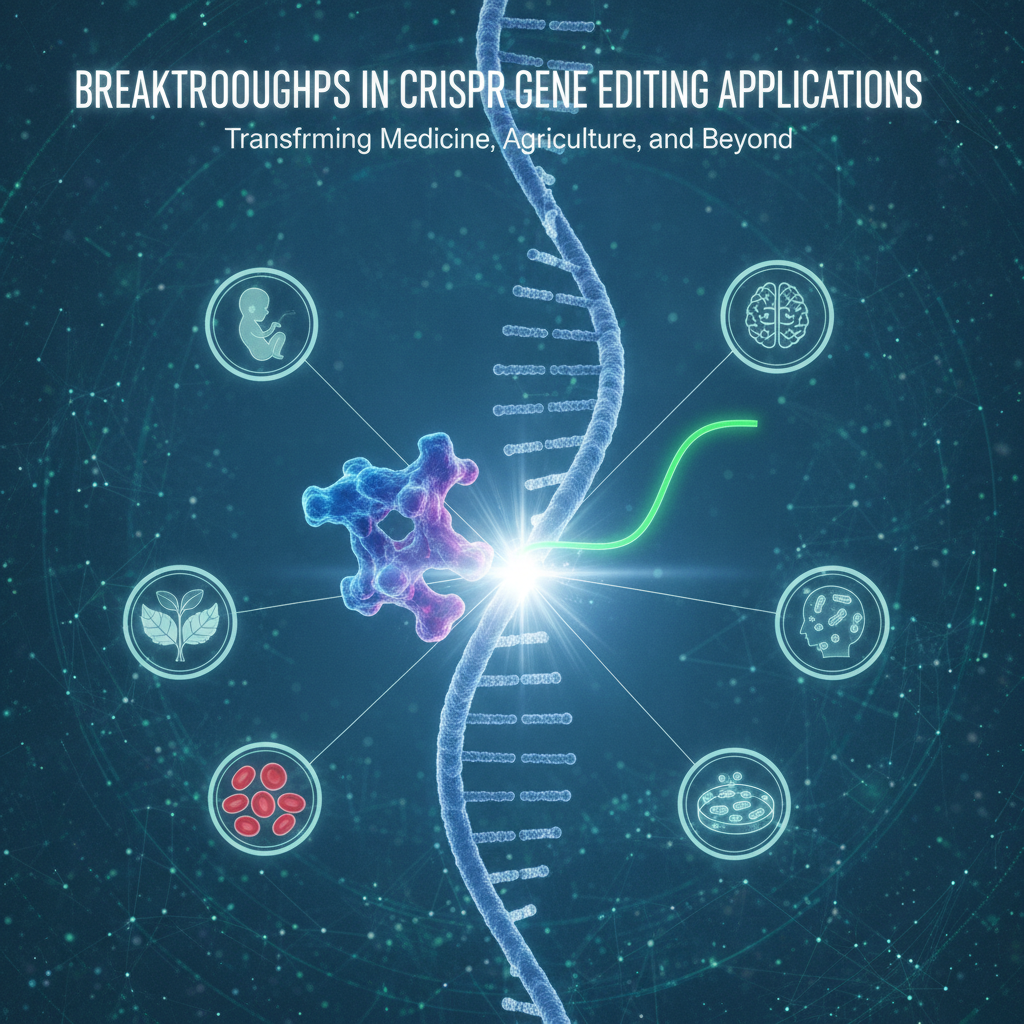
CRISPR’s New Frontiers: Gene Editing’s Latest Triumphs
The world of science is constantly pushing boundaries, and few fields ignite as much excitement and potential as gene editing. At the forefront of this revolution is CRISPR (Clustered Regularly Interspaced Short Palindromic Repeats), a powerful technology often described as a molecular scissor. While CRISPR has been a game-changer for years, recent breakthroughs are propelling its applications into uncharted and incredibly promising territory. Let’s explore some of the most impactful advancements reshaping medicine, agriculture, and beyond.
Revolutionizing Disease Treatment
One of the most profound impacts of CRISPR is its potential to treat previously incurable genetic diseases. We’re seeing incredible progress in clinical trials:
- Sickle Cell Disease & Beta-Thalassemia: In a landmark achievement, CRISPR-based therapies are showing remarkable success in treating these debilitating blood disorders. By editing patients’ own stem cells, doctors are restoring healthy hemoglobin production, offering a potential cure where only symptom management existed before.
- Genetic Blindness: Researchers are actively exploring in-vivo CRISPR delivery to correct mutations causing conditions like Leber Congenital Amaurosis, a severe form of inherited blindness. Early clinical trials are demonstrating safety and promising signs of vision improvement.
- Cancer Immunotherapy: CRISPR is being used to supercharge our immune system’s fight against cancer. By precisely editing T-cells, scientists can create more effective and targeted immunotherapies, enhancing their ability to recognize and destroy cancer cells.
Beyond Human Health: Agriculture and Diagnostics
CRISPR’s influence isn’t limited to human medicine; it’s also making waves in other critical sectors:
- Sustainable Agriculture: In the agricultural realm, CRISPR is enabling the development of crops that are more resilient to pests, diseases, and extreme weather conditions. Imagine apples that don’t brown, wheat resistant to devastating fungi, or nutrient-enhanced vegetables. This promises greater food security and more sustainable farming practices.
- Rapid Diagnostics: Newer CRISPR systems are being repurposed into highly sensitive and specific diagnostic tools. These platforms can quickly detect viruses (including SARS-CoV-2), bacteria, and even genetic markers for cancer from a simple sample, offering faster and more accessible testing, especially in resource-limited settings.
The Future and Ethical Considerations
As CRISPR technology advances, so does the conversation around its ethical implications. Scientists and ethicists are working together to ensure that these powerful tools are used responsibly and equitably. The development of newer, more precise editing tools like Prime Editing and Base Editing further refines CRISPR’s capabilities, allowing for even more targeted changes with fewer off-target effects.
The breakthroughs in CRISPR gene editing applications paint a vivid picture of a future where genetic diseases are curable, food production is more robust, and diagnostics are faster and more accessible. It’s an exciting era of scientific discovery, and we’re only just beginning to unlock the full potential of this revolutionary technology.
“`


Leave a Reply