
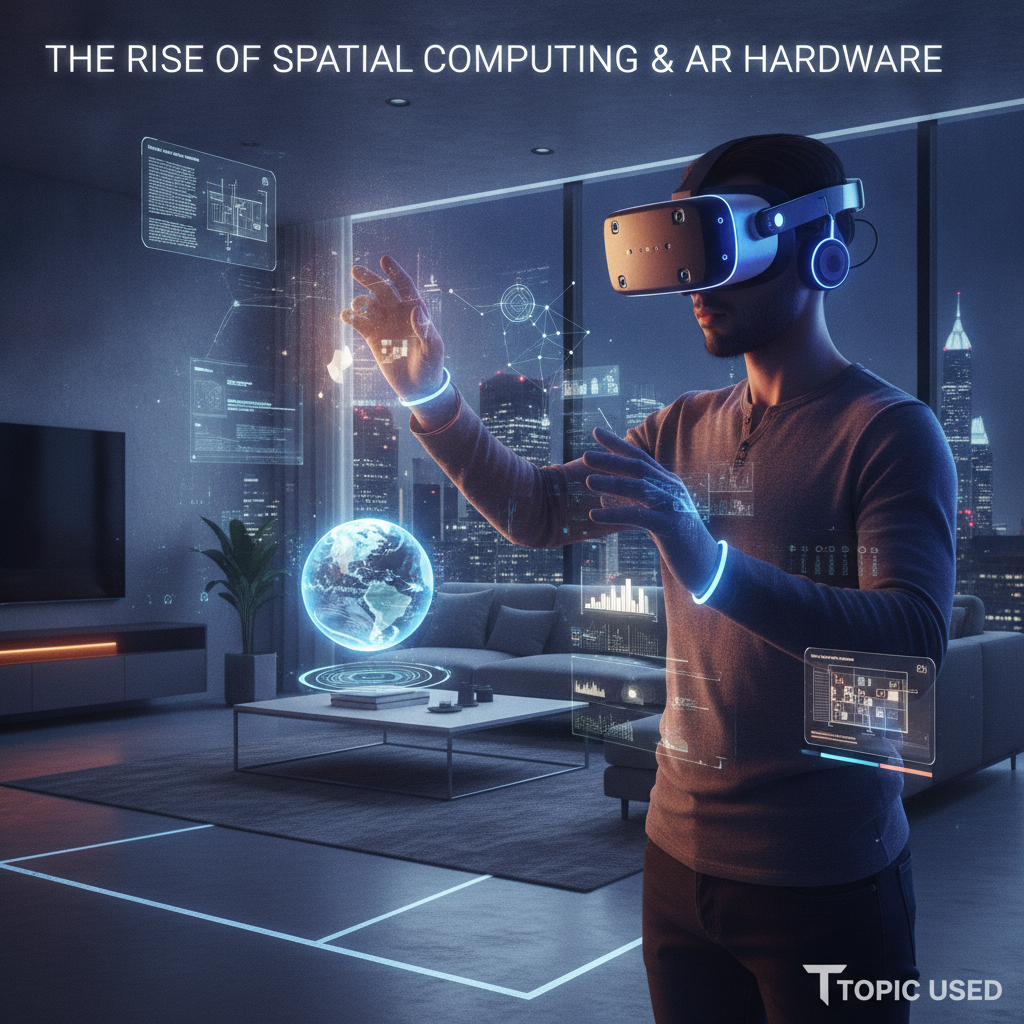
Spatial Computing & AR: Next Tech Frontier!
The world of technology is on the cusp of its next major evolution, moving beyond flat screens into a three-dimensional, interactive digital universe. We’re witnessing the rapid rise of spatial computing, powered by increasingly sophisticated augmented reality (AR) hardware. This isn’t just about gaming; it’s about fundamentally changing how we interact with information, each other, and the physical world around us. Get ready to step into an exciting new dimension!
What is Spatial Computing & AR Hardware?
At its core, spatial computing allows digital objects and experiences to exist and interact within our physical environment. Augmented Reality hardware, such as advanced headsets, smart glasses, and even powerful smartphones, are the critical tools bringing this vision to life. Unlike virtual reality (VR), which fully immerses you in a simulated world, AR overlays digital information onto your real-world view, enhancing it rather than replacing it. Think of it as your reality, supercharged with digital layers.
Key Innovations Driving the Shift
The recent surge in AR hardware isn’t accidental. It’s the result of significant breakthroughs across several technological fronts. Miniaturization has allowed powerful processors and sensors to fit into wearable devices. Advanced optics are creating wider fields of view and more realistic digital overlays. Improved battery life, precise tracking systems, and sophisticated AI for environmental understanding are all contributing to more comfortable, intuitive, and truly useful AR experiences. Companies are investing billions into perfecting these intricate systems.
Real-World Impact & Applications
The potential applications for spatial computing and AR hardware are vast and transformative. In the enterprise, AR is revolutionizing training, remote assistance, and complex assembly, allowing technicians to see step-by-step instructions or get expert guidance overlaid directly onto machinery. For consumers, imagine navigating a new city with digital arrows on the street, trying on clothes virtually, or enjoying immersive entertainment that blends with your living room. Healthcare, education, design, and retail are all poised for disruption.
Challenges on the Horizon
Despite the rapid progress, the path to widespread adoption isn’t without its hurdles. Cost remains a significant barrier for many advanced AR devices. The availability of compelling and truly useful content and applications (the “killer app”) is crucial. Privacy concerns regarding constant environmental scanning and data collection need robust solutions. Furthermore, designing intuitive user interfaces that feel natural and non-intrusive is an ongoing challenge for developers and hardware manufacturers alike.
The Road Ahead
The momentum behind spatial computing and AR hardware is undeniable. Major tech players are doubling down on their investments, and the pace of innovation is accelerating. As devices become more affordable, lighter, more powerful, and seamlessly integrated into our daily lives, we’ll see a gradual but profound shift in how we perceive and interact with our world. We’re not just building new devices; we’re building the foundation for a new way of experiencing reality.
The rise of spatial computing and augmented reality hardware marks a pivotal moment in technological history. While challenges remain, the promise of a digitally enriched, interactive physical world is within reach. Prepare to unlock new dimensions of possibility – the future is spatial, and it’s almost here!
“`



Leave a Reply