
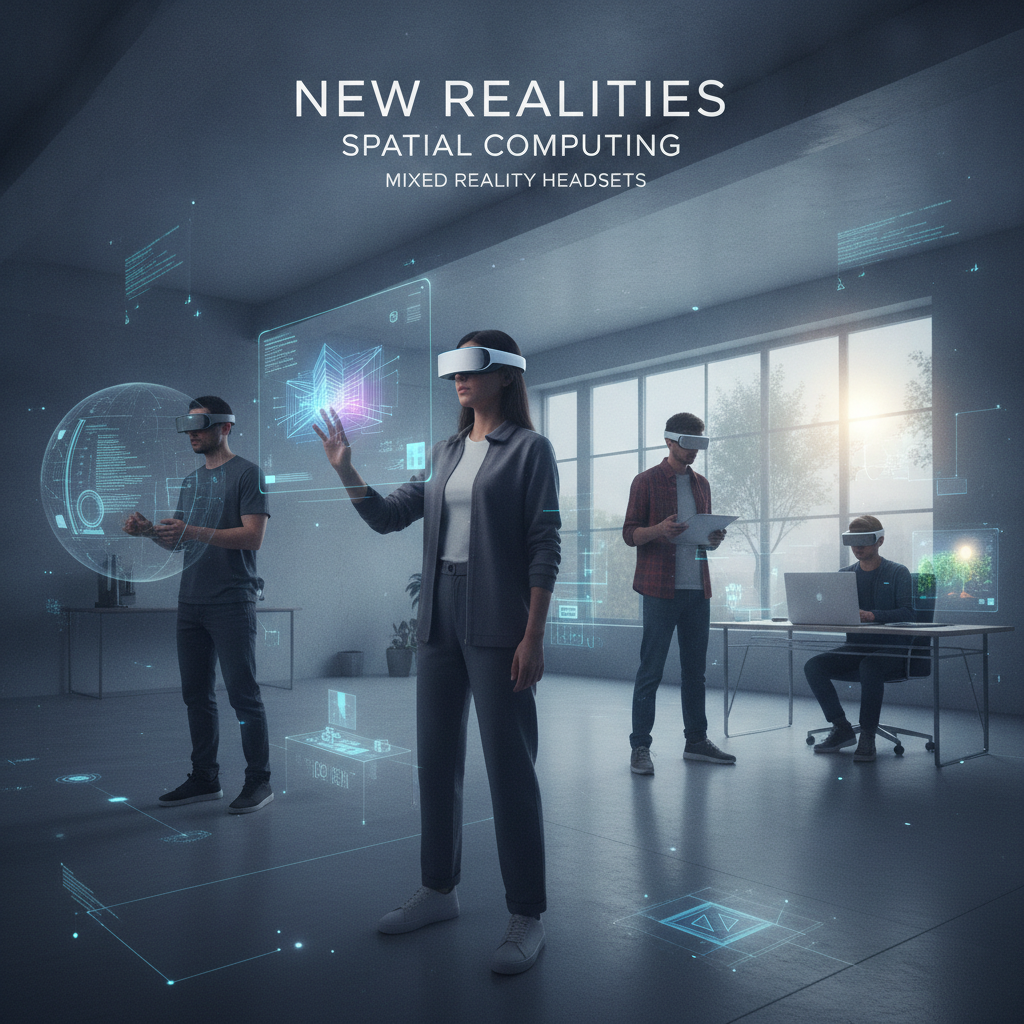
The Future is Here: New Generations of Mixed Reality & Spatial Computing
Welcome, tech enthusiasts and curious minds! If you’ve been following the world of immersive technology, you know we’re on the cusp of something truly transformative. We’re moving beyond simple virtual reality and augmented reality into a fascinating new era: the age of Mixed Reality (MR) and Spatial Computing. The latest generation of headsets and platforms isn’t just about escaping to new worlds; it’s about seamlessly blending the digital with our physical reality in ways that were once confined to science fiction.
What’s Driving the Revolution? Hardware & Software Leaps
So, what makes this new wave so special? It’s a powerful combination of groundbreaking hardware and sophisticated software. On the hardware front, we’re seeing incredible advancements:
- Stunning Displays: Higher resolution, wider fields of view, and more vibrant colors are making digital content look more real than ever before.
- Enhanced Tracking: Precision eye-tracking, advanced hand-tracking, and robust environmental sensing mean more intuitive and natural interactions. Your gaze and gestures become powerful input tools.
- Processing Power: Custom-built chips are delivering desktop-class performance in a compact, wearable form factor, enabling complex simulations and richly detailed digital objects.
- Improved Ergonomics: While still evolving, devices are becoming lighter, more comfortable, and better balanced for extended wear.
On the software side, the progress is just as exciting. Spatial mapping has become incredibly robust, allowing digital objects to persist in your physical space, remembered across sessions. New developer tools are making it easier than ever for creators to build breathtaking applications that understand and interact with the real world.
Beyond Screens: The Magic of Spatial Computing
At the heart of this new generation is the concept of Spatial Computing. This isn’t just about placing digital objects in your view; it’s about giving computers the ability to understand and interact with the three-dimensional world around you. Imagine:
- A virtual screen floating over your physical desk, perfectly aligned and usable.
- Digital guides leading you through a museum, interacting with the real exhibits.
- Collaborating with colleagues on 3D models that appear right in your shared physical workspace.
Spatial computing liberates us from the confines of flat screens. It allows for more intuitive, human-centric interaction, where digital information can be accessed and manipulated in the most natural way possible – by looking, gesturing, and even talking to it within our own environment.
A World of Possibilities: Where We’re Headed
The implications of these advancements are vast and far-reaching. From everyday productivity to cutting-edge industries, Mixed Reality and Spatial Computing are poised to redefine how we live, work, and play:
- Entertainment: Immersive games, interactive storytelling, and virtual concerts that put you right in the middle of the action.
- Work & Collaboration: Virtual workspaces, 3D design reviews, remote assistance, and training simulations that feel incredibly real.
- Education: Experiential learning that brings historical events, scientific concepts, and distant places directly into the classroom.
- Creativity: New tools for artists and designers to sculpt, paint, and build in 3D space, blurring the lines between physical and digital art.
This isn’t just about isolated experiences; it’s about creating a shared digital layer over our physical world, opening up entirely new forms of connection and interaction.
Stepping into Tomorrow, Today
We are truly at an inflection point. The new generations of Mixed Reality headsets and spatial computing platforms are not just incremental upgrades; they represent a fundamental shift in how we will interact with technology and with each other. While the journey is still young, the promise is clear: a future where the digital world doesn’t just overlay our reality, but seamlessly integrates with it, enhancing our senses and expanding our capabilities. Get ready to step into tomorrow, because the future of computing is here, and it’s spatial!

Leave a Reply