
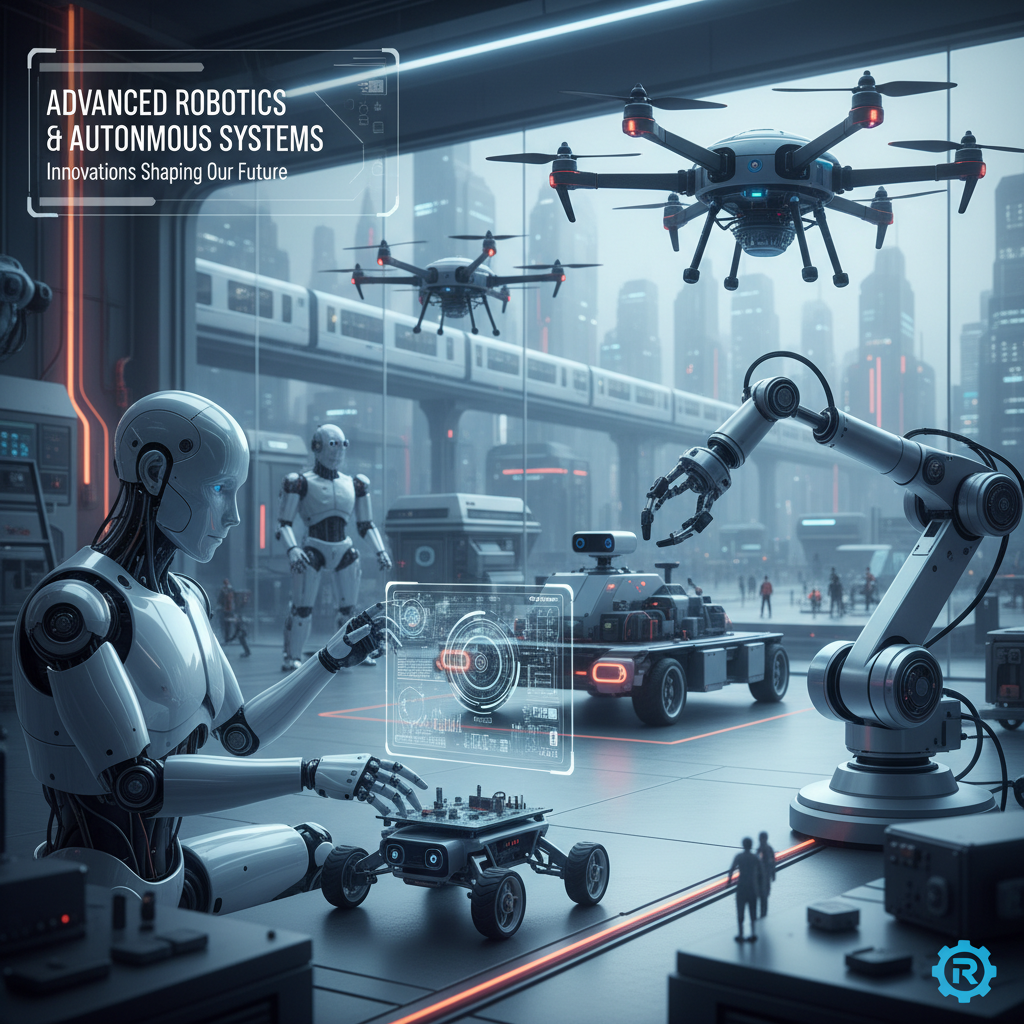
Robots Redefined: The Autonomous Future is Here
Welcome to the fascinating world where machines don’t just follow commands but learn, adapt, and operate independently. Advanced Robotics and Autonomous Systems are no longer the stuff of science fiction; they are rapidly becoming a cornerstone of our reality, revolutionizing industries and reshaping our daily lives. From sophisticated industrial automatons to intelligent self-navigating vehicles, these systems represent a monumental leap in technological capability. Let’s explore the cutting edge of this exciting domain!
The Power Behind Autonomy: Key Technologies Driving Innovation
What makes a robot “advanced” or “autonomous”? It’s a powerful fusion of several groundbreaking technologies working in concert. At the core, Artificial Intelligence (AI) and Machine Learning (ML) enable robots to perceive their environment, make decisions, and learn from experience, just like a human (but often faster and with greater precision). Sensor fusion, combining data from cameras, lidar, radar, and more, grants these systems an unparalleled awareness of their surroundings.
Beyond perception, sophisticated actuators and dexterous end-effectors allow robots to interact with the physical world with remarkable finesse, performing tasks that once required human dexterity. High-speed connectivity and edge computing further empower these systems to process vast amounts of data in real-time, making instantaneous, informed decisions, whether navigating a complex warehouse or performing intricate surgery.
Transforming Industries: Real-World Applications of Autonomous Systems
The impact of advanced robotics and autonomous systems is already palpable across numerous sectors. In manufacturing, collaborative robots (cobots) work alongside humans, augmenting productivity and safety on assembly lines. The healthcare sector is witnessing revolutionary changes with autonomous surgical robots assisting in delicate procedures, and smart prosthetics offering enhanced quality of life.
Logistics and supply chains are being redefined by autonomous vehicles and warehouse robots that optimize material handling, sorting, and delivery, making operations more efficient and resilient. Even in hazardous environments, such as deep-sea exploration, space missions, or disaster relief zones, autonomous drones and rovers perform critical tasks, protecting human lives and pushing the boundaries of discovery. These applications merely scratch the surface of their immense potential.
Navigating the Path Forward: Challenges and Opportunities
As we embrace this autonomous future, it’s crucial to acknowledge the challenges and opportunities that lie ahead. Ethical considerations surrounding AI decision-making, robot responsibility, and data privacy are paramount. The societal impact, particularly concerning job evolution and the need for new skill sets, requires thoughtful planning and investment in education and reskilling initiatives.
However, the opportunities are even greater. The synergy between humans and advanced autonomous systems—often referred to as human-robot collaboration (HRC)—promises to unlock new levels of creativity, productivity, and problem-solving. We envision a future where robots augment human capabilities, handle monotonous or dangerous tasks, and allow humans to focus on innovation, creativity, and compassion. The journey to fully integrate these systems responsibly and effectively is ongoing, promising a future of unprecedented possibilities.
“`



Leave a Reply