
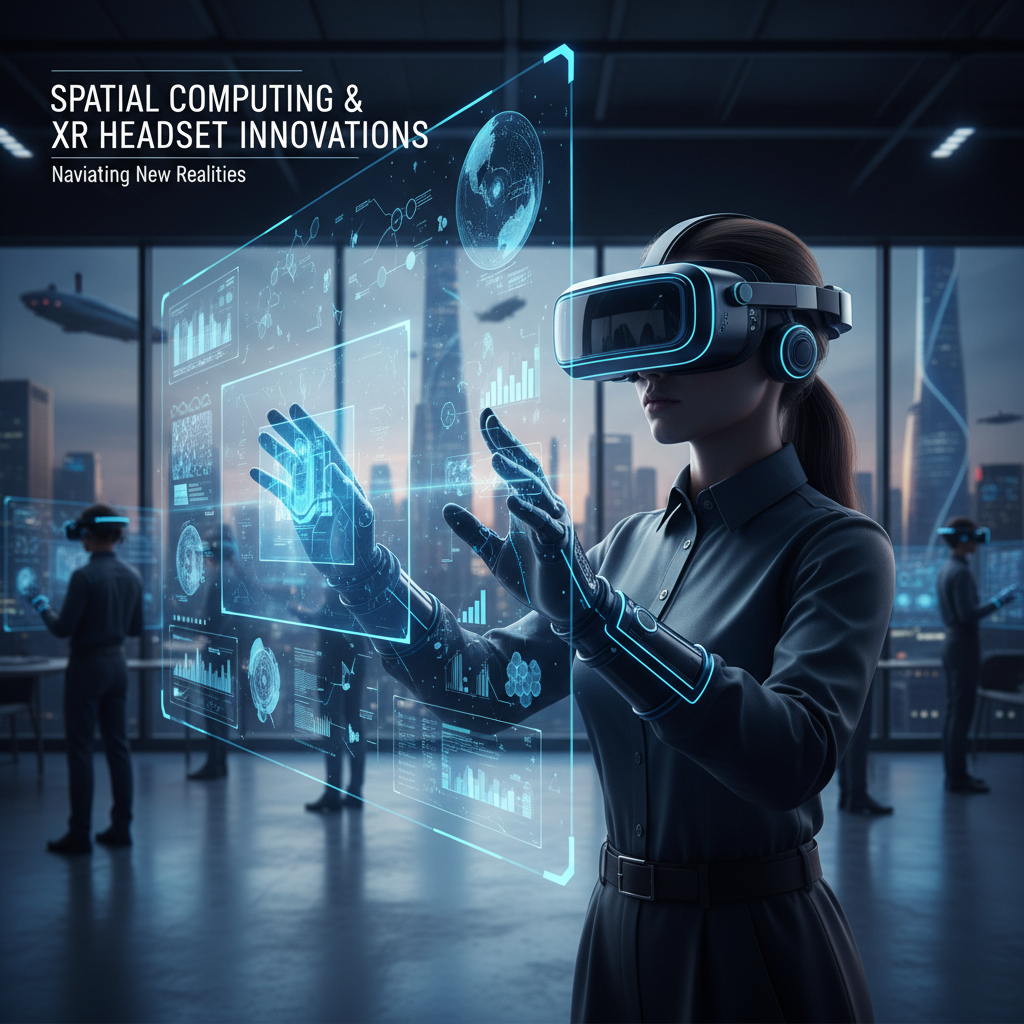
Step Into the Future: Spatial Computing & XR Headsets
Ever dreamt of interacting with digital content that feels like it’s actually in your physical space? That dream is rapidly becoming a reality thanks to groundbreaking innovations in Spatial Computing and XR (Extended Reality) headsets! It’s more than just traditional VR; it’s a whole new way to experience computing, seamlessly blending the digital with our physical world in exciting new ways.
What Exactly is Spatial Computing?
At its heart, spatial computing is about creating a seamless interaction between humans, machines, and the physical environment. Instead of looking at a screen, you’re looking through it, with digital objects appearing to exist within your actual surroundings. Think of it like your computer desktop extending into your living room, allowing you to manipulate windows, browse the web, or even play games on your coffee table – without a physical screen! It’s about context, presence, and natural interaction within a 3D space.
The Rise of XR Headsets: Powering the New Reality
The devices making this possible are today’s advanced XR headsets. From the immersive Meta Quest 3 to the highly anticipated Apple Vision Pro, these headsets are no longer just for hardcore gamers. They feature incredibly high-resolution displays, sophisticated sensor arrays, and powerful processors that map your environment, track your movements, and project digital content with remarkable realism. They bridge the gap between virtual reality (VR), augmented reality (AR), and mixed reality (MR), offering a spectrum of experiences.
Recent advancements have drastically improved comfort, visual fidelity, and intuitive interaction methods, moving from clunky prototypes to sleeker, more user-friendly devices. Eye tracking, hand gestures, and voice commands are becoming standard, making interactions feel more natural than ever before.
Beyond Gaming: Real-World Applications Are Here
While gaming and entertainment are certainly exciting avenues for XR, the true potential of spatial computing extends far beyond. Imagine:
- Education: Students dissecting a virtual heart in biology class or exploring ancient Rome as if they were there.
- Healthcare: Surgeons practicing complex procedures on lifelike digital twins or doctors remotely assisting in diagnostics.
- Design & Engineering: Architects walking through virtual blueprints or engineers collaboratively prototyping new products in a shared digital space.
- Work & Productivity: Setting up an infinite number of monitors in your home office, no matter how small, or collaborating with colleagues across the globe around a shared 3D model.
The possibilities are truly endless, transforming industries one spatial experience at a time.
Challenges and the Road Ahead
Of course, like any nascent technology, spatial computing and XR headsets face challenges. Cost remains a barrier for many, and the need for more compelling, everyday content is crucial for mass adoption. Comfort, battery life, and the ethical considerations surrounding privacy and digital presence are also areas of ongoing development and discussion.
However, the pace of innovation is accelerating. As the technology matures, becomes more affordable, and content ecosystems expand, spatial computing is poised to redefine how we interact with information and each other.
Your Next Digital Frontier Awaits
Spatial computing and advanced XR headsets are not just a technological trend; they represent a fundamental shift in our relationship with computing. Get ready to step into a future where your digital world is no longer confined to a flat screen, but seamlessly integrated into the space around you. The future is spatial, and it’s arriving faster than you think!



Leave a Reply