
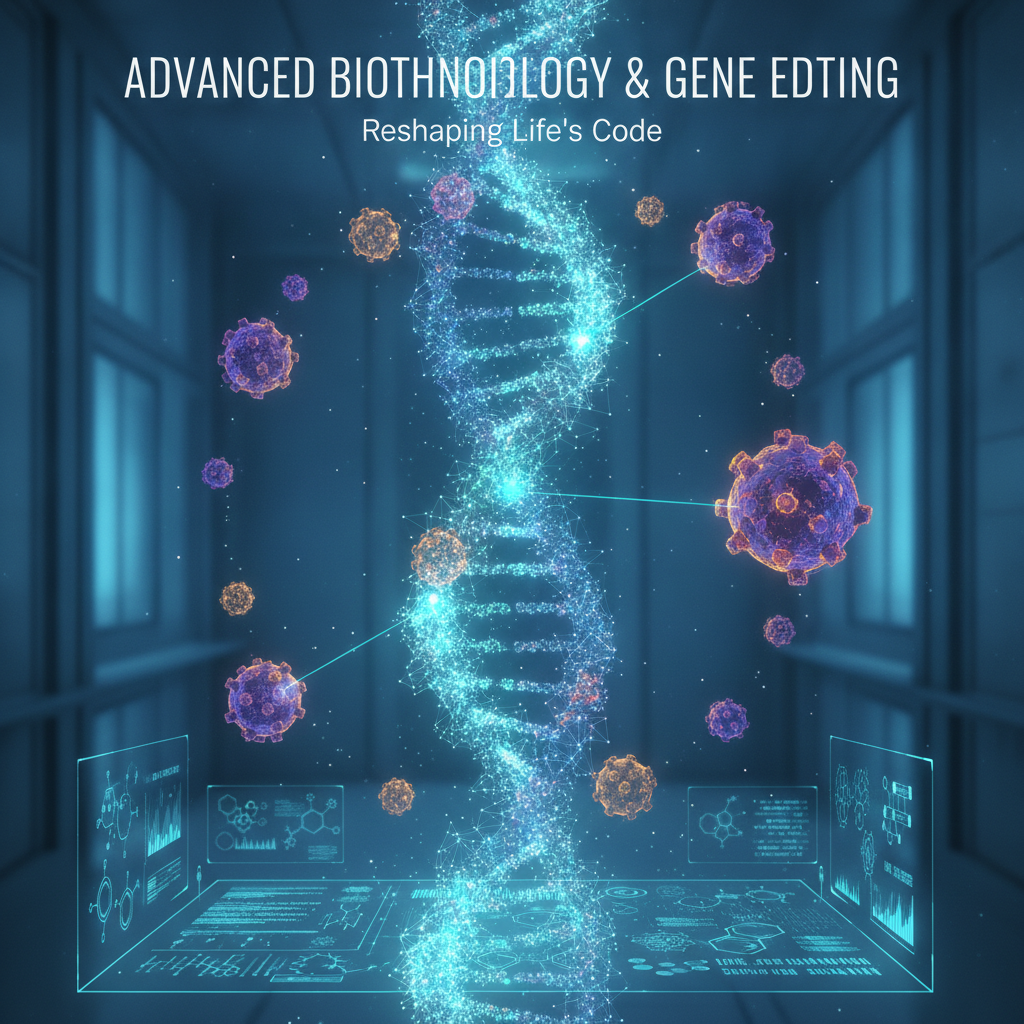
Advanced Biotech: Editing Life’s Blueprint
Imagine a world where genetic diseases could be cured before they even manifest, where crops are inherently resistant to pests and droughts, and where we could truly understand and even fine-tune the very building blocks of life. This isn’t science fiction anymore; it’s the exciting frontier of advanced biotechnology and gene editing. Let’s dive into how these groundbreaking fields are reshaping our future.
Understanding the Power of Gene Editing
At its core, gene editing involves making precise changes to an organism’s DNA. Think of DNA as life’s instruction manual. Gene editing tools allow scientists to “cut,” “paste,” or “replace” specific sections of this manual. While the concept has been around for decades, the advent of technologies like CRISPR-Cas9 has revolutionized the field.
CRISPR (Clustered Regularly Interspaced Short Palindromic Repeats) is often called a “molecular scissor.” It’s a naturally occurring defense mechanism in bacteria, repurposed by scientists to target and edit genes with unprecedented accuracy and ease. This precision has opened doors to therapeutic possibilities that were once unimaginable.
Beyond CRISPR: Diverse Applications
The reach of gene editing extends far beyond the lab bench. Its applications are diverse and promise to impact many aspects of our lives:
- Medicine and Health: From correcting genetic mutations responsible for conditions like cystic fibrosis, sickle cell anemia, and Huntington’s disease, to engineering immune cells to more effectively fight cancer (CAR-T therapy), gene editing holds immense promise for treating and potentially curing a wide range of human diseases.
- Agriculture: Gene-edited crops can be made more nutritious, resistant to pests and harsh environmental conditions, and require fewer resources like water and pesticides. This could be a game-changer for global food security.
- Environmental Solutions: Imagine microbes engineered to clean up oil spills or break down plastic waste. Gene editing can also help in conservation efforts by boosting the resilience of endangered species.
- Industrial Biotechnology: Modifying microorganisms to produce biofuels, pharmaceuticals, or other valuable compounds more efficiently is another rapidly growing area.
Navigating the Ethical Landscape
With great power comes great responsibility, and gene editing is no exception. As these technologies advance, so do the important ethical discussions surrounding them. Questions arise about altering germline cells (changes that could be passed down to future generations), the potential for “designer babies,” ensuring equitable access to these powerful therapies, and unintended ecological consequences.
These are not simple questions, and scientists, ethicists, policymakers, and the public must engage in thoughtful dialogue to establish responsible guidelines and ensure these technologies are used for the greater good.
What’s Next for Biotechnology?
The field is constantly evolving. Beyond CRISPR, new gene editing tools like base editors and prime editors offer even more refined control over DNA changes, allowing for single-letter edits without cutting the DNA strand. We’re also seeing advances in delivering these tools more safely and efficiently into target cells. The integration of artificial intelligence and machine learning is accelerating discovery, making the future of biotechnology even more dynamic.
Advanced biotechnology and gene editing are not just scientific curiosities; they are powerful tools that are literally rewriting the future of life on Earth. While challenges and ethical considerations remain, the potential benefits—from eradicating diseases to feeding the world—are truly inspiring. It’s an exciting time to witness the dawn of a new era in biological science!
“`


Leave a Reply