Unlocking Tomorrow: Advanced Generative AI & Multimodal
Welcome to the Next Frontier of AI
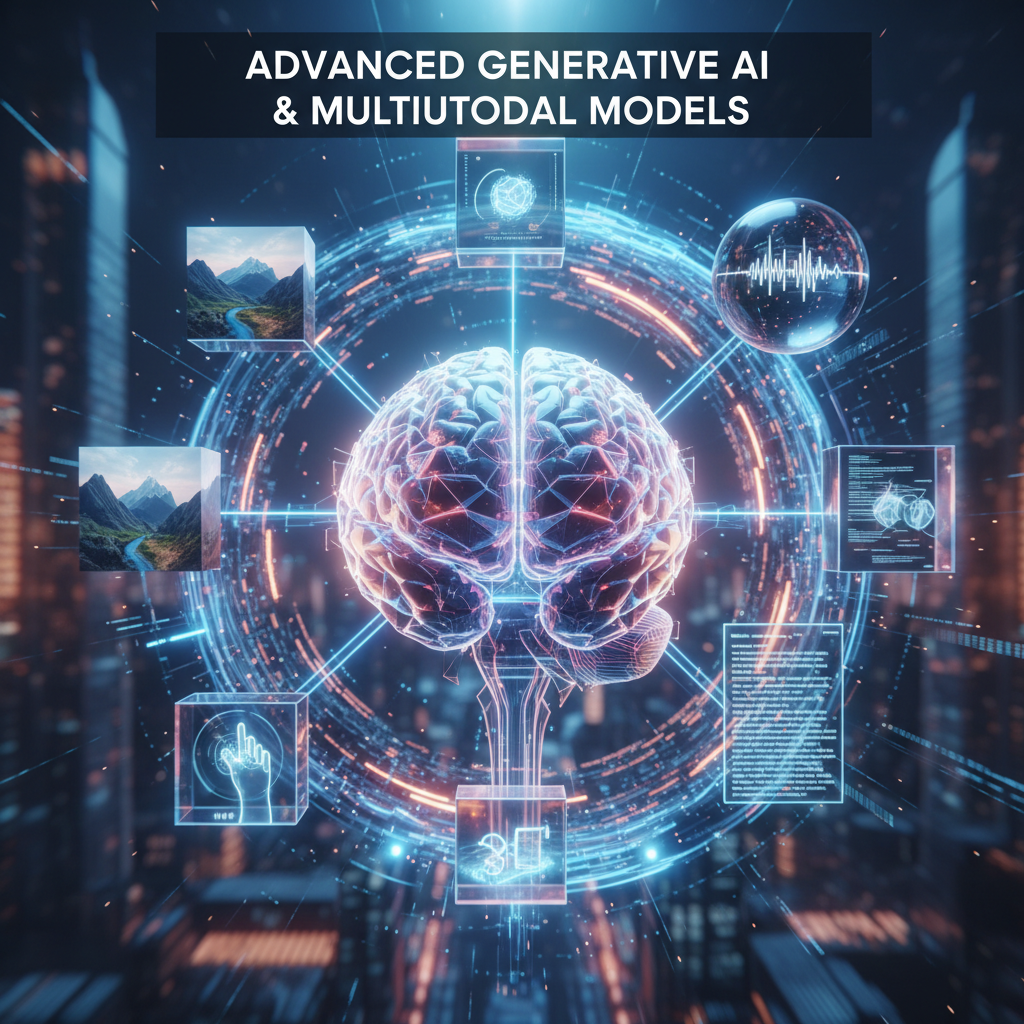
We’re standing at the precipice of a new era in artificial intelligence, one where machines don’t just understand words, but also images, sounds, and even video. Advanced Generative AI and Multimodal Models are rapidly transforming how we interact with technology, moving us closer to truly intelligent and creative systems. Forget simple chatbots; we’re now talking about AI that can paint a masterpiece from a phrase or generate a realistic video from a script. It’s an exciting time to witness these breakthroughs!
Beyond Text: The Multimodal Revolution
Traditionally, AI models specialized in one domain, like natural language processing or computer vision. Multimodal models shatter these silos by integrating and processing information from multiple modalities simultaneously. This means they can “see,” “hear,” and “read” the world, combining inputs like text descriptions, audio cues, and visual data to generate incredibly rich and contextually relevant outputs. Imagine asking an AI to “show me a fluffy cat playing with a red ball in a sunny garden,” and it generates not just an image, but a short video with playful sounds. It’s about bridging the sensory gap for AI.
Key Advancements and Capabilities
The leaps we’re witnessing are powered by sophisticated architectures like transformer networks and diffusion models. These advancements enable models to grasp deeper context, maintain coherence over longer sequences, and even exhibit emergent properties like reasoning across different data types. They can now generate human-quality text, create stunning and diverse images, compose music, synthesize speech, and even produce short videos—all based on natural language prompts. This unparalleled creativity and comprehension are opening doors to previously unimaginable applications across various fields.
Real-World Applications and Impact
The practical implications of advanced generative AI and multimodal models are vast and growing. In content creation, they empower artists and marketers to generate diverse media quickly, fueling creativity and efficiency. In healthcare, they can assist in diagnostics by correlating medical images with patient data, leading to faster and more accurate insights. Education benefits from personalized learning experiences, while scientific research is accelerated through the generation of hypotheses or simulation data. From crafting compelling stories to designing innovative products, these models are becoming indispensable tools across industries.
Navigating Challenges and Ethical Considerations
As with any powerful technology, the rise of advanced generative AI brings its own set of challenges. Concerns around bias in training data, potential misuse (e.g., deepfakes), intellectual property rights, and the sheer computational resources required are paramount. It’s crucial that we develop these models responsibly, ensuring transparency, fairness, and safety are built into their core. Public discourse and robust ethical frameworks are essential to harness their immense potential while mitigating risks and ensuring a beneficial future for everyone.
The Future is Multimodal and Limitless
We are only just scratching the surface of what advanced generative AI and multimodal models can achieve. As research continues to push boundaries, we can anticipate even more intuitive, integrated, and intelligent systems that blur the lines between human and machine creativity. Get ready for a future where ideas seamlessly transition from thought to text, image, sound, and interactive experiences, all facilitated by these groundbreaking AI technologies. The journey into the multimodal future is incredibly exciting, and we’re thrilled to be part of it!
“`

Leave a Reply