
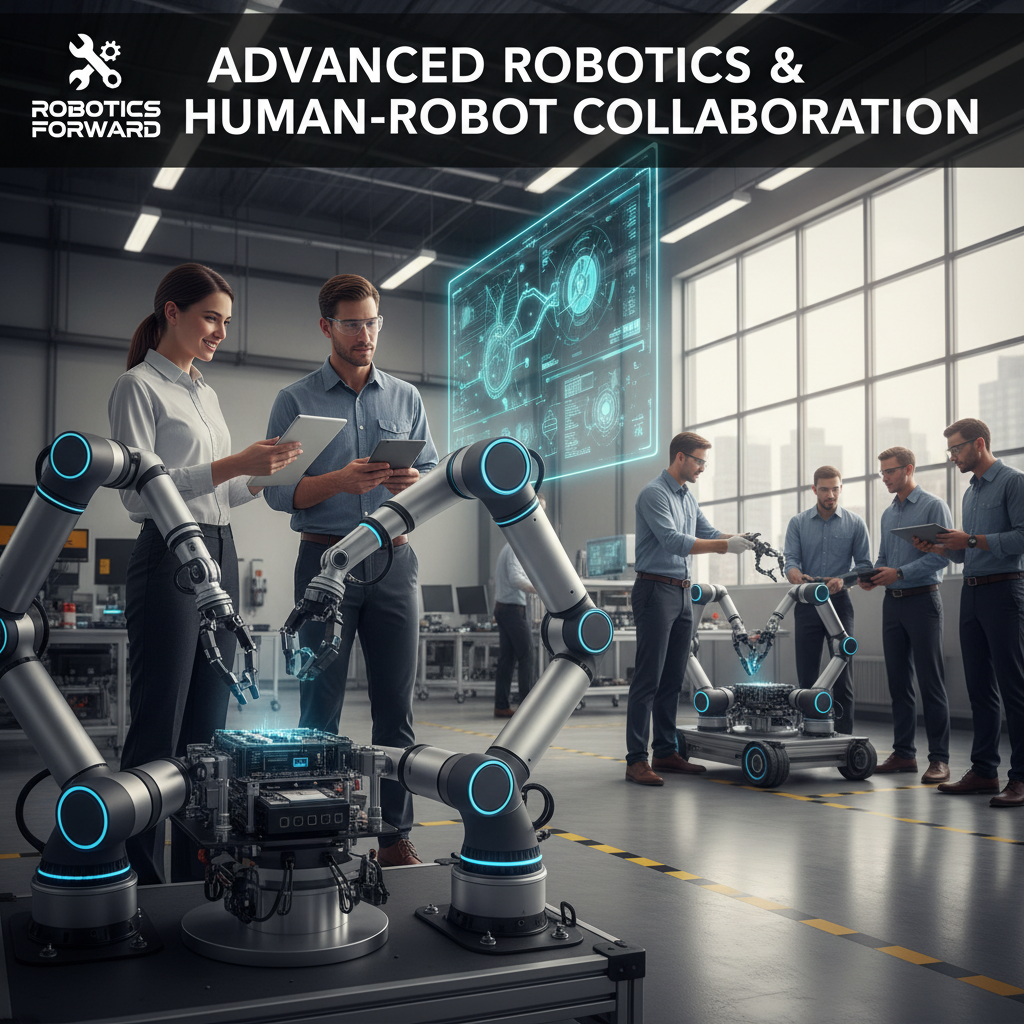
Unlocking Potential: Human-Robot Teamwork
The world of robotics is evolving at an astonishing pace. What once seemed like science fiction is now becoming an everyday reality, as robots move beyond simple automation to become sophisticated partners. The exciting frontier we’re exploring today is Advanced Robotics and, crucially, the power of Human-Robot Collaboration (HRC).
Beyond Automation: The Rise of Advanced Robotics
When we talk about “advanced robotics,” we’re moving past the traditional image of a robot on an assembly line, performing repetitive tasks in isolation. Today’s advanced robots are equipped with AI, machine learning capabilities, sophisticated sensors, and incredible dexterity. They can perceive their environment, learn from experience, adapt to changing situations, and even make decisions.
This leap in capability means robots are no longer just tools for pre-programmed sequences. They’re becoming intelligent agents capable of nuanced interactions, opening up a whole new world of applications and possibilities.
The Power of Collaboration: Why Humans and Robots Together?
While advanced robots are impressive, they still have limitations. Humans bring unparalleled creativity, critical thinking, adaptability to unforeseen circumstances, and emotional intelligence to the table. Robots, on the other hand, excel at precision, strength, endurance, repetitive tasks, and processing vast amounts of data without fatigue.
Human-Robot Collaboration isn’t about robots replacing humans; it’s about leveraging the unique strengths of both to achieve outcomes neither could accomplish alone. This synergy leads to increased efficiency, higher quality, enhanced safety, and the ability to tackle increasingly complex challenges across various sectors.
Real-World Synergy: Where We See HRC in Action
HRC is no longer a theoretical concept; it’s being implemented across industries:
- Manufacturing & Logistics: Collaborative robots, or “cobots,” work alongside human colleagues on factory floors, assisting with tasks like assembly, packaging, and quality control, often without the need for safety cages.
- Healthcare: Robotic surgical assistants provide surgeons with enhanced precision and stability, while assistive robots help patients with rehabilitation and aid caregivers with physically demanding tasks.
- Exploration & Hazardous Environments: Humans remotely operate or guide robots in space, deep-sea exploration, or disaster zones, allowing us to gather data and perform tasks in places too dangerous or inaccessible for people.
- Service Industries: Robots assist in customer service, hospitality, and even food preparation, freeing human staff to focus on more personalized interactions and complex problem-solving.
Navigating the Future: Challenges and Opportunities
As we embrace HRC, there are challenges to address. Ensuring robust safety protocols, developing intuitive interfaces for easier human-robot interaction, designing effective training programs for human workers, and navigating ethical considerations around automation are all crucial steps. However, the opportunities far outweigh the obstacles.
HRC promises to create safer workplaces by offloading dangerous tasks, boost productivity and innovation, and even generate new job roles focused on robot programming, maintenance, and oversight. It empowers humans to focus on higher-value, more creative, and fulfilling aspects of their work, while robots handle the mundane, heavy, or hazardous.
The journey into advanced robotics and human-robot collaboration is an exciting one. It’s not just about building smarter machines; it’s about designing a more collaborative future where technology augments human potential, allowing us to achieve things we once only dreamed of. The best teams often have diverse strengths, and the human-robot team is poised to be one of the most powerful collaborations of the 21st century.



Leave a Reply