
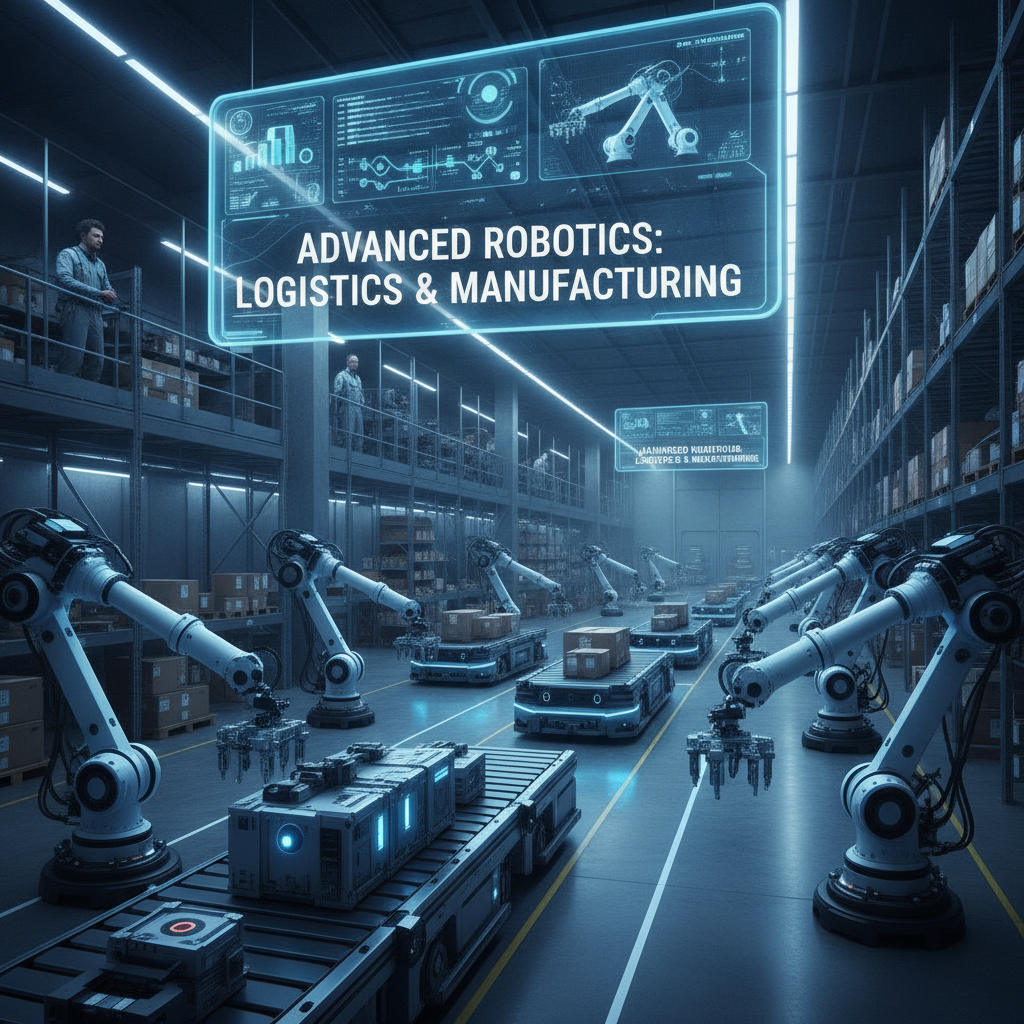
Robots Unleashed: Powering Logistics & Manufacturing
The landscape of logistics and manufacturing is undergoing a profound transformation, driven by the relentless advancement of robotics. What once seemed like science fiction is now reality, as intelligent machines revolutionize everything from factory floors to vast warehouses. These aren’t just simple industrial arms anymore; we’re talking about sophisticated systems capable of perception, decision-making, and collaboration, reshaping industries and setting new benchmarks for efficiency and productivity.
Revolutionizing the Supply Chain with Intelligent Automation
In the realm of logistics, advanced robotics is tackling the complexities of supply chain management head-on. Autonomous Mobile Robots (AMRs) and Automated Guided Vehicles (AGVs) navigate warehouse floors, picking, sorting, and transporting goods with unparalleled speed and accuracy. Drone technology is not only being explored for last-mile delivery but also for inventory management and facility inspection.
Beyond movement, AI-powered robotic systems are optimizing storage layouts, managing inventory, and even predicting demand, reducing human error and significantly cutting operational costs. This leads to faster order fulfillment, reduced lead times, and a more resilient supply chain capable of adapting to rapid changes.
Smart Factories and Collaborative Robots: A New Era
Manufacturing is equally benefiting from this robotic renaissance. Traditional industrial robots, known for their strength and precision, are now complemented by collaborative robots (cobots). These versatile machines work safely alongside human colleagues, handling repetitive tasks, assisting with heavy lifting, and performing intricate assembly operations that demand high accuracy.
Advanced vision systems integrated with AI allow robots to perform quality checks with superhuman precision, identifying defects that might be missed by the human eye. From welding and painting to intricate electronics assembly, robots are enhancing production capabilities, improving product consistency, and enabling higher levels of customization and flexibility in modern smart factories.
Shared Benefits and Charting the Future Course
The convergence of robotics in both logistics and manufacturing brings a host of shared benefits. Enhanced safety for human workers, as robots take on dangerous or ergonomically challenging tasks, is paramount. There’s also a significant boost in operational efficiency, leading to higher throughput and reduced waste. The ability to scale operations quickly and adapt to fluctuating market demands provides companies with a crucial competitive edge.
Looking ahead, the integration of 5G connectivity, advanced AI algorithms, and sophisticated sensor technology will further unlock the potential of these robotic systems. We can expect even greater autonomy, predictive capabilities, and seamless human-robot collaboration, paving the way for hyper-efficient and intelligent operations across both sectors. The future is here, and it’s being built by advanced robotics.



Leave a Reply