
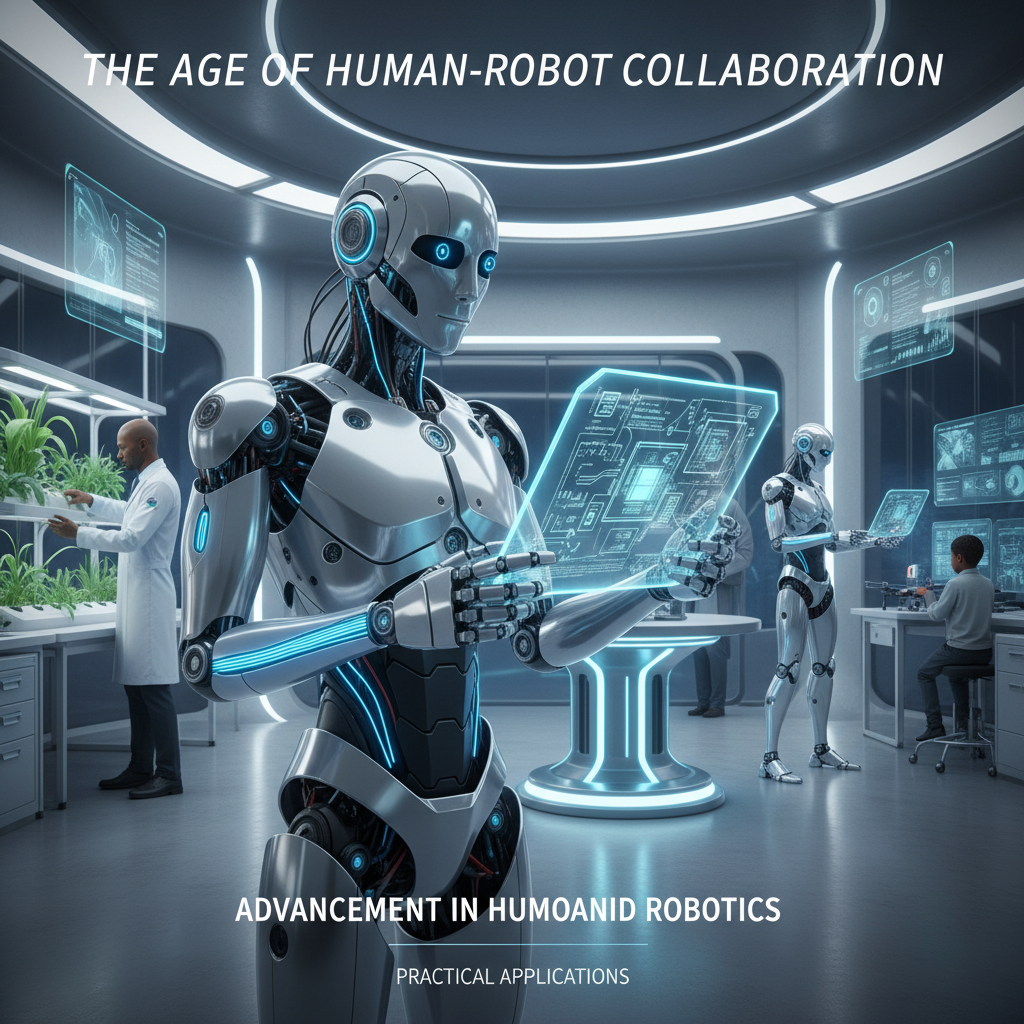
Beyond the Screen: How Humanoid Robots Are Revolutionizing Real-World Applications
For decades, humanoid robots have captured our imaginations, primarily living within the thrilling narratives of science fiction. From C-3PO to Optimus Prime, these human-like machines promised a future of advanced assistance and interaction. But what if we told you that future is rapidly becoming our present? Recent advancements are pushing humanoid robotics out of the lab and into practical, everyday applications, poised to transform industries and improve lives.
A New Era for Humanoid Robotics
Gone are the days when humanoid robots were clunky, slow, and expensive prototypes. Today, thanks to incredible leaps in artificial intelligence, sensor technology, motor capabilities, and battery life, these robots are more agile, intelligent, and capable than ever before. We’re seeing a shift from mere demonstrations to truly functional machines designed for real-world tasks.
Key Breakthroughs Powering Practicality
Several critical innovations are driving this revolution:
- Enhanced Dexterity and Manipulation: Modern humanoid hands can perform incredibly intricate tasks, from grasping delicate objects to using tools, mimicking human fine motor skills with remarkable precision.
- Advanced AI and Machine Learning: Robots are now learning from their environments, adapting to new situations, and even engaging in natural language processing, making interactions smoother and more intuitive.
- Improved Mobility and Balance: With dynamic balancing algorithms and sophisticated leg designs, humanoids can navigate complex terrains, climb stairs, and recover from pushes, making them suitable for unstructured environments.
- Better Energy Efficiency: Longer battery life and more efficient actuators mean robots can operate autonomously for extended periods, reducing the need for constant human oversight and charging.
From Labs to Life: Practical Applications Taking Shape
The potential applications for these advanced humanoids are vast and incredibly exciting:
Hazardous Environments and Disaster Response
Imagine robots stepping into situations too dangerous for humans – exploring collapsed buildings, defusing bombs, or inspecting damaged nuclear facilities. Humanoids, with their ability to navigate human-built environments and manipulate tools, are ideal for these high-risk scenarios, keeping people out of harm’s way.
Assistance in Healthcare and Elder Care
As populations age, the demand for care increases. Humanoid robots could assist with tasks like lifting patients, delivering medications, providing companionship, or monitoring vital signs, augmenting human caregivers and enhancing the quality of life for seniors and those with disabilities.
Logistics and Manufacturing
In factories and warehouses, humanoids can work alongside human employees, performing repetitive or physically demanding tasks such as assembly, packing, and material handling. Their versatility allows them to adapt to different workstations and tasks more readily than highly specialized industrial robots.
Education and Research
Humanoid robots are proving invaluable as interactive educational tools, teaching STEM concepts in engaging ways. They also serve as incredible platforms for research into human-robot interaction, artificial intelligence, and biomechanics, pushing the boundaries of what’s possible.
Retail and Customer Service
Picture a robot greeting you at a store, providing directions, or answering product questions. Humanoids can offer personalized customer service, gather data, and even assist with stocking shelves, creating unique and efficient shopping experiences.
The Road Ahead: Challenges and Bright Prospects
While the future is bright, challenges remain. The cost of advanced humanoids is still high, and further development is needed in areas like robust perception in dynamic environments and truly natural human-robot interaction. Ethical considerations surrounding job displacement and societal integration also need careful thought and planning.
However, the rapid pace of innovation suggests that these hurdles are being overcome. As technology matures and becomes more accessible, humanoid robots will undoubtedly become a more common and beneficial part of our practical lives.
Conclusion: A Humanoid Future is Here
The era of humanoid robots is no longer confined to the silver screen. We are witnessing a monumental shift as these remarkable machines move into practical applications, promising to make our world safer, more efficient, and more connected. It’s an exciting time to be alive, as we collectively shape a future where humans and humanoids work together for the betterment of all.
“`



Leave a Reply