
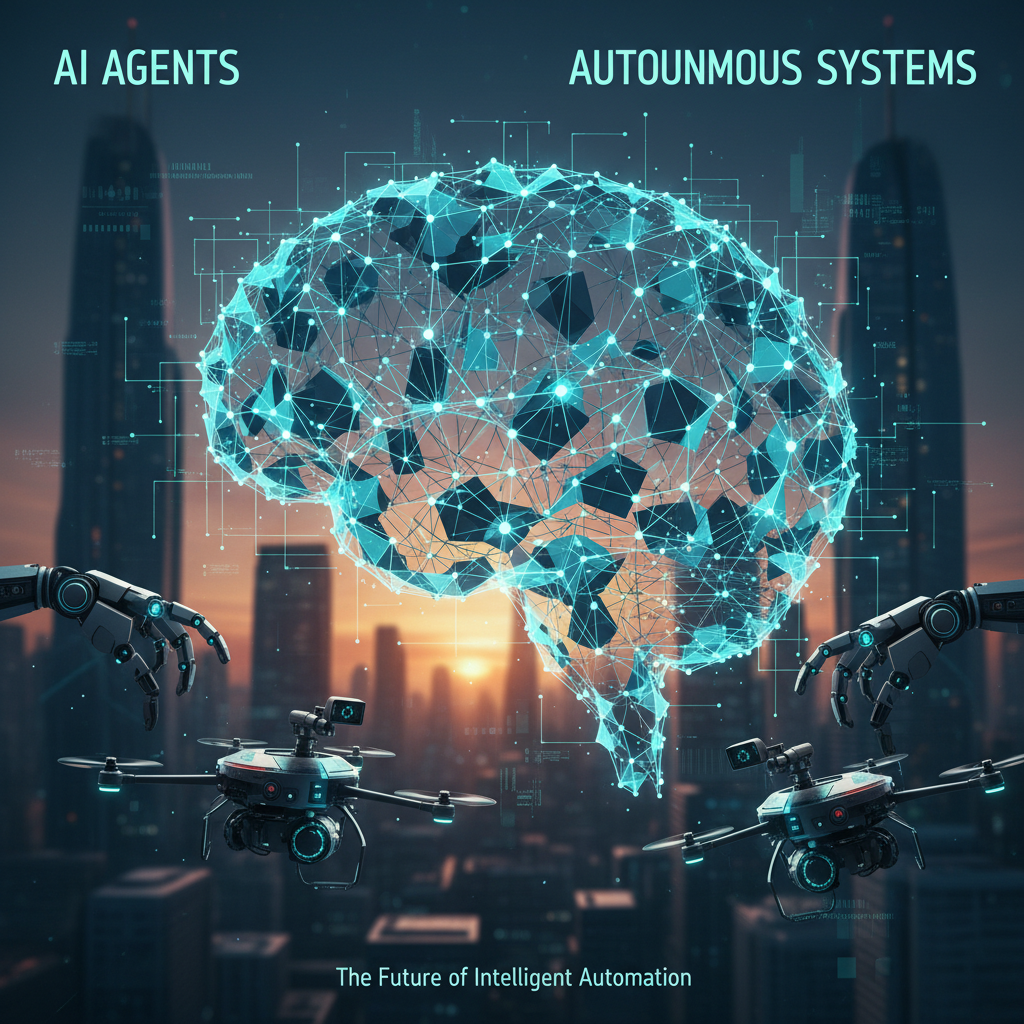
Unleashing the Future: AI Agents & Autonomous Systems
Artificial Intelligence continues to reshape our world at an incredible pace, and at the forefront of this revolution are AI Agents and Autonomous Systems. These aren’t just buzzwords; they represent a fundamental shift in how technology interacts with our environment and tackles complex challenges. Let’s dive into what makes them so fascinating and why they’re poised to redefine our future.
What Exactly Are AI Agents?
Think of an AI agent as a software or hardware entity that can perceive its environment through sensors and act upon that environment through effectors. Critically, they are goal-oriented, meaning they strive to achieve specific objectives. From the intelligent chatbots that help you find information to the recommendation engines suggesting your next favorite show, AI agents are all around us, often working behind the scenes to make our lives easier and more efficient.
Stepping Up: Autonomous Systems
Autonomous systems take the concept of AI agents to the next level. While an agent might require some level of human input or oversight, an an autonomous system operates with a significant degree of independence. These systems can make decisions and execute actions without constant human intervention, relying on sophisticated algorithms, real-time data analysis, and often, machine learning. Imagine a self-driving car navigating busy city streets or a drone delivering packages to your doorstep – these are prime examples of autonomous systems in action, designed to perform tasks reliably and intelligently on their own.
The Power and Potential: Why They Matter
The implications of AI agents and autonomous systems are profound. They promise to enhance productivity across industries, from manufacturing and logistics to healthcare and agriculture. They can perform dangerous tasks in hazardous environments, operate 24/7 without fatigue, and process vast amounts of data to uncover insights humans might miss. Personalized experiences, optimized resource allocation, and unprecedented levels of efficiency are just some of the benefits these systems bring to the table.
Navigating the Challenges and Ethics
Of course, with great power comes great responsibility. The rise of autonomous systems brings important ethical and societal questions to the forefront. Concerns about job displacement, the ethical decision-making capabilities of AI (especially in critical situations), data privacy, security vulnerabilities, and the need for transparency are crucial. Developing these technologies responsibly, with robust regulatory frameworks and a focus on human well-being, is paramount to harnessing their full potential positively.
Looking Ahead: A Collaborative Future
Instead of viewing AI agents and autonomous systems as replacements for human effort, it’s more productive to see them as powerful collaborators. They are tools designed to augment human capabilities, freeing us from mundane or dangerous tasks so we can focus on creativity, critical thinking, and complex problem-solving. The future likely holds a synergistic relationship where humans and intelligent machines work hand-in-hand, pushing the boundaries of innovation and creating a more efficient, safer, and perhaps even more equitable world.
AI agents and autonomous systems are not just a glimpse into the future; they are building blocks of our present. Understanding their mechanics, potential, and ethical considerations is key to shaping a future where technology truly serves humanity. It’s an exciting journey, and we’re all invited to be part of the conversation!



Leave a Reply