
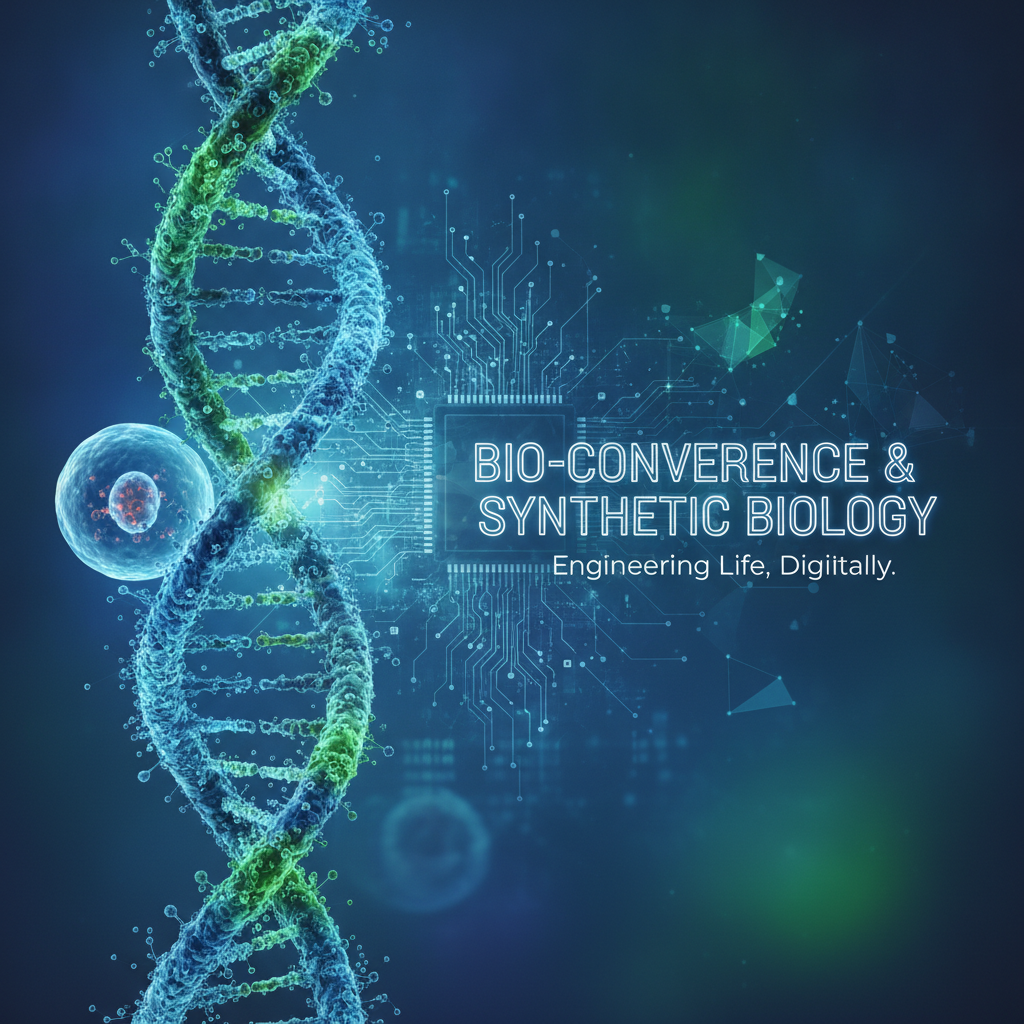
Bio-Convergence: Engineering Life’s Next Chapter
Ever wondered what happens when the very essence of life meets cutting-edge technology? Welcome to the thrilling world of Bio-Convergence and Synthetic Biology! These aren’t just buzzwords; they represent a fundamental shift in how we understand, interact with, and even design the living world around us. Let’s dive in and explore this exciting frontier!
What is Bio-Convergence?
At its heart, Bio-Convergence is about breaking down the silos between disciplines. It’s the powerful fusion of biology with fields like engineering, computer science, materials science, artificial intelligence, and data analytics. Imagine biologists collaborating seamlessly with software engineers, chemists, and roboticists to tackle complex problems that no single field could solve alone.
This interdisciplinary approach fosters innovation by allowing diverse perspectives and tools to converge on biological challenges. It’s about creating new technologies, therapies, and solutions by leveraging the strengths of multiple scientific and technological domains, leading to breakthroughs that were once unimaginable.
Diving into Synthetic Biology
If Bio-Convergence is the grand meeting place of disciplines, then Synthetic Biology is one of its most powerful tools. Often described as “engineering biology,” synthetic biology involves applying engineering principles to biological systems. Think of it like programming a computer, but instead of code, you’re working with DNA, proteins, and cells!
Researchers in synthetic biology design and construct new biological parts, devices, and systems that don’t exist in nature, or re-design existing natural biological systems for specific purposes. This includes everything from creating novel genetic circuits to engineering microbes to produce sustainable fuels or medicines. It’s about making biology predictable, measurable, and programmable.
The Synergy: Why They’re a Power Couple
So, how do Bio-Convergence and Synthetic Biology work together? Bio-Convergence provides the collaborative environment and diverse toolkit needed for ambitious projects. Within this framework, Synthetic Biology offers the practical methodologies to *build* and *engineer* new biological functions.
For example, an AI specialist (Bio-Convergence) might help design a more efficient gene circuit, which a synthetic biologist then builds and tests in a lab. Or a materials scientist might develop a novel scaffold, allowing a synthetic biologist to engineer cells that grow into new tissues. They are two sides of the same coin, each accelerating the other’s potential and pushing the boundaries of what’s possible in life sciences.
Real-World Impacts and Future Horizons
The applications of Bio-Convergence and Synthetic Biology are truly transformative and touch almost every aspect of our lives:
- Healthcare: Developing new diagnostics, personalized medicines, advanced gene therapies, novel vaccines, and even engineering cells to fight cancer.
- Environment: Creating microbes that can clean up pollution (bioremediation), produce sustainable biofuels, or capture carbon dioxide more efficiently.
- Agriculture: Engineering crops to be more resistant to pests and diseases, requiring less water, or having enhanced nutritional value.
- Materials Science: Designing self-healing materials, biodegradable plastics, or biomaterials with unique properties engineered by living systems.
While the potential is immense, it also comes with important discussions about ethics, safety, and responsible innovation. Engaging with these technologies responsibly will be key to harnessing their full, positive impact on humanity and the planet.
Join the Conversation!
Bio-Convergence and Synthetic Biology are not just topics for scientists; they are shaping our future. From the medicines we take to the food we eat and the environment we live in, their influence will only grow. It’s a journey into designing life itself, and it promises to be one of the most exciting adventures of the 21st century!
What are your thoughts on this fascinating intersection of biology and technology? Share your ideas in the comments below!


Leave a Reply