
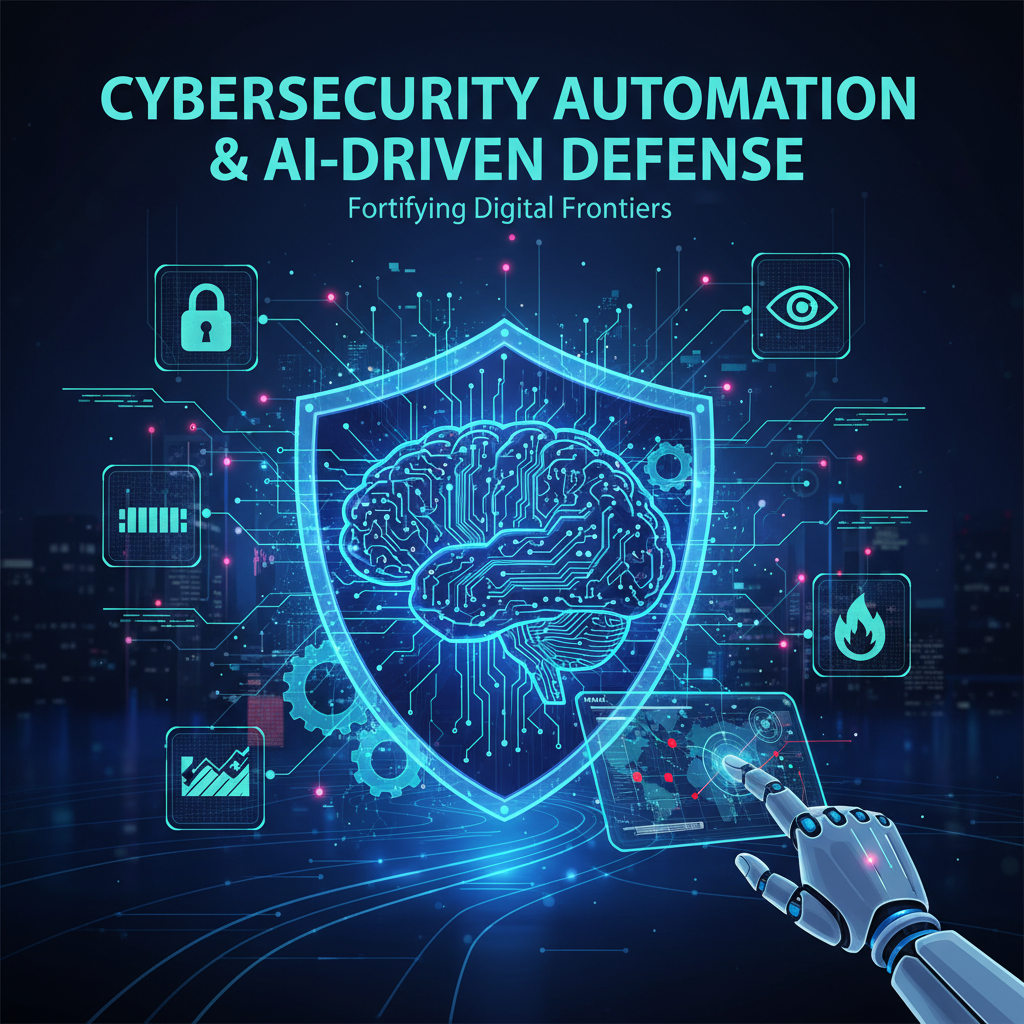
Fortifying Digital Walls with AI & Automation
In today’s interconnected world, cyber threats are growing in sophistication and volume at an unprecedented pace. Organizations face an uphill battle defending against relentless attacks, often struggling to keep up with manual processes and limited human resources. The good news? A powerful paradigm shift is underway, leveraging the might of Cybersecurity Automation and AI-driven Defense to fortify our digital frontiers.
The Evolution of Cybersecurity: Why Automation is Essential
Traditional cybersecurity relies heavily on human analysis, rule-based systems, and reactive measures. While vital, these approaches can be slow, prone to human error, and easily overwhelmed by the sheer volume of alerts and potential threats. Cybersecurity automation steps in as a game-changer, handling repetitive, time-consuming tasks with speed and precision. This includes everything from routine patch management and vulnerability scanning to automated incident response playbooks and security policy enforcement.
By automating these foundational tasks, security teams can free up valuable human expertise to focus on strategic analysis, complex threat hunting, and innovation. It’s about working smarter, not just harder.
AI: The Brains Behind Proactive Defense
While automation provides the muscle, Artificial Intelligence (AI) provides the brains, elevating cybersecurity defense to an entirely new level. AI algorithms can analyze vast datasets of network traffic, user behavior, and threat intelligence at speeds impossible for humans. This capability allows for:
- Advanced Anomaly Detection: AI can identify subtle deviations from normal patterns that might indicate a novel attack or insider threat, even if it doesn’t match a known signature.
- Predictive Threat Intelligence: By analyzing global threat data, AI can predict potential future attack vectors and vulnerabilities, enabling proactive defenses.
- Automated Incident Response Enhancement: AI can help prioritize alerts, suggest response actions, and even autonomously contain threats like malware propagation, reducing dwell time significantly.
- Behavioral Analytics: Understanding normal user and system behavior allows AI to quickly flag suspicious activities, distinguishing between legitimate actions and malicious intent.
Key Benefits for a Resilient Defense
The combination of automation and AI creates a robust, dynamic defense posture:
- Faster Detection & Response: Minimize the time attackers spend in your network, reducing potential damage.
- Reduced Human Error & Fatigue: Automate repetitive tasks and offload alert fatigue, allowing human analysts to focus on high-value activities.
- Proactive Threat Hunting: Move beyond reactive defense to anticipate and neutralize threats before they can cause harm.
- Enhanced Scalability: Effectively defend growing and complex IT environments without proportionally increasing human staff.
- Improved Cost-Efficiency: Optimize security operations and potentially reduce the long-term cost of breaches and manual labor.
Embracing the Future of Cybersecurity
The integration of cybersecurity automation and AI-driven defense is no longer a luxury; it’s a strategic imperative for organizations looking to build resilient and future-proof security programs. While challenges like data quality, AI explainability, and initial investment exist, the overwhelming benefits in threat detection, response speed, and operational efficiency make these technologies indispensable.
By harnessing the power of AI and automation, we empower our defenders to stay one step ahead of adversaries, creating a safer digital world for everyone.



Leave a Reply