
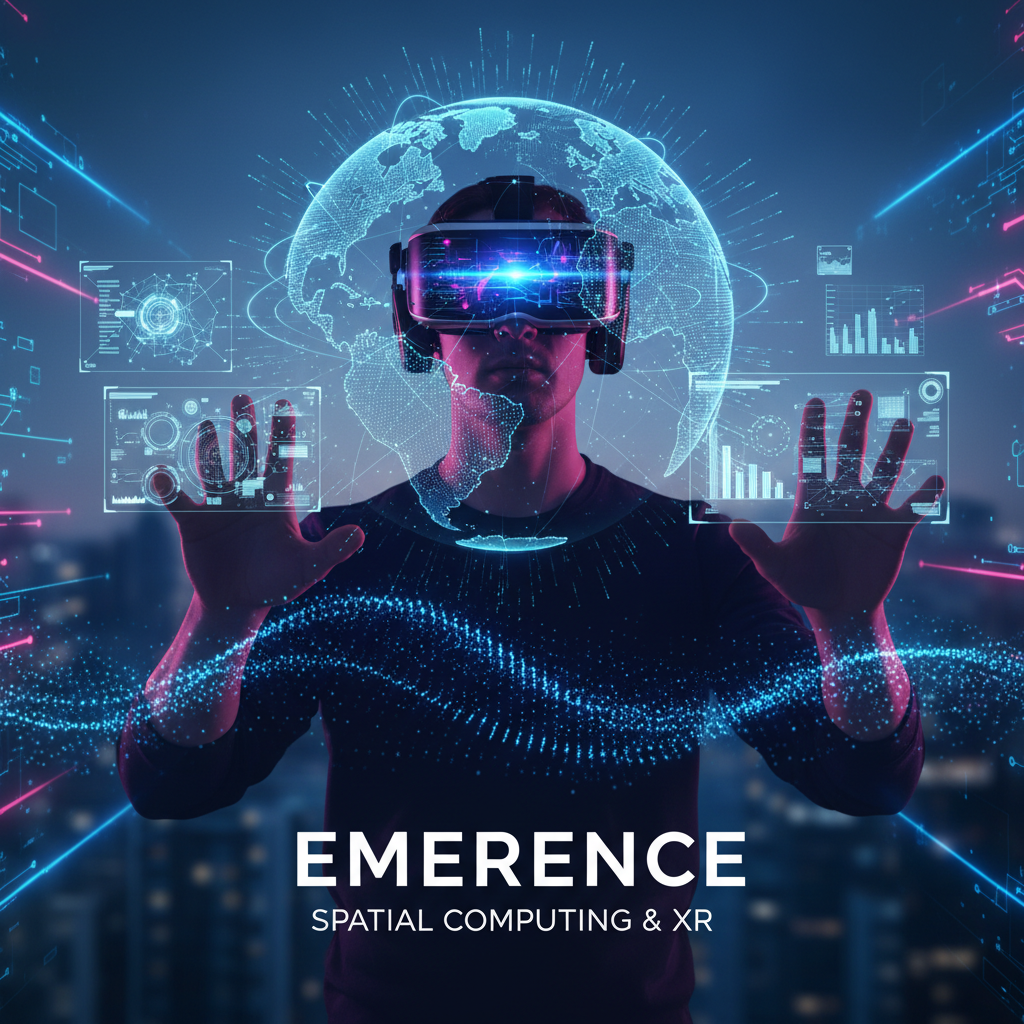
Spatial Computing & XR: The Next Big Leap
Remember when our interactions with computers were confined to flat screens? Well, prepare to step into a new dimension! We’re on the cusp of a revolutionary shift, as Spatial Computing and Extended Reality (XR) devices move from science fiction to our everyday lives. This isn’t just about fancier screens; it’s about blending our digital and physical worlds in ways we’ve only dreamed of.
What Exactly is Spatial Computing?
At its core, Spatial Computing empowers computers to understand and interact with the physical world in three dimensions, much like humans do. It’s the technology that allows digital objects to “live” and persist in your real environment, react to physics, and even remember their place. Think beyond just seeing a virtual object overlaid on your coffee table; think of that object staying there when you leave the room and come back, or even sharing that persistent digital space with others.
This paradigm shift means applications are no longer limited by a 2D interface but can utilize the entire space around us, opening up vast possibilities for immersive experiences and intuitive interactions.
The Rise of XR Devices: Our Portals to New Realities
Fueling the Spatial Computing revolution are XR devices – an umbrella term encompassing Virtual Reality (VR), Augmented Reality (AR), and Mixed Reality (MR). These devices are our portals:
- Virtual Reality (VR): Completely immerses you in a digital world, blocking out the physical environment (e.g., Meta Quest, PlayStation VR).
- Augmented Reality (AR): Overlays digital information onto your view of the real world (e.g., smartphone AR apps, Google Glass).
- Mixed Reality (MR): A sophisticated blend where digital objects are not only overlaid but also interact with your real environment, appearing to be physically present (e.g., Microsoft HoloLens, Apple Vision Pro).
With significant advancements in processing power, display technology, and sensor capabilities, these headsets are becoming more powerful, comfortable, and accessible, paving the way for mainstream adoption.
Key Innovations Driving This Transformative Wave
The journey from clunky prototypes to sleek, powerful devices is powered by a confluence of technological breakthroughs:
- Powerful, Efficient Chips: Custom silicon designed for real-time 3D rendering and environmental understanding.
- Advanced Sensors: Depth cameras, eye-tracking, hand-tracking, and spatial audio create a sense of presence and intuitive interaction.
- High-Resolution, Wide Field-of-View Displays: Reducing the “screen-door effect” and making virtual worlds more believable.
- Sophisticated Software & AI: Enabling robust environmental mapping, object recognition, and natural language processing.
- 5G Connectivity: Facilitating cloud-rendered content and seamless multi-user experiences without lag.
Impact and The Future Potential
The implications of Spatial Computing and XR stretch across nearly every sector:
- Work & Collaboration: Imagine virtual meeting rooms where colleagues from around the globe can interact with 3D models as if they were physically present. Training, design, and remote assistance are being revolutionized.
- Entertainment: Beyond gaming, think of interactive storytelling, live concerts you attend from your living room, or deeply immersive cinematic experiences.
- Education: Students can explore ancient Rome, dissect a virtual heart, or conduct dangerous chemistry experiments safely and realistically.
- Healthcare: Surgeons can practice complex procedures, therapists can help patients overcome phobias in controlled environments, and medical students can learn anatomy in 3D.
The potential is truly boundless, promising to redefine how we work, learn, play, and connect.
Navigating the Path Forward: Challenges and Considerations
While the excitement is palpable, the path to widespread adoption isn’t without its hurdles:
- Cost & Accessibility: High-end devices remain a significant investment for many.
- Comfort & Ergonomics: Weight, battery life, and potential motion sickness still need improvement for long-term wear.
- Content Ecosystem: A rich library of compelling applications is crucial for widespread appeal.
- Privacy & Ethics: How will our spatial data be used? What are the implications of blurred lines between reality and simulation?
Despite these challenges, the emergence of Spatial Computing and advanced XR devices marks a pivotal moment in technology. We are witnessing the dawn of a new era where our digital interactions become inherently spatial, intuitive, and deeply integrated with our physical world. It’s an exciting journey, and the future promises a world far more interactive and immersive than we can currently imagine!
“`



Leave a Reply