
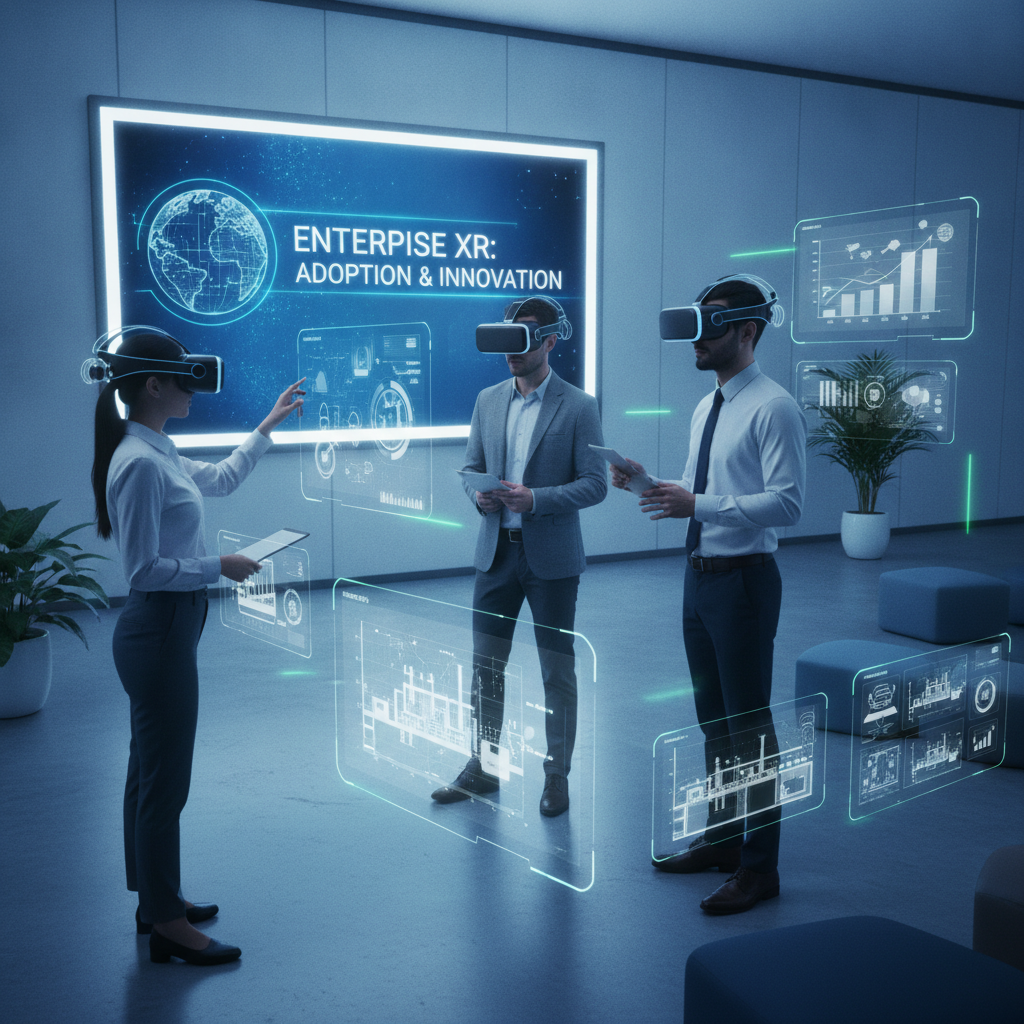
Enterprise XR: Reshaping Business Reality
Once primarily associated with gaming and futuristic sci-fi, Extended Reality (XR) is rapidly evolving beyond consumer novelty to become a cornerstone of enterprise innovation. Encompassing Virtual Reality (VR), Augmented Reality (AR), and Mixed Reality (MR), XR technologies are no longer just “nice-to-haves”; they are becoming essential tools for businesses looking to enhance efficiency, drive collaboration, and unlock unprecedented growth. Let’s dive into how XR is transforming the corporate landscape.
What is XR and Why Should Enterprises Care?
XR is an umbrella term that covers all immersive technologies. Virtual Reality (VR) fully immerses users in a simulated digital environment. Augmented Reality (AR) overlays digital information onto the real world. Mixed Reality (MR) blends physical and digital worlds, allowing interaction with both. For enterprises, these aren’t just cool gadgets; they’re powerful solutions that offer:
- Enhanced Training: Safe, repeatable, and cost-effective simulations.
- Improved Collaboration: Remote teams working together in shared virtual spaces.
- Streamlined Design & Prototyping: Visualizing products in 3D before physical production.
- Remote Assistance: Experts guiding frontline workers from anywhere.
- Deeper Customer Engagement: Immersive product experiences that drive sales.
Driving Innovation Across Industries
The beauty of XR lies in its versatility, making it applicable across a vast array of sectors:
Manufacturing & Engineering: From designing complex machinery in VR to guiding assembly with AR overlays, manufacturers are using XR to shorten development cycles, reduce errors, and facilitate predictive maintenance.
Healthcare: XR is revolutionizing medical training, allowing surgeons to practice intricate procedures without risk. It’s also used for pain management, rehabilitation, and patient education, making complex information easier to understand.
Retail & E-commerce: Imagine trying on clothes virtually or placing furniture in your living room before buying. AR apps are already transforming online shopping, while VR offers immersive brand experiences that deepen customer loyalty.
Training & Education: Whether it’s onboarding new employees, simulating dangerous scenarios for first responders, or teaching intricate skills, XR provides an unparalleled learning experience that’s both engaging and effective.
Overcoming Challenges and Looking Ahead
While the potential is immense, enterprise XR adoption isn’t without its hurdles. Challenges include initial investment costs, the need for specialized content creation, integration with existing IT infrastructure, and ensuring user comfort. However, these are rapidly being addressed:
- Falling Hardware Costs: More affordable and powerful devices are emerging.
- Platform Maturation: Easier development tools and standardized platforms are simplifying content creation.
- Increased Accessibility: Cloud-based XR solutions are making deployment simpler.
The future looks incredibly bright. As 5G becomes ubiquitous, AI capabilities integrate more deeply with XR, and haptic feedback systems improve, we can expect even more seamless and impactful immersive experiences. XR is poised to become a foundational technology, much like the internet and mobile computing, reshaping how we work, learn, and interact.
Ready to Step into the Future?
Extended Reality is no longer just a futuristic concept; it’s a present-day catalyst for enterprise transformation. For businesses looking to stay competitive, innovate faster, and empower their workforce like never before, exploring the vast potential of XR isn’t just an option—it’s a strategic imperative. The reality of tomorrow’s business is immersive, and it’s time to embrace it!
“`



Leave a Reply