
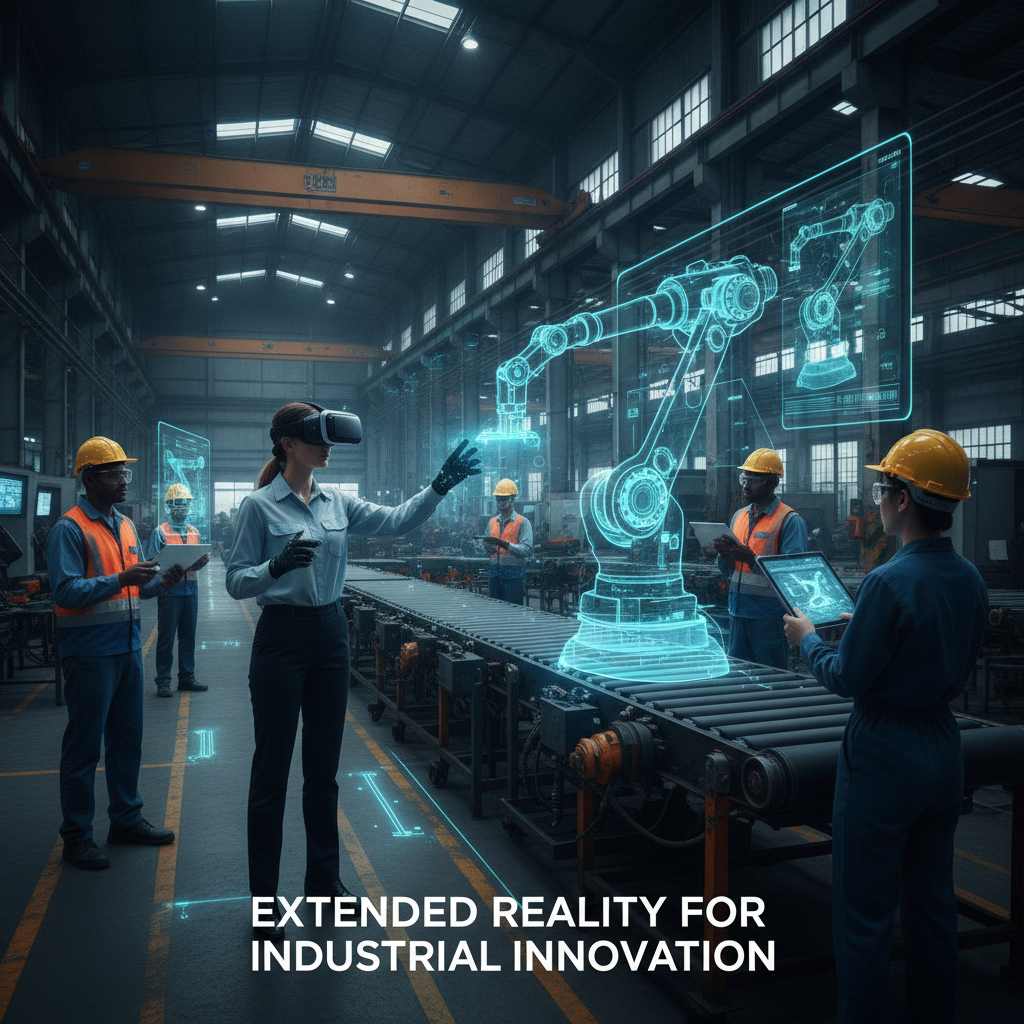
XR in Industry: Boosting Efficiency & Safety
The industrial landscape is continuously evolving, driven by innovation and the pursuit of greater efficiency, precision, and safety. While terms like AI and IoT often dominate the conversation, another transformative technology suite is rapidly gaining traction: Extended Reality (XR). Far from being just for gaming, XR is revolutionizing how industrial companies operate, from the factory floor to remote field operations.
What Exactly is XR?
Before diving into its industrial applications, let’s quickly clarify what XR encompasses. XR is an umbrella term that includes:
- Virtual Reality (VR): A fully immersive experience where users wear a headset to enter a simulated digital world, completely cut off from their physical surroundings.
- Augmented Reality (AR): Overlays digital information (like 3D models, data, or instructions) onto the real world, typically viewed through a smartphone, tablet, or smart glasses.
- Mixed Reality (MR): A hybrid of VR and AR, MR blends real and virtual worlds to produce new environments and visualizations where physical and digital objects co-exist and interact in real time.
In essence, XR allows us to interact with digital content in more intuitive and spatially aware ways than ever before, making it incredibly powerful for practical, hands-on industrial tasks.
Why Industry is Embracing XR
Industrial environments are complex, often requiring highly skilled labor, precise operations, and robust training. Here’s why XR is becoming indispensable:
Industrial sectors face unique challenges: high-stakes operations, complex machinery, a need for continuous training, and the logistical hurdles of remote support. XR offers compelling solutions by providing immersive, interactive, and highly effective tools to address these very issues head-on.
Key Industrial Applications of XR
The applications for XR in industry are vast and growing. Let’s explore some of the most impactful use cases:
1. Training and Simulation
Imagine training new hires on a multi-million dollar piece of equipment without any risk of damage or injury. VR provides hyper-realistic simulations for complex machinery operation, hazardous environment protocols, and intricate assembly processes. This allows employees to practice repeatedly, build muscle memory, and gain confidence in a safe, controlled virtual space, leading to faster learning and fewer on-the-job errors.
2. Remote Assistance and Collaboration
When a machine breaks down in a remote location, getting an expert on-site can be time-consuming and costly. With AR, a local technician can wear smart glasses, streaming their view to an expert thousands of miles away. The expert can then overlay digital instructions, diagrams, or highlight specific components directly into the technician’s field of view, guiding them step-by-step through repairs or diagnostics. This significantly reduces downtime and travel expenses.
3. Design and Prototyping
Engineers and designers can now step inside their 3D models using VR or AR, experiencing products and facilities at scale before they even exist physically. This allows for early detection of design flaws, more intuitive collaboration between teams, and faster iteration cycles, saving significant time and material costs associated with physical prototypes.
4. Maintenance and Repair
AR overlays can provide technicians with real-time access to crucial information, such as maintenance histories, digital twin data, and step-by-step repair guides, directly on top of the machinery they are working on. This “x-ray vision” helps identify issues faster, ensures compliance with procedures, and minimizes human error.
5. Quality Control and Inspection
XR can assist in quality assurance by guiding inspectors through a precise checklist, highlighting potential defects, or providing real-time data comparisons against design specifications. This ensures higher product quality and reduces the likelihood of costly recalls or rework.
The Tangible Benefits: Beyond the Hype
Implementing XR isn’t just about adopting cool tech; it delivers measurable benefits:
- Enhanced Safety: Training in hazardous virtual environments mitigates real-world risks.
- Improved Efficiency: Faster training, quicker repairs, and streamlined design processes boost productivity.
- Cost Reduction: Less travel for experts, reduced need for physical prototypes, and fewer operational errors save significant capital.
- Higher Quality: Precision guidance and real-time data improve accuracy in manufacturing and inspection.
- Faster Innovation: Quicker design cycles and better collaboration accelerate product development.
Looking Ahead: The Future is Immersive
Extended Reality is no longer a futuristic concept; it’s a powerful, practical tool actively shaping the industrial landscape today. As the technology matures, becomes more affordable, and integrates seamlessly with existing systems, its impact will only continue to grow. For industrial leaders looking to gain a competitive edge, improve worker capabilities, and drive operational excellence, embracing XR is not just an option—it’s an imperative.
Are you ready to explore how XR can transform your industrial operations?
“`

Leave a Reply