
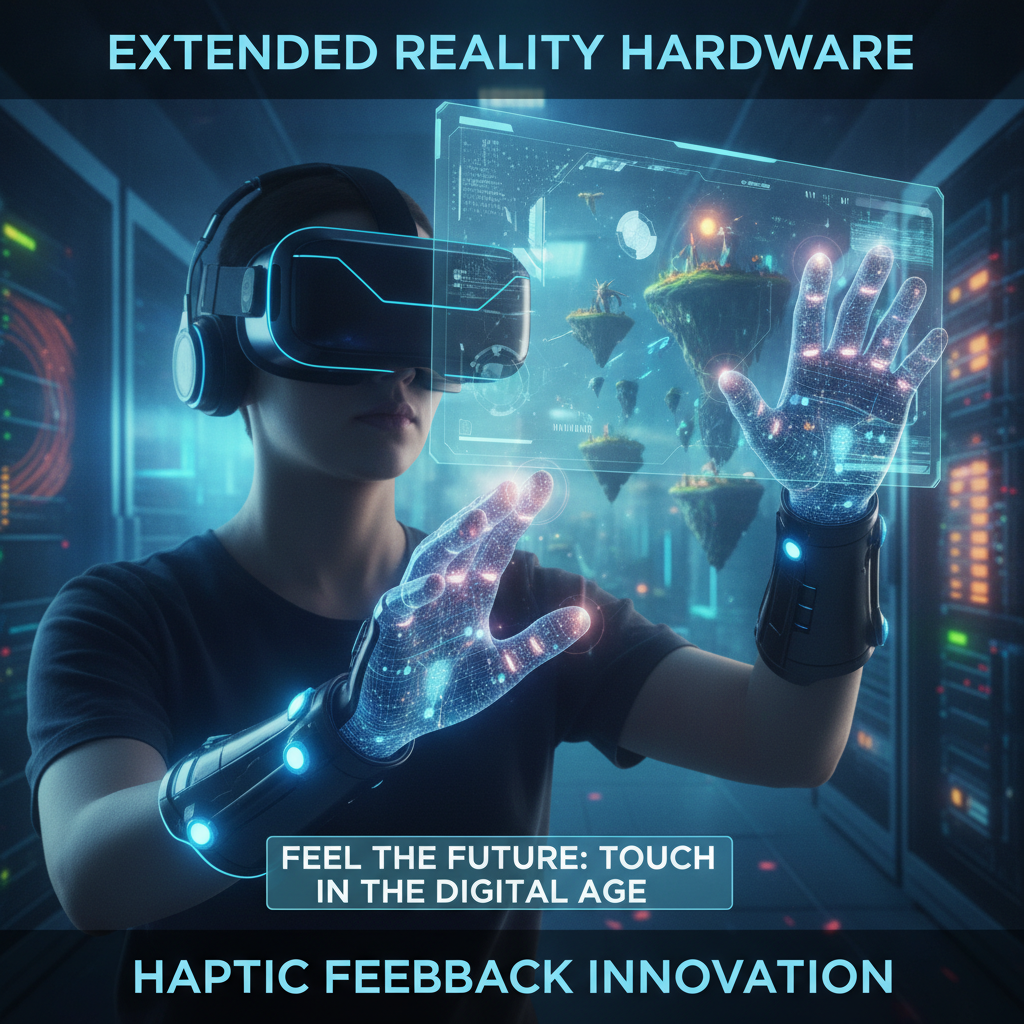
Feel the Future: XR Hardware & Haptics
Extended Reality (XR) is rapidly transforming how we interact with digital content, blending the physical and virtual worlds in exciting ways. But what truly makes these experiences come alive? It’s not just stunning visuals or spatial audio; it’s the sophisticated hardware powering these realms and the incredible sense of touch brought to life by haptic feedback. Let’s dive into how these elements create truly immersive digital adventures.
The Foundation: Essential XR Hardware
Behind every breathtaking virtual world or insightful augmented overlay lies a marvel of engineering: XR hardware. This includes everything from sleek Virtual Reality (VR) headsets like the Meta Quest 3 and Apple Vision Pro, to transparent Augmented Reality (AR) glasses, and powerful Mixed Reality (MR) devices that seamlessly blend both. These devices aren’t just screens; they’re complex systems comprising high-resolution displays, advanced optical lenses, precise tracking sensors, and robust processors – all working in concert to render realistic environments and track your movements with incredible accuracy. The more powerful and ergonomic this hardware, the more seamlessly you can lose yourself in the XR experience.
Such hardware needs to be lightweight, comfortable, and capable of sustained performance to prevent fatigue and motion sickness. High refresh rates and wide fields of view are crucial for visual comfort, while precise hand and eye tracking translate your real-world actions directly into the digital space, making interactions feel natural and intuitive. Without robust and well-optimized hardware, even the most innovative XR experiences would fall flat.
Bringing Touch to the Digital World: Haptic Feedback
While visuals and sound captivate our eyes and ears, it’s the sense of touch that truly anchors us to reality. Haptic feedback in XR aims to replicate this crucial sense, allowing us to ‘feel’ digital objects, textures, and interactions. Gone are the days of simple rumbling controllers; modern haptic technology is incredibly diverse. We’re talking about sophisticated vibration motors that simulate distinct textures, force feedback systems that push back against your hand, electrotactile feedback that creates sensations on your skin, and even thermal elements that let you feel warmth or coolness.
Imagine touching a virtual cat and feeling its fur, or gripping a digital tool and sensing its weight – that’s the magic of advanced haptics. These technologies transform passive viewing into active, tactile engagement, adding a layer of realism and presence that visuals alone cannot achieve. The goal is to make virtual interactions feel as natural and believable as those in the physical world, creating a deeper sense of immersion and connection to the digital environment.
Real-World Impact: Where Haptics Shine in XR
The applications of haptic feedback in XR are as diverse as they are impactful. In gaming, it transforms experiences from mere interaction to genuine immersion – feeling the recoil of a blaster, the impact of a punch, or the subtle vibrations of a virtual engine. This tangible feedback elevates the excitement and believability of virtual worlds, making every action resonate.
Beyond entertainment, haptics are revolutionizing professional fields. Surgeons can practice delicate procedures with realistic tactile feedback, engineers can ‘feel’ the flaws in a virtual prototype, and designers can experience textures of materials before they’re even manufactured. In social XR, a virtual handshake or high-five can suddenly feel much more personal and present, blurring the lines between digital and physical connection. From training simulations to creative design, haptics make XR not just seeable and hearable, but truly feelable.
What’s Next? The Future of Haptic XR
While current XR hardware and haptics are impressive, the journey towards ultimate immersion is just beginning. Researchers are pushing boundaries with micro-haptics for more localized and subtle sensations, advanced materials that can change texture on demand, and even full-body haptic suits that promise a truly encompassing tactile experience. We’re also seeing exploration into non-wearable haptics, like ultrasonic waves that create sensations in mid-air, offering new possibilities for interaction without physical contact.
The challenges remain – achieving hyper-realism, reducing bulk and cost, and integrating these systems seamlessly into everyday life – but the innovations on the horizon promise an XR future where every touch, every texture, every interaction feels incredibly real. Miniaturization, energy efficiency, and more sophisticated haptic actuators will continue to evolve, making XR experiences not just visually stunning but also profoundly tactile.
Extended Reality hardware provides the window into new worlds, but it’s haptic feedback that truly lets us reach out and touch them. Together, these technologies are not just enhancing our digital interactions; they’re redefining the very meaning of presence and immersion. As development continues at a breathtaking pace, we can look forward to an XR future where the digital world feels as tangible and responsive as our own.



Leave a Reply