
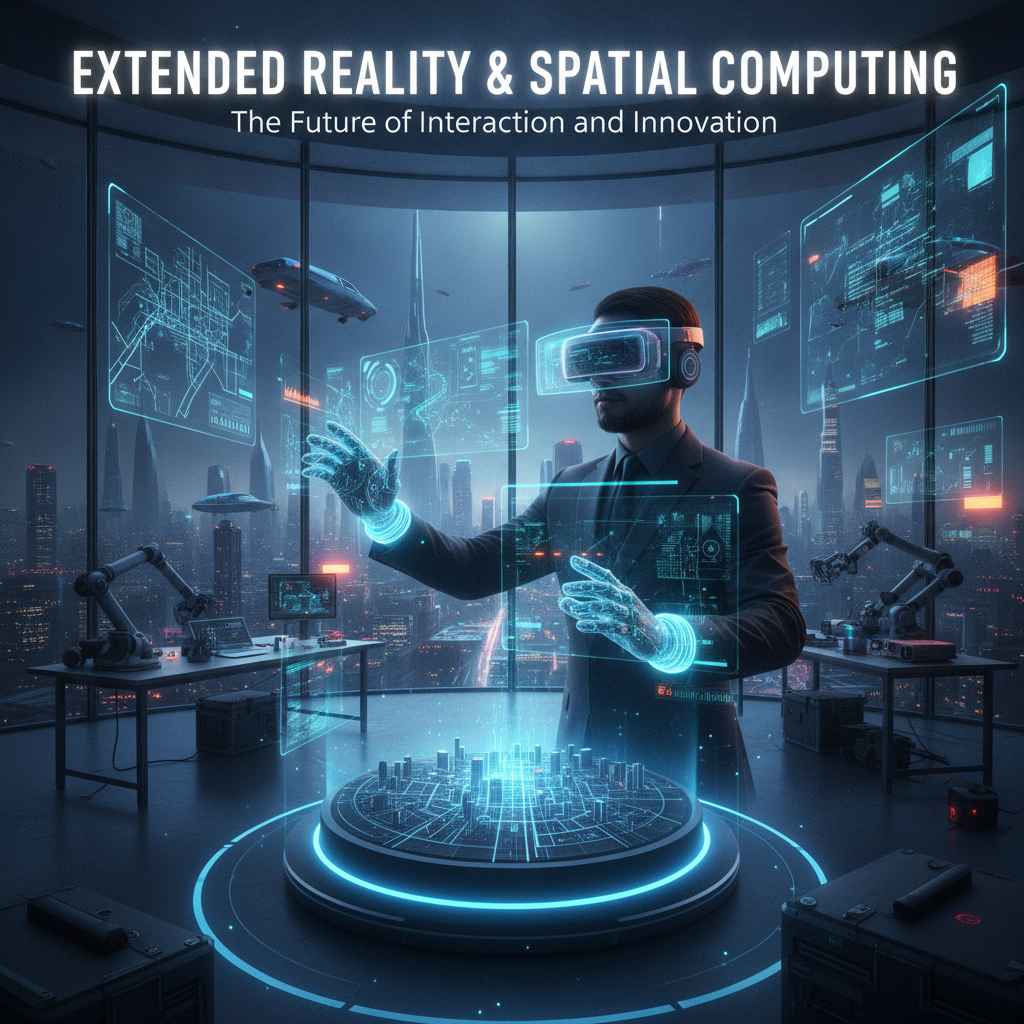
Beyond Screens: The Power of XR & Spatial Computing
Get ready to step into a new dimension! Extended Reality (XR) isn’t just a buzzword; it’s a rapidly evolving frontier that’s reshaping how we interact with digital information. At its core, XR—encompassing Virtual Reality (VR), Augmented Reality (AR), and Mixed Reality (MR)—is powered by groundbreaking hardware and the innovative concept of spatial computing. Let’s dive into how these two pillars are building our immersive future.
The Engine Room: XR Hardware Explained
The magic of XR starts with its hardware. These devices are sophisticated pieces of engineering designed to bridge the gap between our physical world and digital content.
Headsets: From bulky pioneers to sleek, integrated devices, XR headsets are the primary window into these new realities. VR headsets (like Meta Quest or PlayStation VR2) fully immerse you in virtual worlds, blocking out physical surroundings. AR headsets (such as Microsoft HoloLens) overlay digital information onto your real view, while MR headsets (like Apple Vision Pro or Varjo XR-3) seamlessly blend digital objects with your physical environment, making them appear truly present.
Input Devices: Beyond what you see, how you interact is crucial. Hand controllers offer haptic feedback and precise tracking. More advanced systems leverage hand tracking (using cameras to recognize gestures), eye tracking (for foveated rendering and interaction), and even brain-computer interfaces (BCIs) to create more intuitive and natural ways to engage with digital content.
Sensors Galore: XR hardware is packed with an array of sensors—cameras, LiDAR scanners, inertial measurement units (IMUs), microphones—all working in concert. These sensors continuously map your environment, track your movement, and understand your surroundings, which is fundamental for creating a stable and interactive experience.
Defining the Digital Frontier: Spatial Computing
While XR hardware provides the “eyes” and “hands,” spatial computing gives the system its “brain.” Spatial computing is a paradigm shift where computers understand and interact with our 3D physical world, rather than being confined to 2D screens.
Think about it: instead of apps living in separate windows on a desktop, they can exist as persistent, interactive holograms placed directly in your living room or office. This isn’t just displaying digital information; it’s about making computers aware of space, depth, and context. XR hardware, with its advanced sensors and processing power, is the vehicle that makes spatial computing not just possible, but incredibly impactful.
Applications range from collaborative design reviews where engineers in different locations can manipulate a 3D model together, to immersive training simulations that mimic real-world scenarios, to entertainment that transforms your home into an interactive playground.
Key Innovations Powering the Future
The pace of innovation in XR hardware and spatial computing is astounding. Here are a few areas making big waves:
Advanced Displays & Optics: High-resolution, wide field-of-view displays combined with pancake lenses are making headsets lighter, sharper, and more comfortable. Passthrough video, a staple of modern MR, allows for incredible fidelity in blending digital and physical worlds.
Processors & AI: Dedicated XR chipsets (like Qualcomm’s Snapdragon XR platform) are getting more powerful and energy-efficient. On-device AI is crucial for real-time environment understanding, object recognition, and natural language processing, making interactions seamless.
Inside-Out Tracking & SLAM: Gone are the days of external base stations for tracking. Inside-out tracking uses cameras on the headset itself to map your environment and pinpoint your position, while Simultaneous Localization and Mapping (SLAM) algorithms build persistent 3D maps of your space, allowing digital objects to “remember” their place.
Challenges and the Road Ahead
Despite the rapid advancements, XR hardware and spatial computing still face hurdles. Cost, comfort, battery life, and the need for more compelling content are ongoing challenges. However, the trajectory is clear: devices will become smaller, lighter, more powerful, and seamlessly integrated into our daily lives.
The future promises an exciting era where our physical and digital worlds will merge in ways we’re only just beginning to imagine. XR hardware and spatial computing aren’t just about entertainment; they’re foundational technologies that will transform industries, education, communication, and human connection itself. Get ready to experience computing beyond the screen!
“`


Leave a Reply