
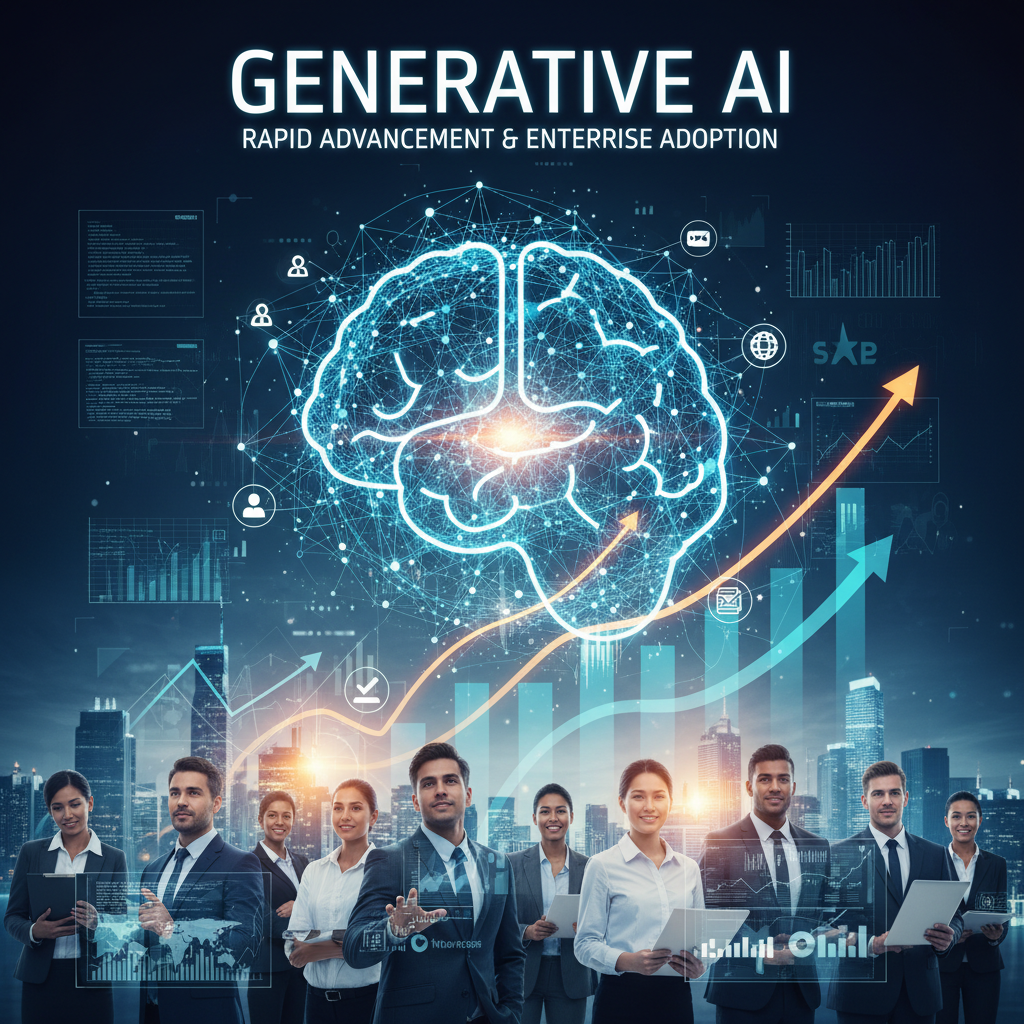
Generative AI: From Hype to Enterprise Powerhouse
It feels like just yesterday Generative AI was a fascinating niche in the tech world. Now, it’s not just a buzzword; it’s a transformative force rapidly reshaping industries and enterprise strategies worldwide. The speed at which Generative AI has advanced and moved into practical business applications is nothing short of astounding, setting new precedents for technological adoption.
The Unprecedented Pace of Innovation
What started with impressive text and image generation models has quickly expanded into a vast ecosystem of capabilities. We’ve witnessed a Cambrian explosion of new architectures, improved algorithms, and accessible tools that allow users and developers to create everything from compelling marketing copy to functional code, realistic images, and even entire virtual environments. This rapid evolution isn’t just about more sophisticated models; it’s about making powerful AI more practical and attainable for everyday business challenges.
Key Drivers Behind Enterprise Momentum
Several factors are fueling this swift enterprise adoption. Firstly, the models are getting exponentially better and more versatile, delivering higher quality and more relevant outputs. Secondly, increased computational power, often available through cloud services, has democratized access to what were once resource-intensive technologies. Lastly, the growing availability of well-curated datasets and open-source contributions has accelerated development, allowing businesses to build upon existing foundations rather than starting from scratch.
Bringing AI into the Boardroom: Real-World Applications
Enterprises aren’t just experimenting; they’re integrating Generative AI into core operations to unlock significant value. From enhancing customer service with AI-powered chatbots that offer personalized responses, to automating content creation for marketing and sales, the applications are diverse. Developers are using AI to write and debug code faster, designers are accelerating creative workflows, and data analysts are generating insights from complex datasets with unprecedented speed. The drive for efficiency, innovation, and competitive advantage is making Generative AI a strategic imperative.
Navigating the Future: Opportunities and Challenges
While the opportunities are immense, enterprise adoption isn’t without its considerations. Questions around data privacy, ethical AI use, bias mitigation, and intellectual property remain critical. Companies are also grappling with the need for new skill sets, robust governance frameworks, and seamless integration with existing systems. However, the potential rewards — from significant cost savings and increased productivity to entirely new products and services — are compelling organizations to thoughtfully invest and innovate in this space.
Embracing the Generative AI Era
We are truly in an exciting period of technological transformation. Generative AI is no longer a futuristic concept; it’s a present-day reality driving tangible business outcomes. For enterprises looking to stay competitive and relevant, understanding and strategically adopting Generative AI isn’t just an option—it’s quickly becoming a fundamental pillar for future success. The journey is just beginning, and its impact will only continue to grow.



Leave a Reply