
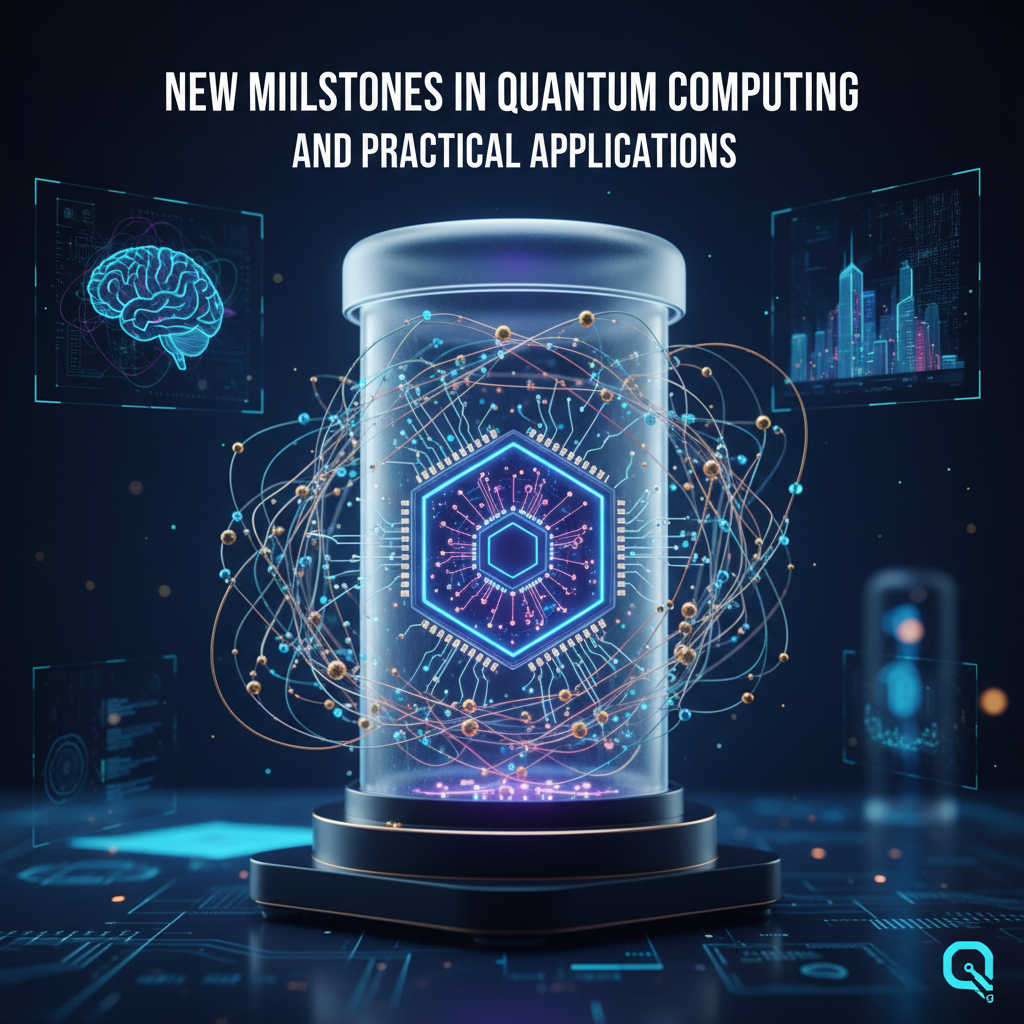
Quantum’s Ascent: Real-World Applications Emerge
For years, quantum computing felt like a distant dream, confined to academic papers and futuristic predictions. But what if we told you that the quantum revolution is no longer a distant whisper, but a clear, emerging roar? Today, we’re witnessing exciting new milestones that are rapidly bringing practical quantum applications closer to reality. It’s time to explore how this incredible technology is moving beyond the lab and into the practical realm.
Breaking Barriers: Recent Quantum Milestones
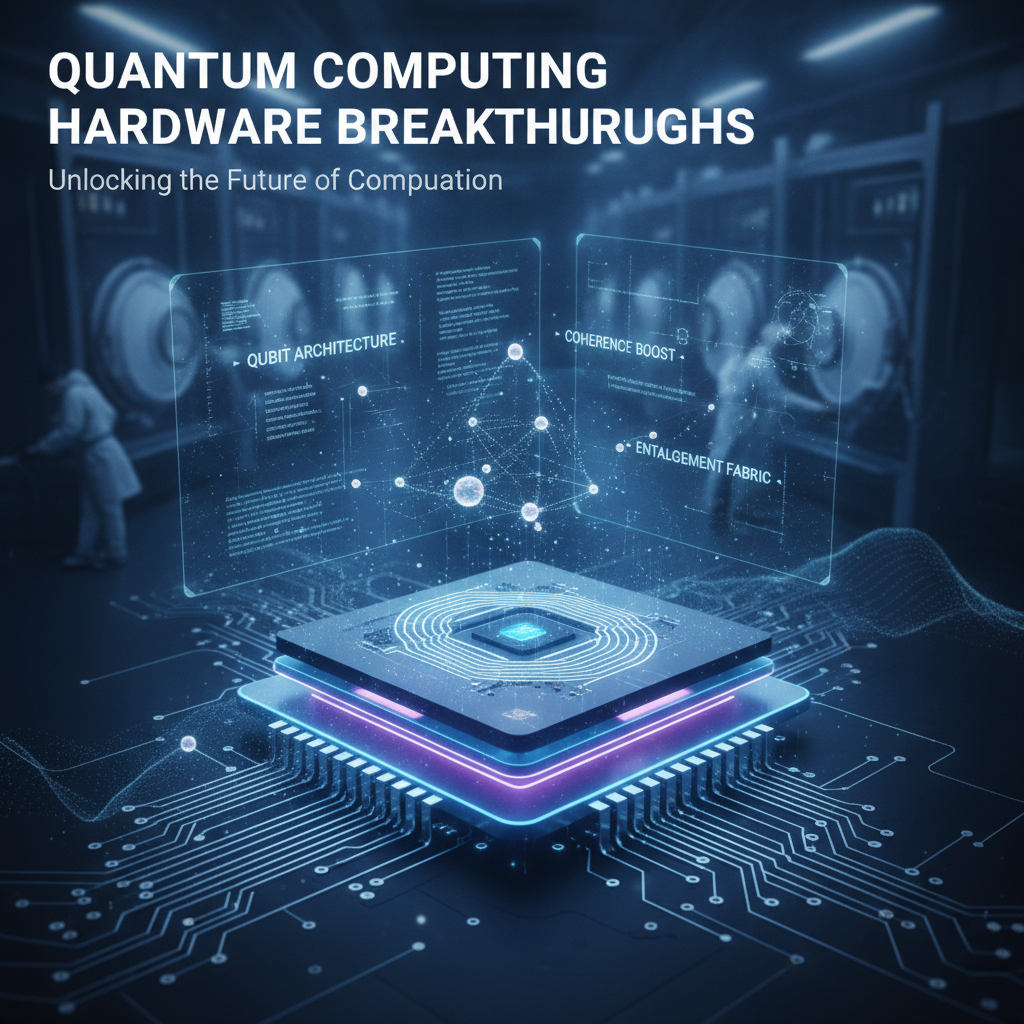
The quantum landscape is evolving at an incredible pace. Recent breakthroughs aren’t just about adding more qubits; they’re about enhancing their stability, improving error rates, and developing more sophisticated architectures. We’re seeing significant progress in quantum error correction techniques, which are crucial for building fault-tolerant quantum computers. Furthermore, new quantum processors are demonstrating longer coherence times, allowing for more complex computations before quantum states decohere. These incremental yet profound advancements are paving the way for the next generation of powerful quantum machines.
From advancements in superconducting qubits to trapped ions and photonic systems, the diversity of approaches is driving innovation. Each new research paper and successful experiment brings us a step closer to unlocking the full potential of quantum mechanics for computation.
From Theory to Reality: Emerging Applications
So, what does this mean for you and your industry? The potential practical applications are truly transformative. In drug discovery, quantum simulations could drastically speed up the development of new medicines by modeling molecular interactions with unprecedented accuracy, leading to more effective treatments with fewer side effects. For materials science, it promises the design of revolutionary new materials with tailored properties, from super-conductors to advanced batteries, opening doors to previously impossible innovations.
Financial institutions are exploring quantum algorithms for more efficient portfolio optimization and risk analysis, potentially leading to more stable and profitable investments. Even in logistics and supply chain management, quantum computing holds the key to solving complex optimization problems that are currently intractable for classical computers, leading to more efficient operations and reduced costs globally.
The Road Ahead: Challenges and Opportunities
While the progress is thrilling, it’s important to remember that quantum computing is still in its early stages. Significant challenges remain, particularly in scaling up qubit counts reliably and further improving error correction to achieve truly fault-tolerant systems. The sensitivity of quantum states requires extreme precision and control, which are difficult to maintain.
However, the global research community, tech giants, and innovative startups are investing heavily in overcoming these hurdles. The collaborative spirit, sharing of research, and rapid innovation across academia and industry ensure that the journey from noisy intermediate-scale quantum (NISQ) devices to truly fault-tolerant quantum computers is accelerating. Each challenge overcome represents a new opportunity for groundbreaking discovery.
The future of computing is undeniably quantum. We’re not just observing theoretical concepts anymore; we’re actively building the foundations for a new era where previously unsolvable problems become tractable. Keep an eye on this space – the practical applications of quantum computing are no longer science fiction, but a rapidly unfolding reality that promises to reshape industries and expand human capability. The quantum leap is happening now!
“`


Leave a Reply