
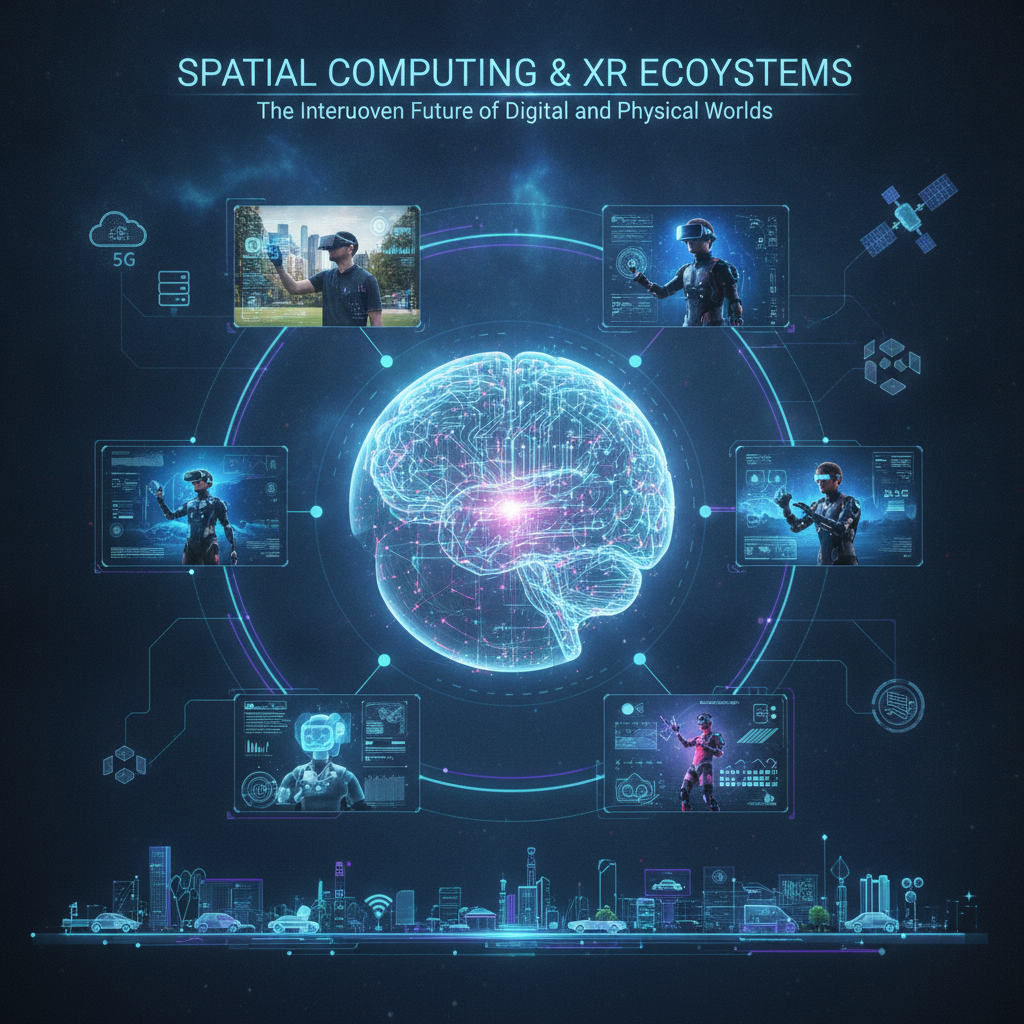
Spatial Computing & XR: Navigating New Realities
Welcome to the Next Dimension!
Ever feel like our digital lives are confined to flat screens? What if your computer could understand the world around you, blending digital information seamlessly into your physical space? Welcome to the thrilling realm of Spatial Computing and Extended Reality (XR) ecosystems – a paradigm shift that’s transforming how we interact with technology and each other.
Decoding Spatial Computing
At its core, Spatial Computing is about systems that understand and interact with our physical environment. It’s not just displaying information; it’s about making digital content aware of its physical surroundings, persistent within that space, and responsive to our movements and gestures. Imagine a digital blueprint floating accurately on a construction site, or a virtual pet playing hide-and-seek among your furniture. This isn’t just augmented reality; it’s computers recognizing, understanding, and operating within our 3D world.
The Extended Reality (XR) Spectrum
While Spatial Computing is the “what” (a new way of interacting), Extended Reality (XR) is often the “how” – the primary interface. XR is an umbrella term encompassing Virtual Reality (VR), Augmented Reality (AR), and Mixed Reality (MR):
- Virtual Reality (VR): Fully immerses you in a digital world, blocking out the physical environment. Think high-fidelity gaming or virtual training simulations.
- Augmented Reality (AR): Overlays digital information onto your view of the real world, often via smartphone apps or smart glasses. Pokémon Go was a famous early example.
- Mixed Reality (MR): A more advanced form of AR where digital objects are not just overlaid but anchored to and interact with the physical environment, responding to real-world obstacles and lighting. This is where the lines between physical and digital truly blur.
XR devices – from powerful VR headsets to sleek AR glasses – are the key gateways to experiencing spatial computing in action.
Building Blocks of the Ecosystem
The rise of Spatial Computing and XR isn’t driven by one single innovation, but by a sprawling ecosystem of interconnected technologies:
Hardware: This includes advanced headsets (like Meta Quest, Apple Vision Pro, Magic Leap), sophisticated sensors (depth cameras, LiDAR), haptic feedback devices, and powerful processors designed for real-time 3D rendering.
Software: Development kits (e.g., Unity, Unreal Engine, ARKit, ARCore, OpenXR) provide the tools for creators. Operating systems specifically designed for spatial interaction are emerging, alongside platforms for content distribution and social experiences.
Content & Applications: This is where the magic truly happens! From immersive games and entertainment to enterprise solutions for design, training, remote assistance, and digital twins, the variety of experiences is rapidly expanding.
Infrastructure: High-speed connectivity (5G), cloud computing, and edge computing are crucial for offloading heavy processing, ensuring low latency, and enabling persistent shared spatial experiences.
Why It Matters: Impact and Potential
The implications of this convergence are profound. In healthcare, surgeons can practice complex procedures on holographic patients. Manufacturers can design and prototype products in 3D space, collaborating remotely. Educators can create immersive learning environments that bring history or science to life. From enhanced retail experiences to new forms of artistic expression, Spatial Computing and XR are set to redefine how we work, learn, play, and connect.
The Road Ahead: Challenges & Opportunities
While the future is bright, challenges remain. Cost, user comfort, the need for interoperability between platforms, and ethical considerations around data privacy and digital boundaries are important hurdles. However, these also present immense opportunities for innovation. As the technology matures, becomes more accessible, and developers continue to push boundaries, the potential for this ecosystem to transform our world is limitless.
Join the Spatial Revolution!
Spatial Computing and XR are no longer futuristic concepts; they are here, evolving rapidly, and inviting us to explore new dimensions of human-computer interaction. Whether you’re a developer, an enthusiast, or simply curious, now is an incredibly exciting time to dive into this transformative ecosystem. The future is spatial – are you ready to step in?


Leave a Reply