
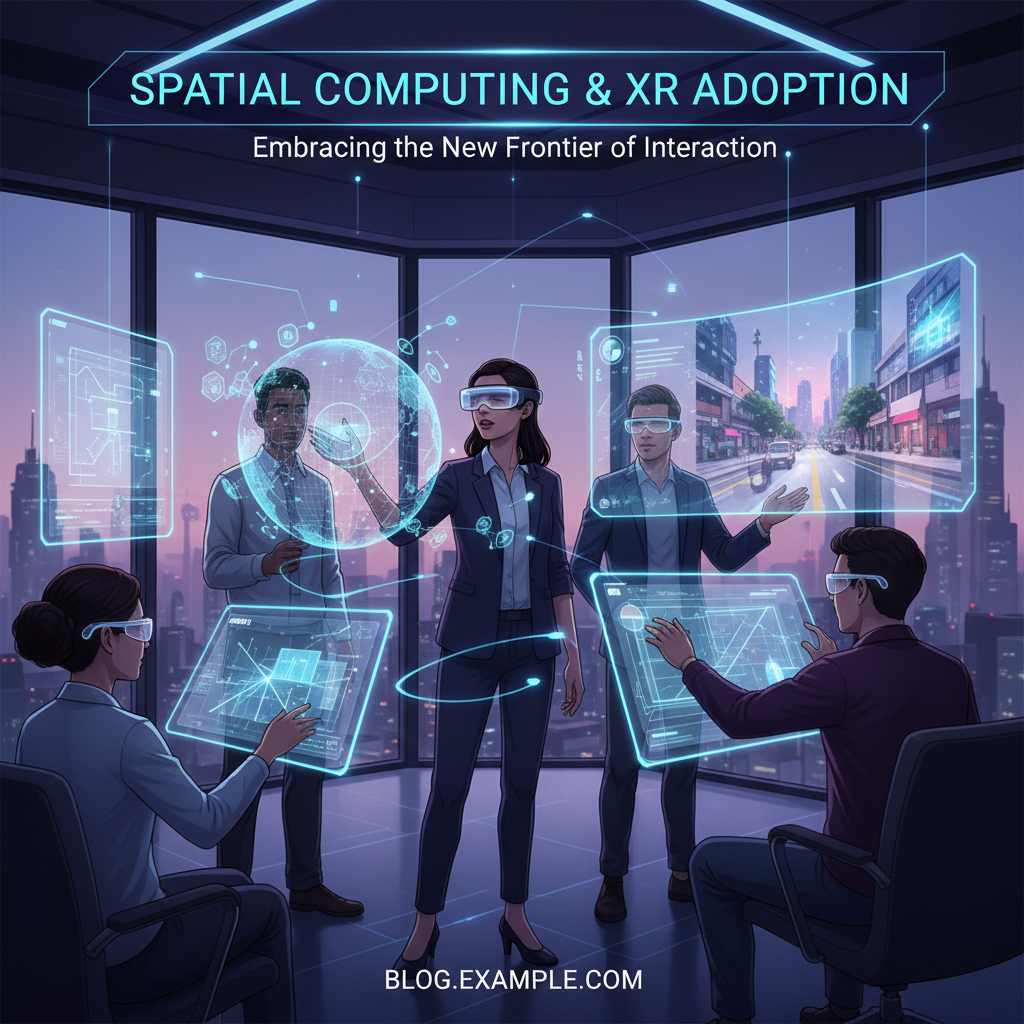
XR & Spatial Computing: The Future is Here
Remember when smartphones felt like science fiction? Get ready for the next paradigm shift: Spatial Computing and Extended Reality (XR). Far beyond just VR headsets, XR is poised to redefine how we interact with digital information and the physical world. But how far along are we in truly adopting this transformative technology?
Understanding Spatial Computing and XR
At its core, Spatial Computing refers to technology that allows computers to understand and interact with the real world, its objects, and our position within it. Think of it as giving computers a sense of space. Extended Reality (XR) is the umbrella term encompassing Virtual Reality (VR), Augmented Reality (AR), and Mixed Reality (MR) – the interfaces through which we experience spatial computing. From overlaying digital data onto our real environment to fully immersive virtual worlds, XR is expanding our digital horizons.
Why XR Adoption is Surging
The journey of XR hasn’t been a straight line, but recent advancements are fueling unprecedented adoption. Key drivers include:
Technological Maturation: Lighter, more powerful headsets with improved displays, wider fields of view, and better tracking are making experiences more comfortable and compelling.
Accessibility: While high-end devices exist, more affordable standalone headsets are bringing XR to a broader audience.
Enterprise Buy-in: Businesses are discovering tangible ROI in areas like training, product design, remote assistance, and virtual collaboration.
Content & Platform Growth: A growing ecosystem of applications, games, and development tools is making XR more useful and engaging.
Key Sectors Embracing Spatial Computing
XR isn’t just for gaming anymore. Its practical applications are driving adoption across diverse industries:
Manufacturing & Engineering: Virtual prototyping, assembly line training, remote maintenance support using AR overlays.
Healthcare: Surgical training, therapy for phobias, patient education, and even complex medical visualizations.
Education: Immersive classroom experiences, virtual field trips, and hands-on simulation for vocational training.
Retail & E-commerce: Try-before-you-buy AR apps for furniture or clothing, virtual showrooms, and enhanced customer experiences.
Remote Work & Collaboration: Virtual meeting rooms and shared spatial environments that foster a stronger sense of presence than traditional video calls.
Navigating the Hurdles Ahead
Despite the momentum, XR still faces significant hurdles:
Cost & Accessibility: High upfront hardware costs for some advanced systems remain a barrier for many consumers and smaller businesses.
User Experience & Comfort: Weight, battery life, and potential motion sickness are still areas for improvement.
Content Gaps: While growing, a “killer app” or widespread, compelling content ecosystem for all use cases is still developing.
Interoperability & Standards: A fragmented ecosystem with competing platforms and standards can hinder seamless experiences and development.
Privacy & Data Security: As our digital and physical worlds merge, new concerns around data collection and user privacy emerge.
The Road Ahead for XR and Spatial Computing
The trajectory for Spatial Computing and XR adoption is undeniably upward. As devices become more integrated into our daily lives (think AR glasses replacing smartphones), and as the power of spatial data becomes more accessible, we can expect a profound shift in how we work, learn, play, and connect. The future isn’t just digital; it’s spatial, interactive, and deeply integrated with our reality.
Are you ready to step into the spatial era? The journey of XR adoption is not just about technology; it’s about reimagining human-computer interaction and unlocking new dimensions of experience and productivity. The future is knocking, and it wants to know your position.



Leave a Reply