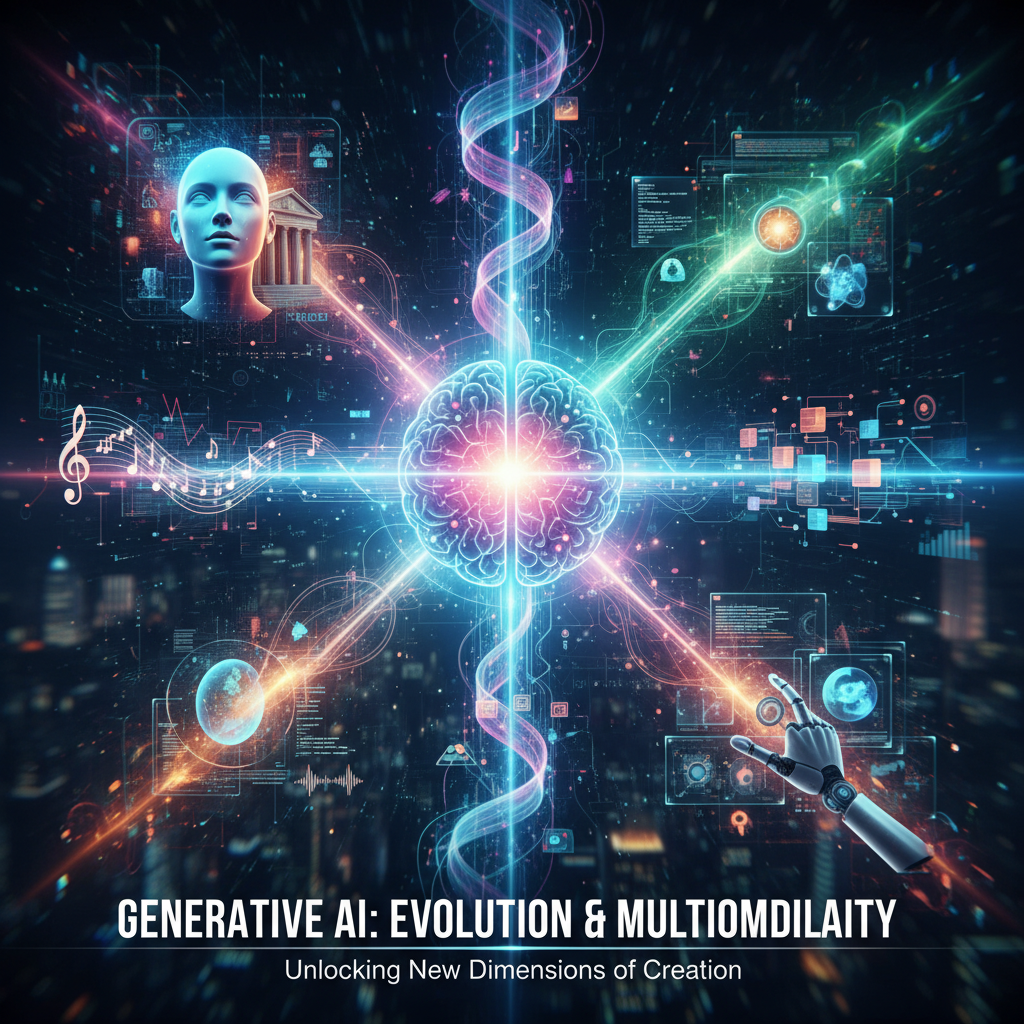
Generative AI: From Text to a Multimodal Future!
Remember when AI creating coherent text felt like magic? Well, that was just the beginning! Generative AI is evolving at an incredible pace, pushing boundaries we once thought futuristic. Today, it’s not just about words; it’s about a symphony of text, images, audio, and more.
What is Generative AI, Anyway?
At its core, Generative AI refers to algorithms that can create new, original content rather than just analyzing existing data. Think large language models (LLMs) like ChatGPT for text, DALL-E for images, or tools that compose music. It learns patterns from vast datasets and uses that knowledge to generate novel outputs, often mimicking human creativity.
The Blistering Pace of Progress
It feels like just yesterday we were marveling at AI’s ability to write a simple poem or draft an email. Now, we’re seeing systems generating complex code, drafting entire articles, and even passing advanced exams. This acceleration is fueled by improved algorithms, massive datasets, and increasing computational power, making these tools more sophisticated and accessible than ever before.
The iteration cycles are incredibly short. New models and capabilities are announced almost monthly, demonstrating a research and development velocity unprecedented in many other tech fields. This rapid evolution means what was cutting-edge last year might be standard practice today.
Embracing the Multimodal Revolution
Perhaps the most exciting frontier is multimodal AI. This means AI models are no longer confined to a single type of data (like just text or just images). Instead, they can understand, interpret, and generate content across multiple modalities simultaneously. It’s about AI perceiving and creating a richer, more integrated world.
Imagine describing a scene in text and having the AI generate a high-quality image, complete with specific lighting and style. Or uploading an image and asking the AI to describe it in detail, translate it into another language, and even compose a musical score that fits its mood. We’re seeing text-to-image, text-to-video, image-to-text, and even models that combine all three – truly unlocking a new dimension of possibilities.
Real-World Impact and Creative Horizons
The implications of multimodal generative AI are vast. For creatives, it’s a powerful new set of tools for rapid prototyping, concept art, content creation, and even personalized storytelling. Businesses can leverage it for dynamic marketing content, product design, and interactive customer experiences that are more engaging and tailored.
From personalized educational content that adapts to learning styles with visual aids and audio explanations, to advanced robotics that can interpret their environment through multiple senses and respond intelligently – the applications are just beginning to surface. This capability is set to transform industries and redefine how we interact with technology.
Navigating the Future: Challenges and Opportunities
Of course, with great power comes great responsibility. As these models become more sophisticated, discussions around ethics, bias, intellectual property, and responsible deployment are more critical than ever. Ensuring fairness and transparency in AI development is paramount.
However, the opportunities for innovation, problem-solving, and augmenting human creativity are immense. Staying informed and engaged in this conversation is key to harnessing the positive potential of this rapidly advancing technology.
Generative AI’s journey from text-based marvels to truly multimodal powerhouses is nothing short of breathtaking. It’s an exciting time to witness (and participate in!) this rapid evolution. So, buckle up – the future of creativity and innovation just got a whole lot more interesting!
“`

Leave a Reply