
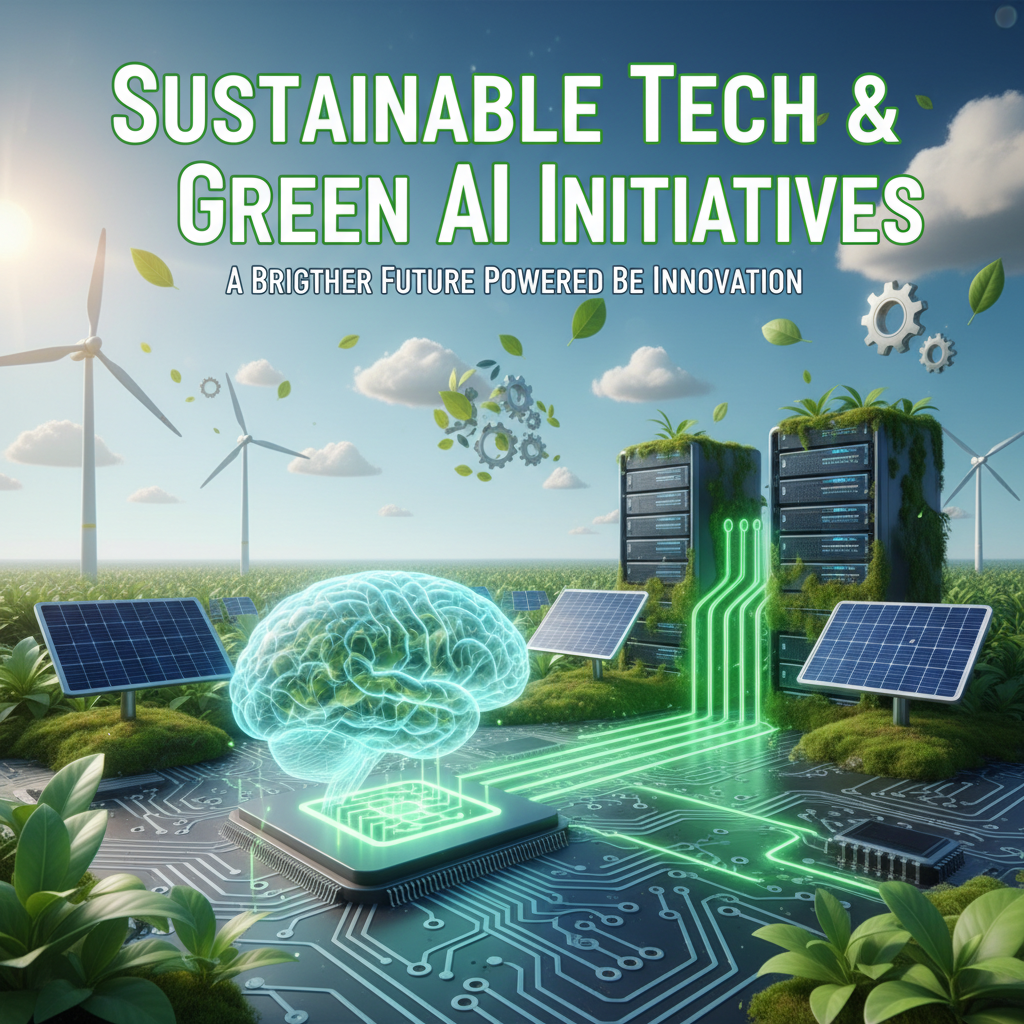
Green AI & Tech: Our Sustainable Future
In our increasingly digitized world, technology has become an indispensable part of our daily lives. From smartphones to smart cities, innovation continues to push boundaries. However, this relentless progress comes with an environmental cost. The energy consumption of data centers, the manufacturing of devices, and the lifecycle management of electronics contribute significantly to our planet’s carbon footprint. This is where the crucial concepts of Sustainable Technology and Green AI Initiatives step in, offering a beacon of hope for a greener tomorrow.
What is Sustainable Technology?
Sustainable Technology, often referred to as “Green Tech,” encompasses the creation, implementation, and disposal of technological solutions in an environmentally responsible manner. It’s about designing technology that minimizes its environmental impact throughout its entire lifecycle. This includes using fewer resources, reducing waste, lowering energy consumption, and favoring renewable energy sources. Think of energy-efficient hardware, software designed for longevity, circular economy principles in electronics, and data centers powered by solar or wind energy.
The Rise of Green AI Initiatives
Artificial Intelligence (AI), while revolutionary, can be incredibly resource-intensive. Training complex AI models requires immense computational power and, consequently, significant energy. Green AI initiatives are dedicated to addressing this challenge. They focus on two key aspects:
- Reducing AI’s Footprint: Developing more energy-efficient algorithms, using smaller and more optimized models, and running AI computations on hardware designed for lower power consumption. The goal is to make AI intrinsically sustainable.
- AI for Sustainability: Leveraging AI to solve environmental problems. This includes using AI to optimize energy grids, predict and mitigate climate change impacts, improve waste management, enhance precision agriculture, and design more sustainable materials. For example, AI can analyze vast datasets to identify energy waste patterns in buildings or optimize logistics to reduce fuel consumption.
Why It Matters: The Dual Impact
The convergence of Sustainable Technology and Green AI is paramount for several reasons. Firstly, as technology continues to permeate every sector, its environmental impact will only grow unless managed proactively. By integrating sustainability from the ground up, we can mitigate future ecological damage. Secondly, these initiatives aren’t just about reducing harm; they’re about actively contributing to environmental solutions. AI, when applied thoughtfully, can be a powerful tool in our fight against climate change and resource depletion.
Moreover, there are significant economic benefits. Investing in green tech can lead to cost savings through reduced energy consumption, foster innovation in new markets, and enhance corporate social responsibility, appealing to a growing segment of eco-conscious consumers and investors.
Looking Ahead: Challenges and Opportunities
The journey towards fully sustainable technology and ubiquitous Green AI is not without its challenges. It requires industry-wide collaboration, standardized metrics for environmental impact, and a shift in mindset from pure performance to performance-with-purpose. However, the opportunities are immense. We are on the cusp of a technological revolution where innovation doesn’t just push human capabilities but also heals our planet.
From developing neuromorphic chips that mimic the human brain’s energy efficiency to using AI for advanced climate modeling, the future of sustainable technology holds incredible promise. It’s a call to action for engineers, researchers, policymakers, and businesses alike to prioritize ecological stewardship alongside technological advancement.
Embracing Sustainable Technology and Green AI Initiatives isn’t just an option; it’s a necessity. It’s about ensuring that the incredible power of technology serves not only our present needs but also safeguards a thriving future for generations to come. Let’s work together to build a world where innovation and ecological responsibility go hand-in-hand.



Leave a Reply