
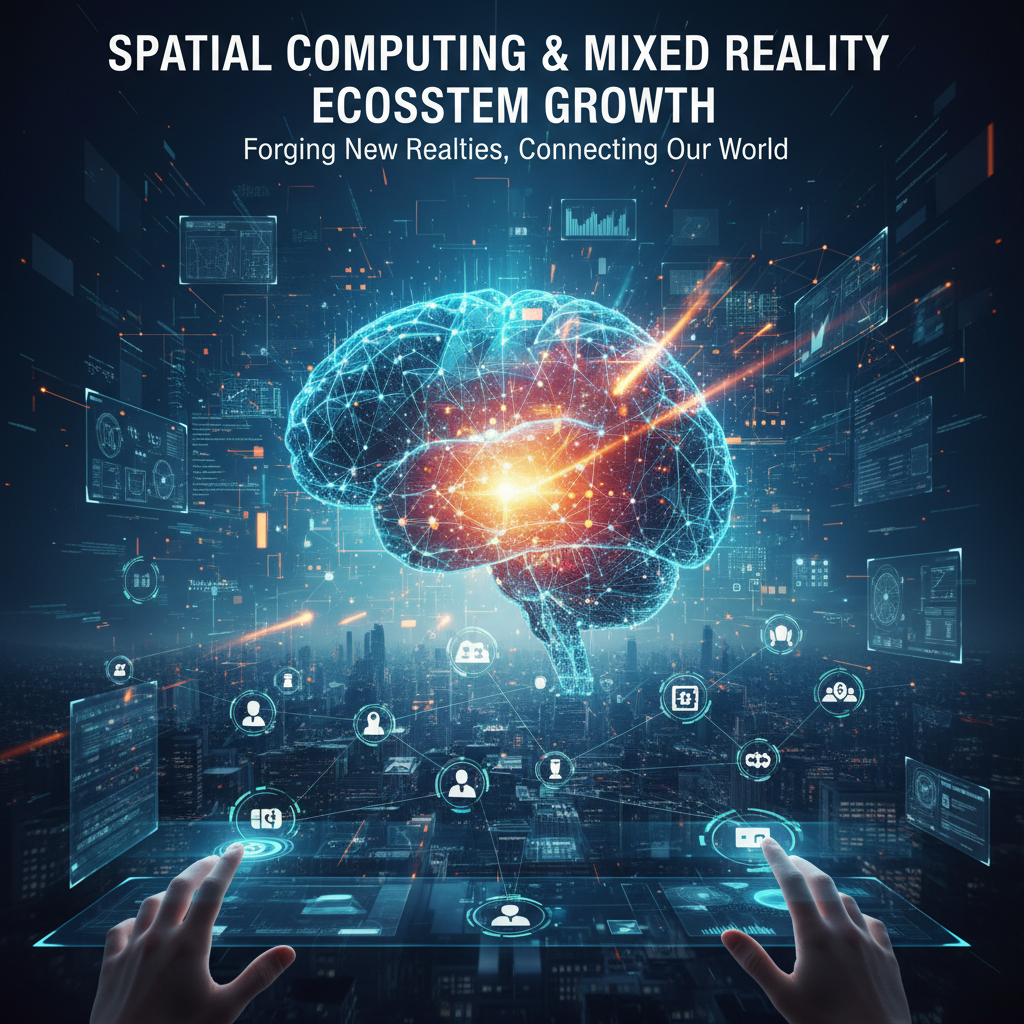
The Spatial Computing & MR Ecosystem is Booming!
Ever wondered what lies beyond your screen? The world of Spatial Computing and Mixed Reality is rapidly expanding, promising to transform how we interact with technology and our environment. Let’s dive into this exciting growth!
What is Spatial Computing and Mixed Reality?
At its core, Spatial Computing refers to technology that understands and interacts with the physical world around us. It allows digital content to be seamlessly integrated into our real-world space. Mixed Reality (MR) is a key facet of this, blending the physical and digital in real-time, enabling users to interact with both physical and virtual objects simultaneously.
Think beyond just VR headsets for gaming; this is about overlaying 3D models onto your living room, collaborating with colleagues’ avatars in a shared virtual space, or getting real-time navigation cues superimposed onto your actual path.
The Foundation: Why Now?
The concept of merging digital with reality isn’t entirely new, but several factors are converging to fuel its current explosive growth:
- Hardware Advancements: Powerful, lighter, and more sophisticated headsets (like Apple Vision Pro, Meta Quest 3, and various enterprise-focused devices) are making the experience more immersive and accessible.
- AI and Cloud Computing: These technologies provide the muscle for real-time environment understanding, object recognition, and complex simulations.
- Developer Tools and Platforms: Robust SDKs and platforms (e.g., Unity, Unreal Engine) are empowering creators to build incredible experiences faster than ever.
- Increased Investment: Major tech companies and venture capitalists are pouring billions into R&D and product development, signaling strong confidence in the future of spatial tech.
Building Blocks: Hardware, Software & Content Flourish
A thriving ecosystem requires more than just cool gadgets. We’re seeing growth across all essential components:
Hardware: From high-fidelity professional devices to more consumer-friendly options, the range is expanding. This competition drives innovation, pushing boundaries in display, optics, sensors, and processing power.
Software: Operating systems specifically designed for spatial interactions, along with development kits that simplify the creation process, are maturing. This includes everything from 3D scanning applications to advanced rendering engines.
Content & Experiences: This is where the magic truly happens. Businesses are developing training simulations, architectural visualization tools, and remote assistance applications. Consumers are gaining access to new forms of entertainment, social interaction, and personalized productivity tools.
Impact Across Industries and Everyday Life
The potential applications of spatial computing and MR are vast and continue to expand daily:
- Enterprise & Industry: Enhancing product design, remote collaboration, surgical training, field service, and manufacturing processes. Imagine a mechanic seeing repair instructions overlaid on an engine!
- Healthcare: Aiding in complex surgeries, therapy, medical education, and even managing patient records in a 3D interface.
- Education: Immersive learning environments that bring history, science, and art to life in ways never before possible.
- Retail & E-commerce: Virtual try-ons for clothing, visualizing furniture in your home before purchase, and interactive shopping experiences.
- Entertainment & Gaming: Taking immersive experiences to the next level, blurring the lines between the game world and your physical space.
Looking Ahead: Challenges and Opportunities
While the growth is exciting, there are still challenges to overcome, such as achieving truly comfortable and stylish form factors, ensuring widespread content availability, and addressing interoperability standards. However, the opportunities far outweigh them.
The future promises a world where our digital lives seamlessly merge with our physical surroundings, creating new paradigms for work, learning, socializing, and entertainment. This isn’t just about new devices; it’s about a fundamental shift in how we interact with information and each other.
Join the Spatial Revolution!
The spatial computing and mixed reality ecosystem is not just growing; it’s blossoming into a transformative force. Whether you’re a developer, a business leader, or simply curious about the future of technology, now is an incredible time to engage with this space. Get ready to experience a whole new dimension of interaction!
“`

Leave a Reply