
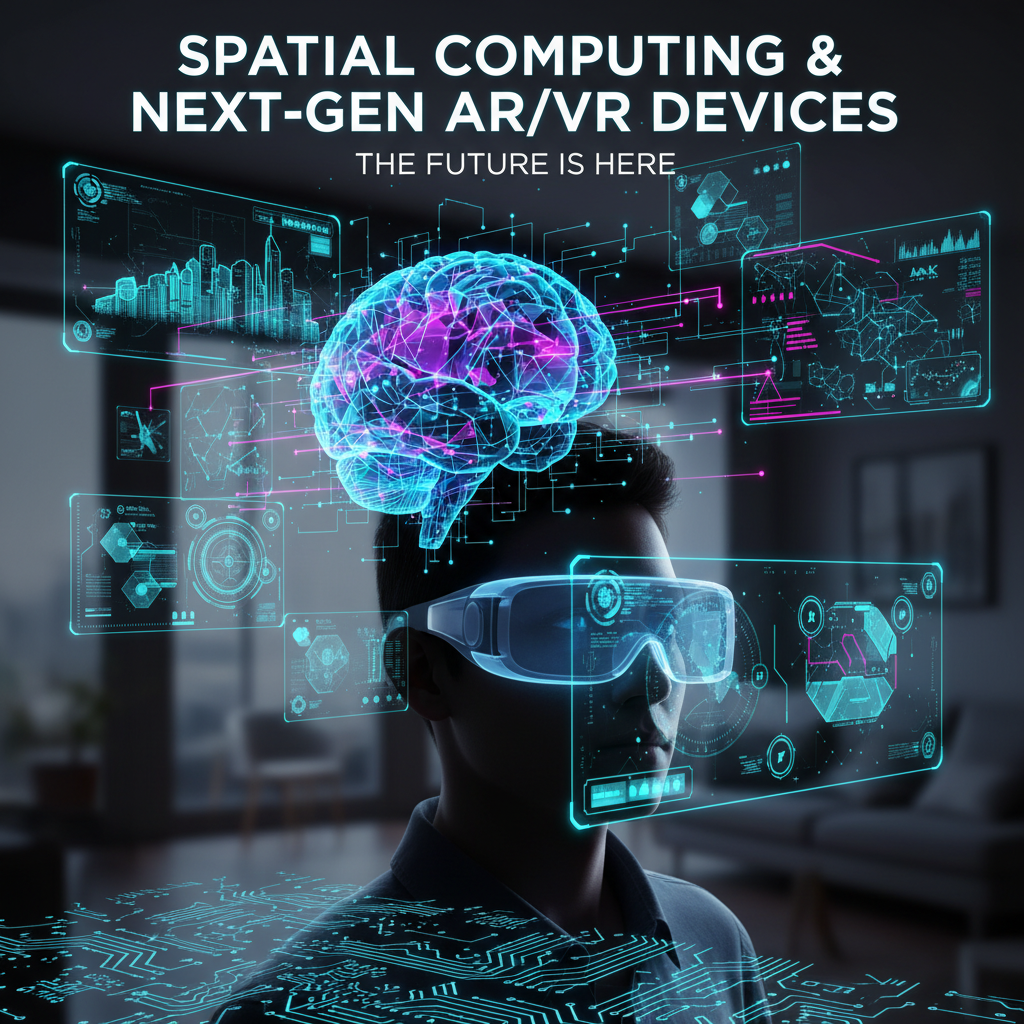
Beyond Screens: The Rise of Spatial Computing
Remember when AR/VR felt like science fiction? Well, the future is now, and it’s not just about putting on a headset. We’re on the cusp of a revolutionary shift, moving beyond traditional screens into an immersive world where digital information seamlessly blends with our physical environment. Welcome to the era of Spatial Computing and next-generation AR/VR devices!
Demystifying Spatial Computing
At its core, Spatial Computing is about enabling computers to understand and interact with the real world in three dimensions, similar to how humans do. It’s not just about displaying a virtual object; it’s about making that object aware of its surroundings, capable of interacting with physical surfaces, and persisting in a shared space. Think of it as giving computers a spatial awareness, allowing them to integrate digital content so naturally into our physical world that it feels indistinguishable from reality.
Next-Gen AR/VR: Your Gateway to New Realities
While the concepts behind Spatial Computing have been around for a while, the technology making it mainstream is finally here, spearheaded by advanced AR (Augmented Reality) and VR (Virtual Reality) devices. Next-gen headsets are moving beyond bulky prototypes, offering:
- Enhanced Immersion: Wider fields of view, higher resolution displays, and incredible refresh rates create truly believable experiences.
- Seamless Interaction: Advanced eye-tracking, hand-tracking, and haptic feedback make interactions intuitive and natural.
- Lightweight & Comfortable Designs: The future promises sleeker, lighter devices that can be worn for extended periods without fatigue, blending more naturally into our daily lives.
- Powerful Processors: Onboard computing power is increasing, reducing reliance on external devices and enabling richer, more complex spatial experiences.
These devices aren’t just for gaming; they are powerful tools poised to transform every industry.
Transforming Industries: Where Spatial Computing Shines
The applications are boundless:
- Education: Imagine dissecting a virtual frog in biology class or exploring ancient Rome from your classroom.
- Healthcare: Surgeons can practice complex procedures in a virtual operating room, and medical students can study anatomy in 3D.
- Design & Engineering: Architects can walk through their blueprints before construction begins, and engineers can collaborate on 3D models from across the globe.
- Entertainment & Social: Beyond gaming, picture shared virtual concerts, immersive storytelling, and new ways to connect with friends in digital spaces.
- Work & Productivity: Replace multiple monitors with limitless virtual screens, collaborate on 3D data, and bring remote teams together in shared virtual workspaces.
Navigating the Future: Challenges and Opportunities
Of course, this exciting future isn’t without its hurdles. Key challenges include:
- Cost: High-end devices are still expensive, limiting widespread adoption.
- Content Creation: Developing compelling and useful spatial experiences requires specialized skills and tools.
- User Comfort & Ethics: Addressing issues like motion sickness, privacy, and responsible use of immersive technologies will be crucial.
- Interoperability: Ensuring different devices and platforms can communicate and share spatial data seamlessly.
However, with rapid advancements in hardware, software, and increasing investment, these challenges are being actively addressed, paving the way for a truly spatial future.
Embrace the Spatial Revolution
Spatial Computing, powered by next-generation AR/VR, is not just another tech trend; it’s a fundamental shift in how we interact with information and the world around us. It promises a future where technology enhances our reality, makes learning more engaging, work more collaborative, and entertainment more immersive than ever before. Get ready to step into a new dimension of experience – the spatial revolution is here!

Leave a Reply