
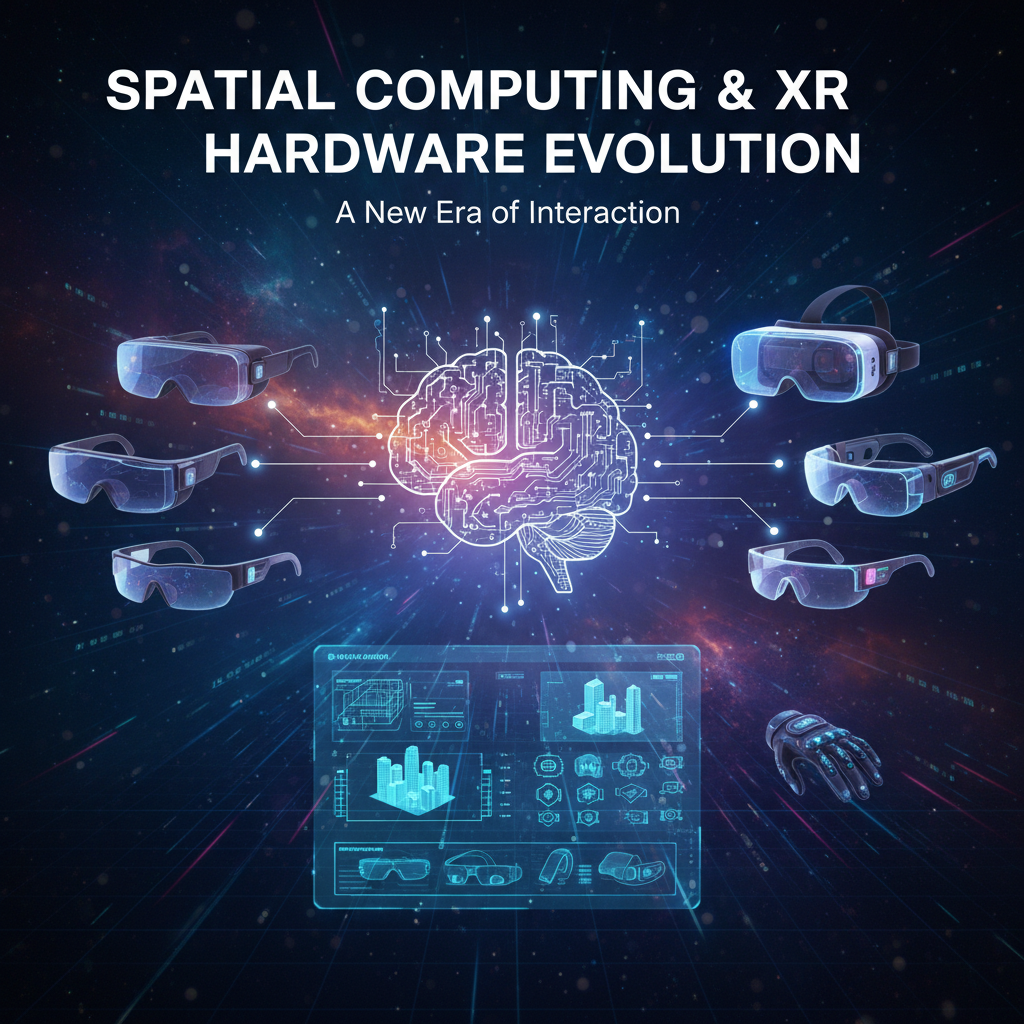
XR Hardware: The Future of Spatial Computing Unfolds
Hello fellow tech enthusiasts! Today, we’re diving into a realm that’s rapidly transforming how we interact with digital information and the physical world: Spatial Computing. This exciting field, which blends the real and virtual, is heavily reliant on the incredible evolution of eXtended Reality (XR) hardware. From clunky prototypes to sleek, powerful devices, the journey has been nothing short of astonishing. Let’s explore how these devices are shaping our immersive future!
From Niche Gadgets to Mainstream Vision
Remember the early days of VR and AR? For many years, these technologies felt like distant sci-fi dreams or niche developer tools. Early VR headsets were bulky, expensive, and often tethered to powerful PCs, while early AR attempts struggled with limited fields of view and processing power. However, persistent innovation has brought us to a thrilling inflection point.
Over the past few years, we’ve witnessed a dramatic shift. Devices like the Meta Quest series democratized standalone VR, making immersive experiences accessible to millions. More recently, innovations like the Apple Vision Pro have showcased what’s possible when cutting-edge displays, advanced spatial audio, and robust environmental understanding converge. These devices are no longer just for gaming; they’re becoming powerful tools for productivity, collaboration, education, and social connection, blurring the lines between our physical and digital realities.
Key Innovations Driving the Shift
What’s fueling this rapid evolution? A combination of breakthroughs across several hardware components:
- Displays: We’ve moved from low-resolution, “screen-door effect” panels to stunning micro-OLED and high-resolution LCDs, offering wider fields of view and incredibly sharp visuals. Varifocal displays and improved optics are also reducing eye strain and increasing realism.
- Tracking & Sensors: Inside-out tracking (no external base stations needed!) has been a game-changer for portability and ease of use. Advanced sensor arrays, including LiDAR, depth cameras, and IMUs, enable precise hand tracking, eye tracking, and a deeper understanding of the user’s environment, facilitating seamless digital overlays.
- Processing Power: Dedicated mobile chipsets (like Qualcomm’s Snapdragon XR platforms and Apple’s M-series chips) are now capable of running complex spatial applications directly on the headset, freeing users from wires and bulky external computers.
- Ergonomics & Form Factor: While still a work in progress, devices are becoming lighter, more balanced, and more comfortable for extended use. The goal is to make them as ubiquitous and unobtrusive as a pair of glasses.
The Road Ahead: What’s Next for XR Hardware?
The journey is far from over! Looking ahead, we can anticipate even more groundbreaking developments:
- Miniaturization: Expect the transition from “headsets” to lightweight “smart glasses” to accelerate, making XR devices indistinguishable from regular eyewear.
- Enhanced Sensory Feedback: Haptic gloves and suits will become more sophisticated, offering realistic touch and force feedback. We might even see advancements in olfactory (smell) and gustatory (taste) feedback for truly immersive experiences.
- Advanced AI Integration: On-device AI will enable more intuitive interactions, anticipate user needs, and intelligently adapt digital content to the physical environment.
- Battery Life & Power Efficiency: A perennial challenge, but continuous improvements in battery technology and chip efficiency will lead to longer usage times.
- Brain-Computer Interfaces (BCIs): While still largely experimental for consumer XR, BCIs could one day offer entirely new, hands-free ways to interact with spatial computing environments.
Conclusion: An Immersive Future Awaits
The evolution of XR hardware is not just about incremental improvements; it’s about building the foundational tools for the next generation of computing. Spatial computing promises to revolutionize everything from healthcare and education to entertainment and how we simply connect with one another. As the hardware continues to advance at a breathtaking pace, we’re not just observing the future; we’re actively stepping into it. Keep an eye on this space – it’s going to be an incredible ride!


Leave a Reply