
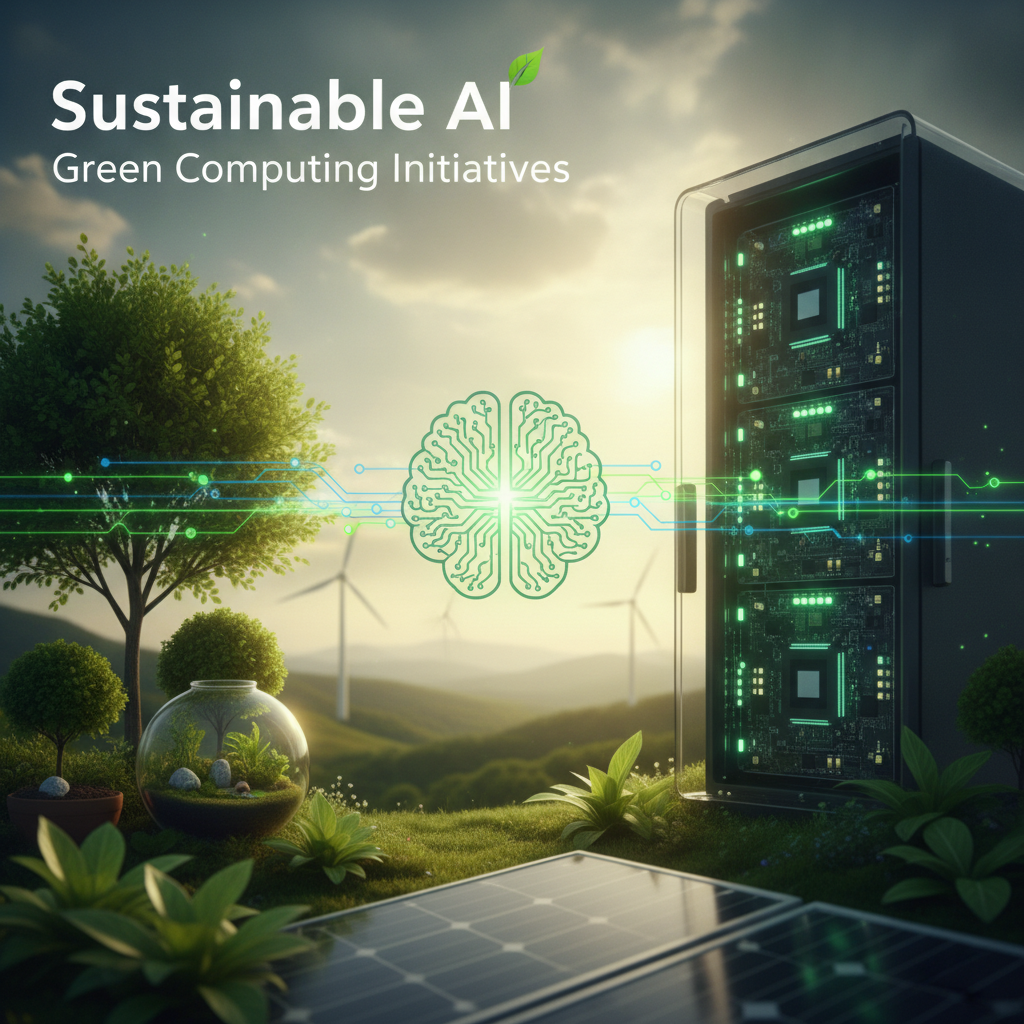
Greening AI: Powering a Sustainable Future
Artificial Intelligence is undeniably transforming our world, bringing unprecedented advancements across industries. From medical diagnostics to smart city management, AI’s potential seems limitless. However, this immense power comes with a significant energy cost. The computational demands of training and running complex AI models contribute to a growing carbon footprint, making the need for sustainable AI and green computing initiatives more critical than ever.
The AI Energy Conundrum
Think about the vast data centers humming with servers, constantly processing information to fuel our AI-driven world. Training a single large language model can consume as much energy as several homes over a year, emitting tons of CO2. As AI applications become more sophisticated and widespread, this energy consumption will only escalate if we don’t adopt more responsible practices. It’s a paradox: a technology that offers solutions to climate change could also exacerbate it if not managed sustainably.
What is Sustainable AI?
Sustainable AI isn’t just a buzzword; it’s a commitment to developing, deploying, and using AI systems in an environmentally responsible manner. It encompasses several key principles:
- Efficiency: Designing AI algorithms and models that require less computational power and data.
- Resource Optimization: Minimizing the consumption of energy, water, and raw materials throughout the AI lifecycle.
- Responsible Hardware: Utilizing energy-efficient hardware and promoting circular economy principles for electronic waste.
- Leveraging AI for Good: Applying AI itself to solve environmental challenges, such as optimizing energy grids, predicting climate patterns, and improving resource management.
Pioneering Green Computing Initiatives
The good news is that the tech industry, researchers, and policymakers are increasingly recognizing this challenge and actively pursuing solutions. Green computing initiatives are at the forefront of this movement:
- Algorithmic Innovation: Researchers are developing more “sparse” or “efficient” AI models that deliver similar performance with fewer computations. Techniques like quantization and pruning are key.
- Hardware Efficiency: Manufacturers are designing specialized AI chips (like GPUs and TPUs) that offer higher performance per watt, along with more efficient server architectures.
- Data Center Optimization: Companies are investing heavily in making data centers more energy-efficient. This includes optimizing cooling systems, utilizing advanced power management software, and even locating data centers in cooler climates to reduce cooling needs.
- Renewable Energy Integration: A growing number of data centers are being powered by renewable sources like solar, wind, and hydropower, significantly reducing their carbon emissions.
- Circular Economy Principles: Efforts are underway to extend the lifespan of AI hardware, promote recycling, and reduce electronic waste, transforming a linear consumption model into a more circular one.
Why This Matters: A Triple Bottom Line
The push for sustainable AI and green computing isn’t just about environmental responsibility; it delivers benefits across a “triple bottom line”:
- Environmental Impact: Directly reduces greenhouse gas emissions, conserves natural resources, and mitigates climate change.
- Economic Benefits: Lower energy consumption translates into significant cost savings for businesses, fostering innovation in green technologies and creating new economic opportunities.
- Social Responsibility: Demonstrates a commitment to ethical technology development, building trust with consumers and contributing to a healthier, more sustainable future for all.
Our Collective Path Forward
The journey towards truly sustainable AI is a collaborative one. It requires continued research, industry innovation, supportive policies, and increased awareness from developers and users alike. By consciously integrating sustainability into every stage of AI development and deployment, we can ensure that this powerful technology serves humanity without compromising the health of our planet. Let’s work together to harness AI’s potential not just for progress, but for a greener, more sustainable future.
“`



Leave a Reply