Sustainable Tech: Building Our Future
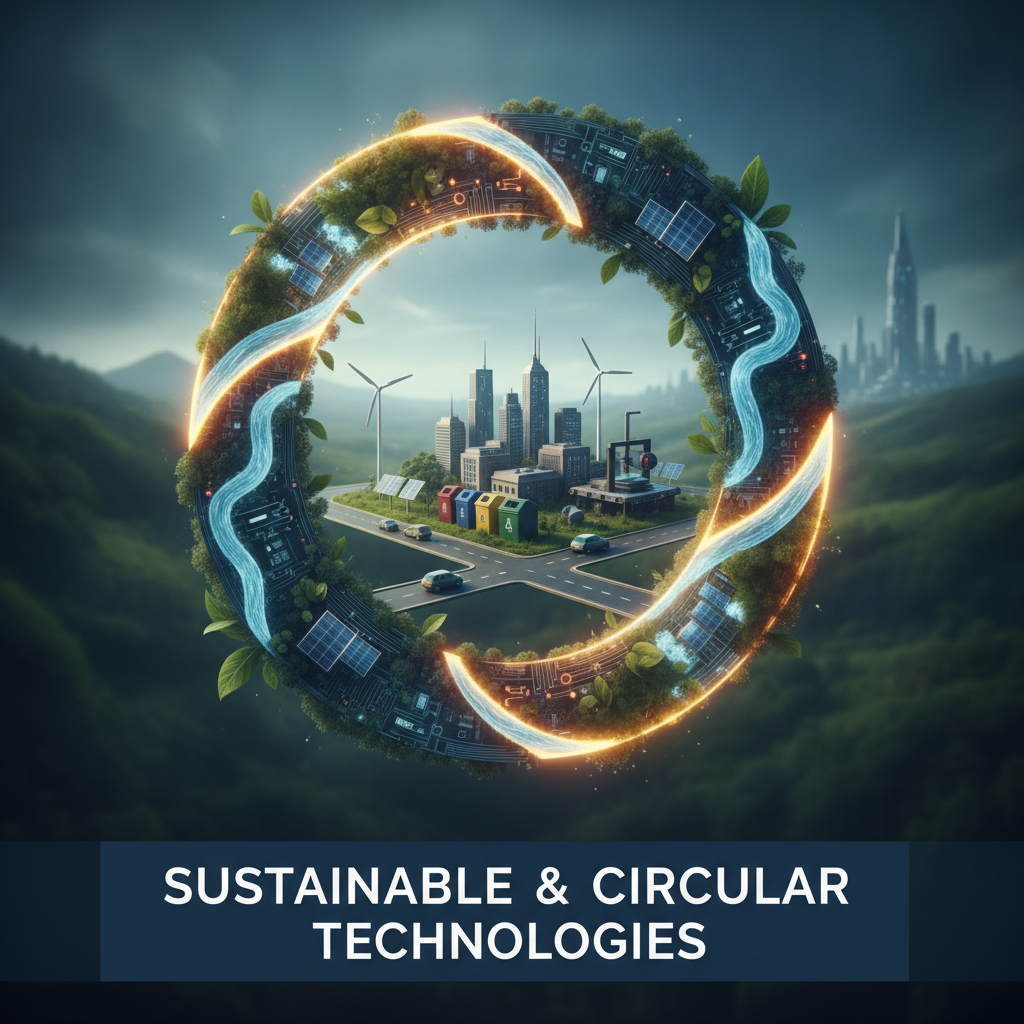
The way we produce, consume, and dispose of goods has reached a critical turning point. Our traditional linear economy—take, make, dispose—is straining our planet’s resources and generating mountains of waste. But what if there was a better way? Enter the powerful duo: the Sustainable and Circular Economy, supercharged by groundbreaking technologies.
Embracing a New Paradigm: Sustainability & Circularity
A Sustainable Economy aims to meet the needs of the present without compromising the ability of future generations to meet their own needs. The Circular Economy takes this a step further by redesigning our systems to keep resources in use for as long as possible, extract the maximum value from them while in use, then recover and regenerate products and materials at the end of each service life. The key to making this vision a reality? Innovative technology.
The Technologies Driving the Change
From smart sensors to advanced material science, a host of technologies are empowering us to “close the loop” and build a more resilient future. These innovations are transforming every stage of a product’s lifecycle:
IoT and AI for Resource Optimization: Imagine smart bins that know when they’re full, supply chains that predict demand to prevent overproduction, or factories that use AI to minimize energy waste. Internet of Things (IoT) devices combined with Artificial Intelligence (AI) allow for precise tracking, management, and optimization of resources, dramatically reducing waste and improving efficiency across industries.
Advanced Recycling and Upcycling: Beyond traditional recycling, new technologies are emerging. Chemical recycling can break down plastics into their original molecular components, ready to be reformed into new, high-quality products. Biological recycling uses enzymes and microorganisms to deconstruct materials, opening doors for even hard-to-recycle items. Upcycling technologies find creative ways to transform waste materials into products of higher value, preventing them from ever reaching a landfill.
Digital Twins and Product Passports: These digital tools provide a complete lifecycle history for products. A “digital twin” is a virtual replica of a physical product, allowing for predictive maintenance and extended lifespan. “Product passports” offer transparent information about a product’s materials, origin, repairability, and end-of-life instructions, empowering consumers and facilitating responsible recycling and reuse.
Additive Manufacturing (3D Printing): By building objects layer by layer, 3D printing significantly reduces material waste compared to traditional manufacturing. It also enables on-demand production, localized manufacturing, and the creation of highly customized parts for repair, thus extending product life and minimizing inventory waste.
More Than Just Green: The Broader Impact
These technologies offer far more than just environmental benefits. They pave the way for new business models (like product-as-a-service), enhance resource security, drive economic growth through innovation, and create new job opportunities. They foster a sense of shared responsibility and collaboration, proving that sustainability can be a powerful engine for progress.
Join the Circular Revolution!
The journey towards a truly sustainable and circular economy is a collective effort. From the researchers developing the next breakthrough to businesses adopting circular practices, and even us as consumers making conscious choices, everyone has a role to play. By embracing and investing in these incredible technologies, we’re not just protecting our planet; we’re actively building a more prosperous, resilient, and equitable future for all. Let’s innovate, collaborate, and cycle towards a better tomorrow!
“`


Leave a Reply