Hello Innovators and Eco-Enthusiasts!
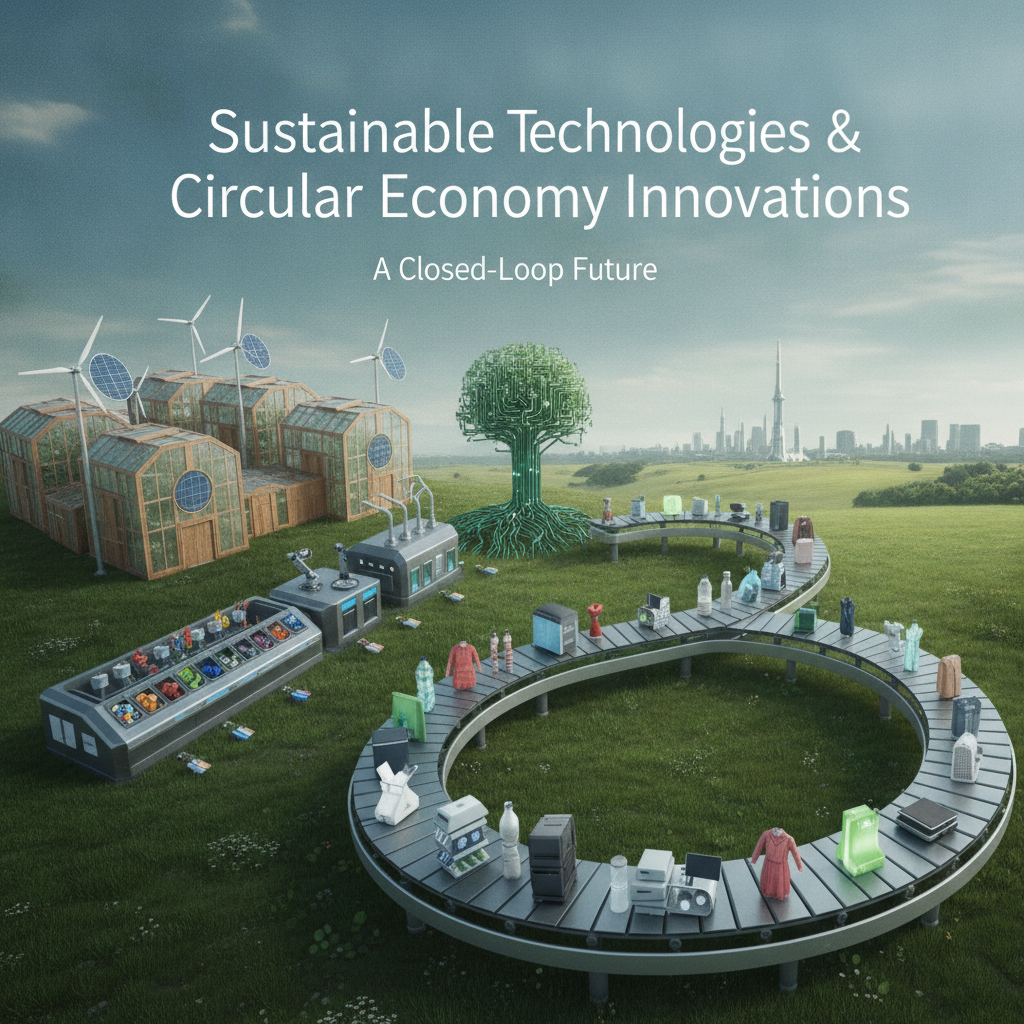
Today, we’re diving into a topic that’s not just trending but absolutely critical for our planet’s future: Sustainable Technologies and Circular Economy Innovations. As global challenges mount, from climate change to resource depletion, the way we design, produce, use, and dispose of products must fundamentally change. This isn’t just about ‘going green’; it’s about reimagining our entire economic system.
What Are Sustainable Technologies?
Sustainable technologies encompass a broad range of innovations designed to protect the environment, conserve resources, and reduce our ecological footprint. Think beyond just solar panels and wind turbines, though they are certainly pillars!
These technologies include advanced solutions in:
- Renewable Energy: Harnessing solar, wind, hydro, geothermal, and biomass power.
- Energy Efficiency: Smart grids, LED lighting, energy-efficient appliances, and intelligent building management systems.
- Green Materials: Biodegradable plastics, recycled composites, self-healing materials, and sustainable construction techniques.
- Waste Management & Recycling: Advanced sorting, chemical recycling, upcycling processes, and waste-to-energy solutions.
- Sustainable Agriculture: Precision farming, vertical farms, water-efficient irrigation, and organic pest control.
Essentially, they are tools that enable us to live, work, and produce with minimal negative impact on the environment.
Embracing the Circular Economy
While sustainable technologies provide the ‘how,’ the Circular Economy provides the ‘why’ and the ‘what.’ It’s an economic model that aims to eliminate waste and the continual use of finite resources. Unlike our traditional ‘take-make-dispose’ linear economy, the circular model is built on three core principles:
- Design out waste and pollution: From the very beginning, products are conceived to minimize waste and environmental harm.
- Keep products and materials in use: Through repair, reuse, remanufacturing, and high-quality recycling, materials retain their value for as long as possible.
- Regenerate natural systems: Returning biological materials to the earth safely, replenishing rather than depleting natural capital.
Imagine a world where your phone can be easily repaired, upgraded, or its components fully recycled into a new phone, rather than ending up in a landfill. That’s the promise of a circular economy.
Innovations Driving the Change
The synergy between sustainable technologies and the circular economy is where the magic truly happens. Here are some exciting innovations:
- Product-as-a-Service (PaaS) Models: Companies like Philips (lighting) or Mud Jeans (denim) lease their products instead of selling them, retaining ownership and responsibility for maintenance, upgrades, and end-of-life recycling.
- Advanced Material Recovery: Startups are developing sophisticated methods for extracting valuable materials from e-waste, plastics, and even industrial byproducts, turning waste streams into new raw materials.
- Digital Passports & Blockchain: Tracking the origin and lifecycle of products and materials to facilitate better recycling, repair, and transparency in supply chains.
- Bio-based & Biodegradable Materials: Innovations in bioplastics made from algae or fungi, and packaging that composts harmlessly, reducing reliance on fossil fuels.
- IoT for Resource Optimization: Sensors and AI optimizing everything from water usage in agriculture to energy consumption in smart buildings, minimizing waste in real-time.
The Benefits of This Synergy
Adopting sustainable technologies within a circular economy framework brings a multitude of benefits:
- Environmental Resilience: Reduced greenhouse gas emissions, less pollution, conservation of biodiversity, and lower demand for virgin resources.
- Economic Opportunity: New business models, job creation in green sectors, increased resource security, and reduced volatility in raw material prices.
- Social Well-being: Healthier communities through reduced pollution, improved product durability and accessibility, and a more equitable distribution of resources.
The transition to a sustainable and circular future is not just an ideal; it’s an economic imperative and a moral responsibility. Every innovation, every conscious choice, and every policy shift brings us closer to a thriving planet for generations to come.
What sustainable tech or circular economy innovation excites you the most? Share your thoughts in the comments below!
“`



Leave a Reply