
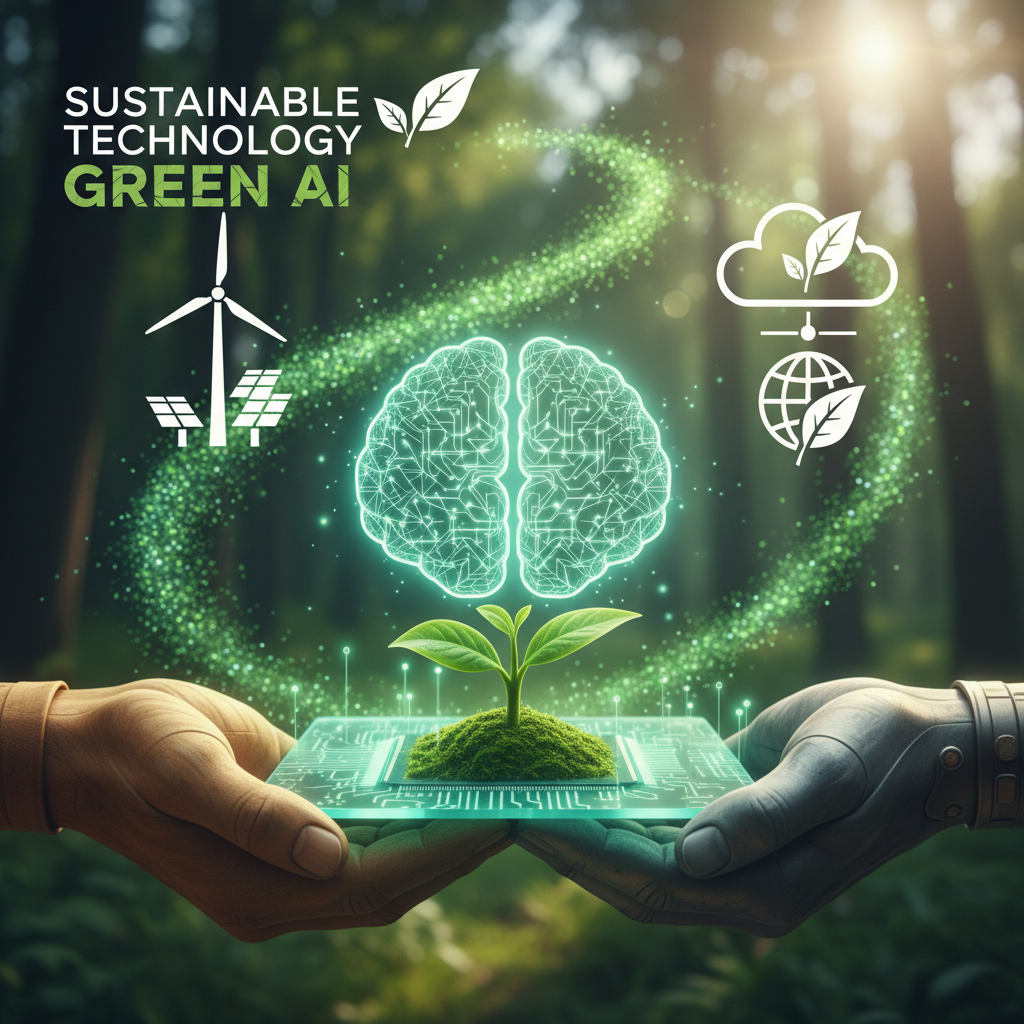
Tech for a Greener Tomorrow: Green AI’s Promise
Hey there, eco-conscious innovators and tech enthusiasts! Ever wondered how the rapid advancements in artificial intelligence can actually help us build a more sustainable future? It’s a fascinating and crucial question, especially as we face pressing environmental challenges. Today, we’re diving into the exciting world of Sustainable Technology and its powerful ally: Green AI.
What Exactly is Sustainable Technology?
At its heart, sustainable technology is about designing, developing, and using technological solutions that meet the needs of the present without compromising the ability of future generations to meet their own needs. This means minimizing environmental impact – think reduced waste, lower energy consumption, and responsible resource use – while also promoting social well-being and economic viability. From renewable energy systems to efficient manufacturing processes, sustainable tech is all around us, evolving rapidly.
Enter Green AI: Intelligence for Our Planet
Now, where does AI fit in? While AI’s immense computational power can sometimes come with a significant energy footprint (especially for training large models), “Green AI” offers a transformative vision. Green AI encompasses two main aspects:
- Energy-Efficient AI: Developing AI models and hardware that require less energy to train and run.
- AI for Environmental Benefit: Using AI to solve environmental problems, from optimizing energy grids to predicting climate patterns.
It’s about making AI itself more sustainable, and simultaneously leveraging its intelligence to drive broader sustainability goals.
How Green AI Powers a Sustainable Future
The applications are incredibly diverse and impactful:
- Optimizing Energy Grids: AI can predict energy demand and supply more accurately, integrating renewable sources efficiently and reducing waste in distribution.
- Climate Modeling & Prediction: Advanced AI models help scientists better understand climate change, predict extreme weather events, and develop mitigation strategies.
- Resource Management: From smart agriculture that minimizes water and pesticide use to AI-powered waste sorting and recycling, AI helps us manage finite resources more intelligently.
- Sustainable Design & Manufacturing: AI can optimize product designs for recyclability, reduce material waste in production, and improve supply chain efficiency.
- Biodiversity Conservation: AI-powered sensors and analysis tools can monitor wildlife populations, detect poaching, and track deforestation, aiding conservation efforts.
The Path Forward: Challenges & Bright Opportunities
Of course, the journey isn’t without its challenges. The energy consumption of training ever-larger AI models remains a concern, emphasizing the need for continued research into more efficient algorithms and hardware. Ethical considerations around data privacy and bias also play a crucial role in ensuring AI is deployed responsibly.
However, the opportunities far outweigh these hurdles. By committing to developing Green AI – AI that is both intrinsically efficient and purposively applied for environmental good – we can unlock unprecedented potential. It requires collaboration across researchers, policymakers, and industry leaders to prioritize sustainability in every layer of technological development.
Let’s Build a Greener, Smarter Tomorrow
Sustainable technology and Green AI aren’t just buzzwords; they represent a fundamental shift in how we envision and create our future. By integrating environmental consciousness into the core of our technological advancements, we’re not just building smarter systems, but a healthier, more resilient planet for everyone. What innovative ways do you see AI contributing to sustainability? Share your thoughts below!



Leave a Reply