
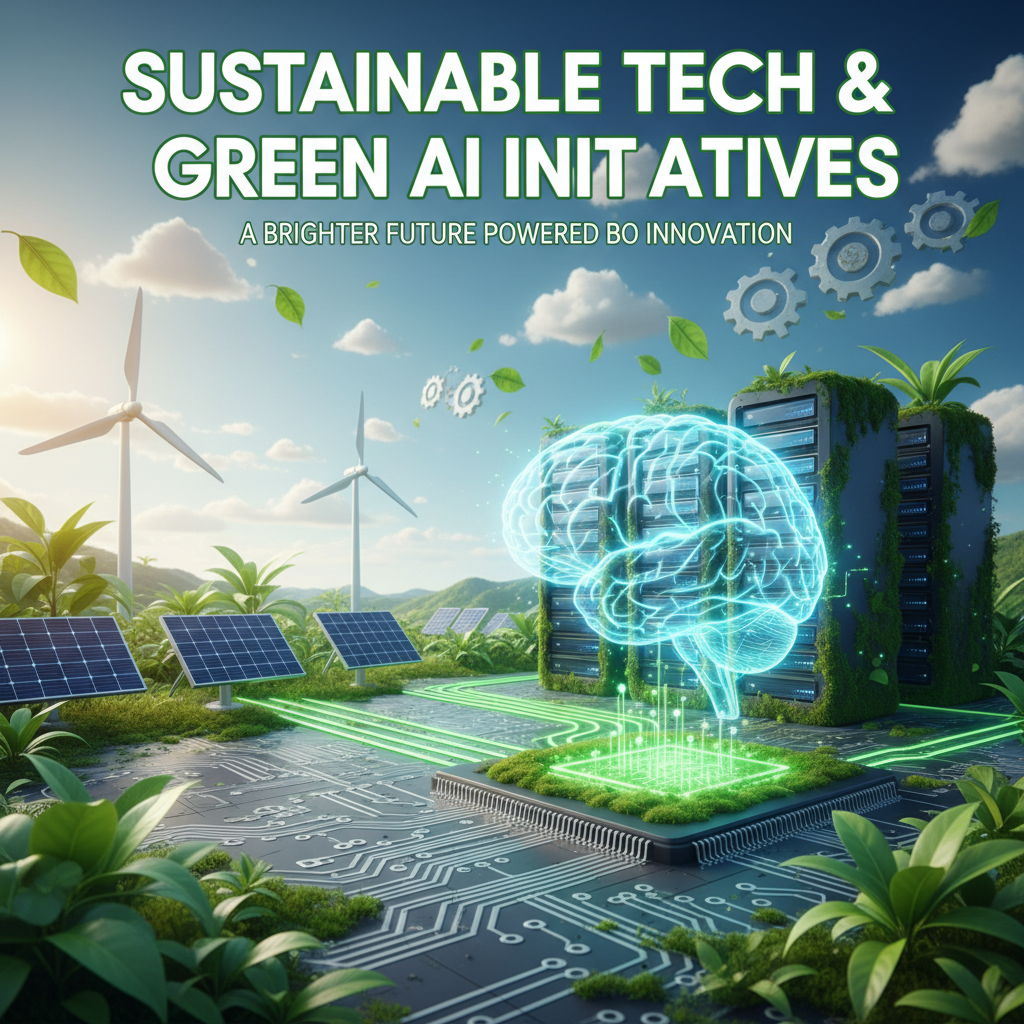
Tech’s Green Revolution: AI for a Sustainable Future
Hello tech enthusiasts and planet protectors! Today, we’re diving into a topic that bridges innovation with responsibility: Sustainable Technology and Green AI Initiatives. As our digital world expands, so does its environmental footprint. But what if the very tools driving progress could also be instrumental in healing our planet? Let’s explore how.
The Growing Footprint of Our Digital World
It’s no secret that the internet and the vast computational power behind AI consume significant energy. From training complex machine learning models to powering data centers around the globe, the demand for electricity is immense. This consumption often translates into substantial carbon emissions, contributing to climate change. Recognizing this challenge is the first step towards building a more sustainable digital future.
Defining Sustainable Technology
Sustainable technology isn’t just about making things “green.” It encompasses the design, production, use, and disposal of technological products and services in a way that minimizes environmental impact, conserves resources, and promotes social equity. For AI, this means everything from energy-efficient algorithms and hardware to responsible data management and ethical development practices.
Green AI: Smarter Algorithms, Greener Planet
Green AI initiatives focus on reducing the environmental impact of artificial intelligence itself. This involves several key strategies:
- Optimized Algorithms: Developing AI models that require less computational power and data to achieve their goals. Think lean, efficient code.
- Energy-Efficient Hardware: Utilizing specialized processors (like GPUs optimized for AI) and energy-efficient data centers powered by renewable energy sources.
- Lifecycle Thinking: Considering the environmental impact from development to deployment and eventual decommissioning of AI systems.
- Cloud Computing for Good: Leveraging cloud providers committed to sustainability and offering transparent reporting on their energy consumption and renewable energy use.
By making AI “greener” internally, we reduce its direct environmental cost.
AI as a Catalyst for Global Sustainability
Beyond making AI itself sustainable, Green AI initiatives also harness the power of AI to *solve* broader environmental challenges. This is where AI truly shines as a tool for good:
- Climate Modeling & Prediction: AI can process vast amounts of climate data to create more accurate models, helping us understand and predict climate change impacts.
- Smart Grids & Renewable Energy Management: AI optimizes energy distribution, balances supply and demand for renewables, and minimizes waste in power grids.
- Precision Agriculture: AI-powered sensors and drones help farmers use water, fertilizers, and pesticides more efficiently, reducing resource consumption and pollution.
- Waste Management & Circular Economy: AI can sort waste more effectively, identify recycling opportunities, and optimize logistics for a circular economy.
- Biodiversity Conservation: AI monitors wildlife, tracks deforestation, and identifies poaching hotspots, aiding conservation efforts.
Here, AI isn’t just less harmful; it’s actively beneficial.
Challenges and Our Collective Path Forward
While the potential is immense, challenges remain. The initial investment in green infrastructure, the complexity of redesigning existing systems, and the need for standardized metrics for measuring AI’s environmental impact are significant hurdles. However, through collaborative research, policy development, and a commitment from tech companies and individuals alike, we can overcome these. Every developer choosing an efficient algorithm, every company investing in renewable energy, and every consumer supporting sustainable tech contributes to this vital movement.
Join the Green Tech Revolution!
Sustainable Technology and Green AI Initiatives offer a hopeful vision where innovation and environmental stewardship go hand-in-hand. By consciously developing, deploying, and utilizing technology, we can build a future that is both technologically advanced and ecologically responsible. Let’s work together to ensure that AI not only propels humanity forward but also protects the only home we have.



Leave a Reply