
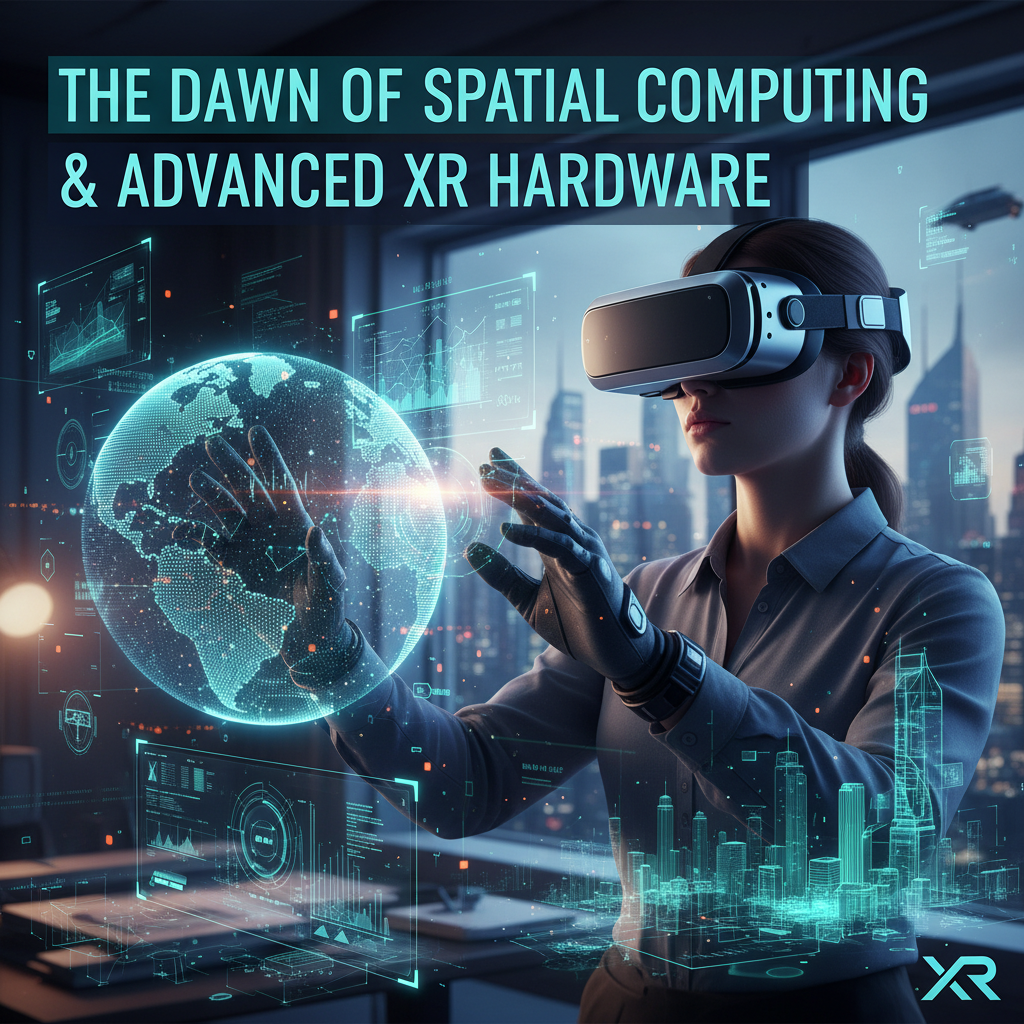
Spatial Computing & XR: The Future is Now
We stand at the precipice of a technological revolution, one that promises to fundamentally change how we interact with digital information and the world around us. Forget screens; welcome to the era of spatial computing, powered by an astounding generation of Advanced eXtended Reality (XR) hardware. It’s not just a buzzword; it’s the next frontier in human-computer interaction, and it’s already beginning to redefine our reality.
What Exactly is Spatial Computing?
At its heart, spatial computing is about blending the digital and physical worlds seamlessly. It’s the ability for computers to understand and interact with objects and environments in 3D space, just as humans do. Imagine digital content no longer confined to a flat screen, but existing all around you, anchored to real-world locations, objects, and people. This paradigm shift moves us from interacting with a device to interacting within a digital environment, offering intuitive and immersive experiences that feel truly natural.
The Power Behind the Magic: Advanced XR Hardware
None of this would be possible without the incredible leaps in XR hardware. We’re moving beyond bulky, low-resolution headsets to sleek, powerful devices that are increasingly comfortable, capable, and intelligent. These aren’t just display devices; they are sophisticated spatial awareness systems.
Key Hardware Innovations Driving the Future:
- High-Resolution & Wide Field-of-View Displays: Crystal-clear visuals with expansive views that truly immerse you without “screen-door effects.”
- Powerful Onboard Processors: Enabling complex real-time rendering and spatial understanding directly within the device, minimizing latency.
- Advanced Sensor Arrays: Lidar, depth cameras, and sophisticated tracking systems map your environment, hands, and eyes with unparalleled precision. This allows for natural gestures, eye-tracking interactions, and precise object placement.
- Comfort & Ergonomics: Lighter designs, better weight distribution, and improved battery life make prolonged use a realistic and enjoyable experience.
- Spatial Audio: Immersive sound that makes digital objects sound like they’re truly in your physical space, enhancing realism and presence.
Beyond Entertainment: Real-World Applications
While gaming and entertainment often capture headlines, the true impact of spatial computing and advanced XR hardware extends far beyond. Imagine architects walking through their designs at scale, surgeons practicing complex procedures, engineers collaborating on 3D models from different continents, or educators bringing historical events to life right in the classroom. From industrial design and manufacturing to healthcare, retail, and remote work, spatial computing is poised to enhance productivity, creativity, and communication in ways we’ve only dreamed of.
The Road Ahead: A Collective Journey
The journey into spatial computing is just beginning. While the hardware is rapidly advancing, the development of robust, intuitive software platforms and compelling content is crucial. We’re witnessing a collaborative effort across developers, designers, and hardware manufacturers to build the foundational layers of this new digital era. The potential is immense, promising not just new tools, but entirely new ways of living, working, and connecting.
Ready to Step Into the Future?
The dawn of spatial computing, amplified by incredible advancements in XR hardware, isn’t just a technological upgrade; it’s an invitation to experience the world anew. It’s an exciting time to be alive, as the boundaries between the physical and digital continue to blur, opening up a universe of possibilities. Keep an eye on this space – the future is unfolding before our very eyes!
“`



Leave a Reply