Multimodal AI: A New Era of Creation
Generative AI has captivated our imaginations, creating stunning artwork from text prompts, writing compelling stories, and even composing music. But what happens when these incredibly creative AIs start to not just understand, but truly interact with the world through multiple senses, much like we do? Welcome to the exciting frontier of Generative AI & Multimodal Models!
What is Generative AI (Again)?
Before we dive into the “multimodal” part, let’s quickly recap Generative AI. Simply put, it’s a type of artificial intelligence that can *generate* new, original content. Instead of just analyzing existing data or making predictions, generative models create novel outputs such as images, text, audio, or video that are often indistinguishable from human-made content. Think DALL-E, ChatGPT, or Midjourney – they are all amazing examples of this creative power.
The Multimodal Revolution
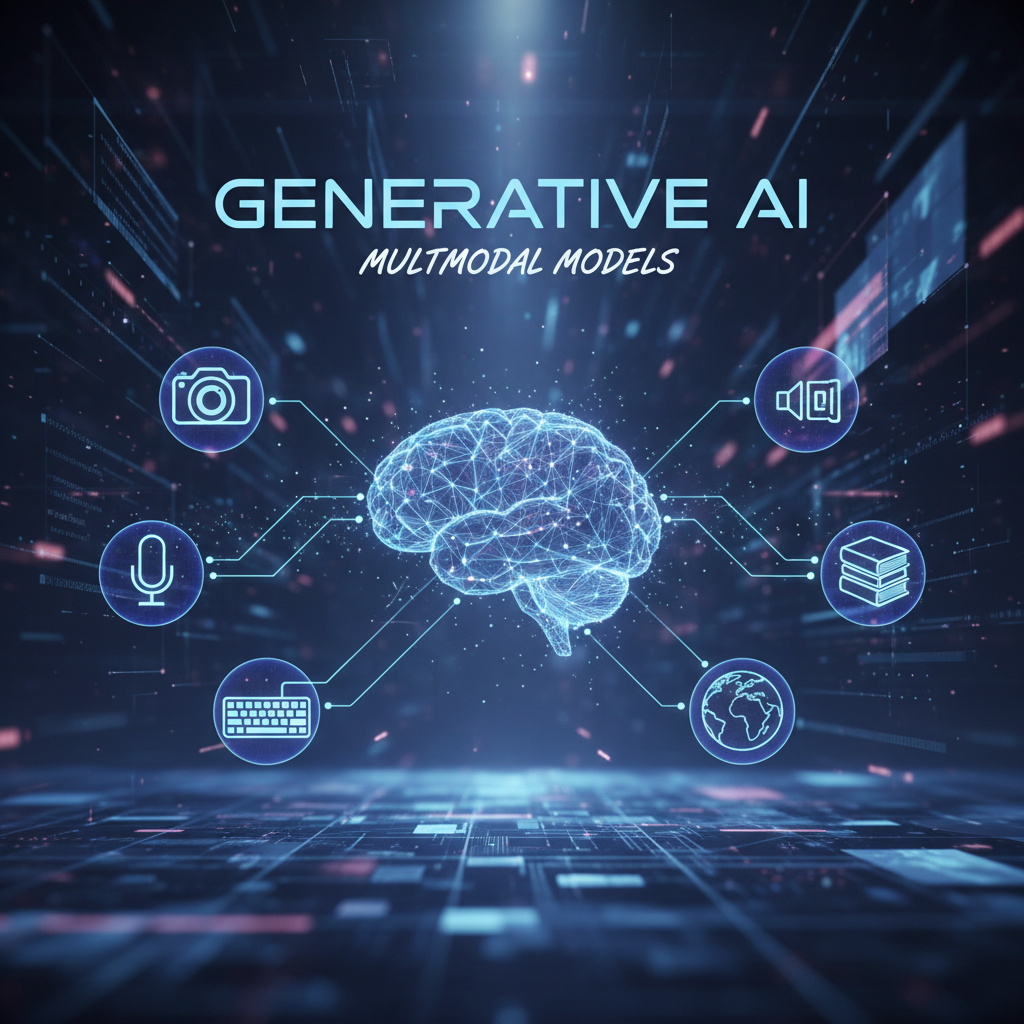
While incredible, many early generative AI models specialized in one type of data: text-to-text, or text-to-image. Multimodal models break down these barriers. “Multimodal” means combining and understanding information from multiple different modalities or types of data simultaneously. Imagine an AI that can not only process text, but also images, audio, and even video, learning the complex relationships between them.
This allows a multimodal AI to take input from one modality (e.g., text) and generate output in another (e.g., an image), or even take input from multiple modalities (e.g., an image and a spoken question) to generate a relevant response (e.g., text or another image).
How Multimodal Models Work Their Magic
At their core, these models are trained on massive datasets that contain various types of linked information. For instance, an image paired with its text description, or a video clip with its corresponding audio transcript. By analyzing billions of such pairs, the models learn to identify underlying patterns and connections across modalities. This cross-modal understanding is what enables them to “translate” ideas and concepts from one form to another, or to perform complex tasks requiring reasoning across different data types.
Real-World Applications & Beyond
The implications of multimodal generative AI are vast and already shaping our technological landscape:
- Text-to-Image Generation: The most famous examples, like Stable Diffusion or Midjourney, allow you to describe a scene in text, and the AI generates a unique image matching your description.
- Image Captioning & Visual Question Answering: AI can describe what’s happening in an image or video, or answer questions about its content (e.g., “What color is the car in this picture?”).
- Text-to-Video/Audio: Imagine generating a short video clip or a piece of music simply by describing it in text. This area is rapidly advancing!
- Enhanced Human-Computer Interaction: Future assistants could understand your verbal commands, analyze your emotional tone, see your screen, and generate visual responses all at once, leading to more natural and intuitive interactions.
- Creative Content Creation: Filmmakers, game developers, and artists can use these tools to rapidly prototype ideas, generate assets, or even create entire scenes from high-level descriptions.
The Future is Multimodal
The journey with Generative AI and Multimodal Models is just beginning. As these systems become more sophisticated, they promise to unlock unprecedented levels of creativity, productivity, and intuitive interaction with technology. While challenges around ethics, bias, and computational demands remain, the potential for multimodal AI to revolutionize how we create, communicate, and understand the world is truly exhilarating. Get ready for a future where AI doesn’t just process data, but truly understands and interacts with the richness of our multisensory world!


Leave a Reply