

Next-Gen Satellite Internet: Bridging Divides
Remember the early days of satellite internet – slow speeds and high latency? Well, prepare to have your perceptions shattered! We’re on the cusp of a revolution, driven by next-generation satellite internet constellations that promise to redefine global connectivity. Forget clunky dishes and frustrating delays; the future of the internet is literally looking up.
What Are These Constellations?
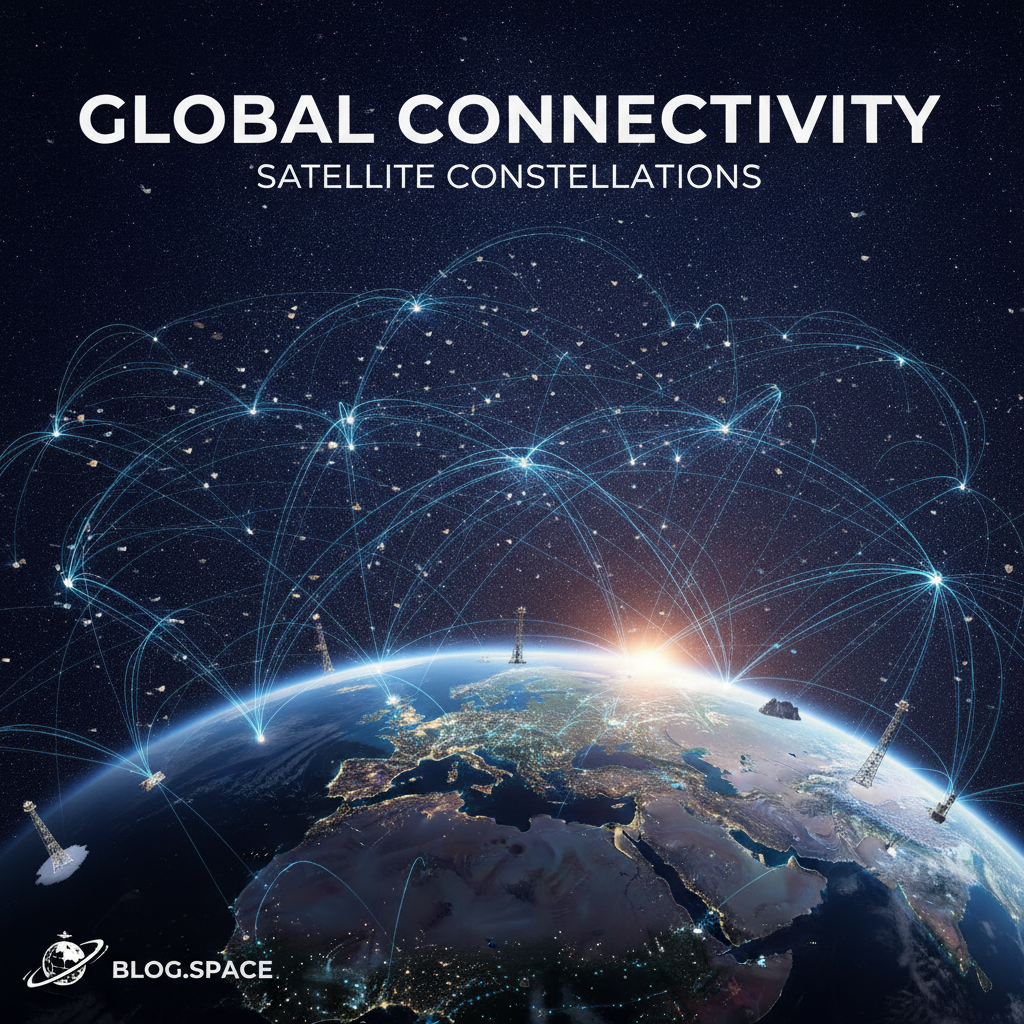
Unlike traditional geostationary satellites (GEO) that orbit far above the Earth, these new constellations operate primarily in Low Earth Orbit (LEO) or Medium Earth Orbit (MEO). This much closer proximity dramatically reduces signal travel time, translating into significantly lower latency – a game-changer for applications like online gaming, video conferencing, and real-time data access. Instead of a single, powerful satellite, these systems deploy thousands of smaller, interconnected satellites forming a mesh network in space.
This distributed approach ensures wider coverage, higher bandwidth capacity, and greater resilience. Imagine a global web, spun not just across continents, but across the sky itself, providing high-speed internet to nearly every corner of the planet.
Key Players and Their Vision
The race to deploy these advanced networks is heating up, with several ambitious players leading the charge:
- Starlink (SpaceX): Perhaps the most well-known, Starlink is rapidly deploying thousands of LEO satellites, aiming to provide high-speed, low-latency broadband internet globally, particularly to rural and underserved areas.
- OneWeb: Aims to provide global connectivity for governments, businesses, and communities, also utilizing a large constellation of LEO satellites with a strong focus on enterprise and mobility markets.
- Project Kuiper (Amazon): Amazon’s entry into the LEO satellite internet arena, Kuiper plans to launch over 3,200 satellites to provide fast, affordable broadband to a diverse range of customers worldwide.
Each of these ventures brings unique strengths and strategies, but all share the common goal of democratizing internet access and unlocking new possibilities for education, commerce, and communication.
Bridging the Digital Divide
The most profound impact of next-generation satellite internet will undoubtedly be its ability to bridge the global digital divide. Billions of people still lack reliable internet access, hindering economic development, educational opportunities, and access to vital information.
By making high-speed internet accessible in remote villages, disaster zones, and even at sea, these constellations will empower communities, foster innovation, and connect individuals who were previously left behind. This isn’t just about faster downloads; it’s about equitable access to the global knowledge economy.
Challenges and the Road Ahead
While the future looks bright, it’s also important to acknowledge the challenges. Concerns about space debris, the visual impact on astronomy (light pollution), and the immense cost of deployment are valid and being addressed by the industry and regulators. Sustainable practices, satellite deorbiting plans, and collaboration between operators are crucial for the long-term viability of these networks.
Regulatory hurdles and spectrum allocation also present complex challenges that require international cooperation. However, the benefits of universal connectivity are so compelling that these challenges are being met with significant innovation and determination.
The Future is Connected
Next-generation satellite internet constellations are more than just a technological marvel; they represent a fundamental shift in how we access and utilize information. They hold the promise of a truly interconnected world, empowering individuals and communities everywhere. Get ready – the internet is about to reach new heights!


Leave a Reply